
Starting in 2025, parking in downtown Wichita will no longer be free after 15 minutes
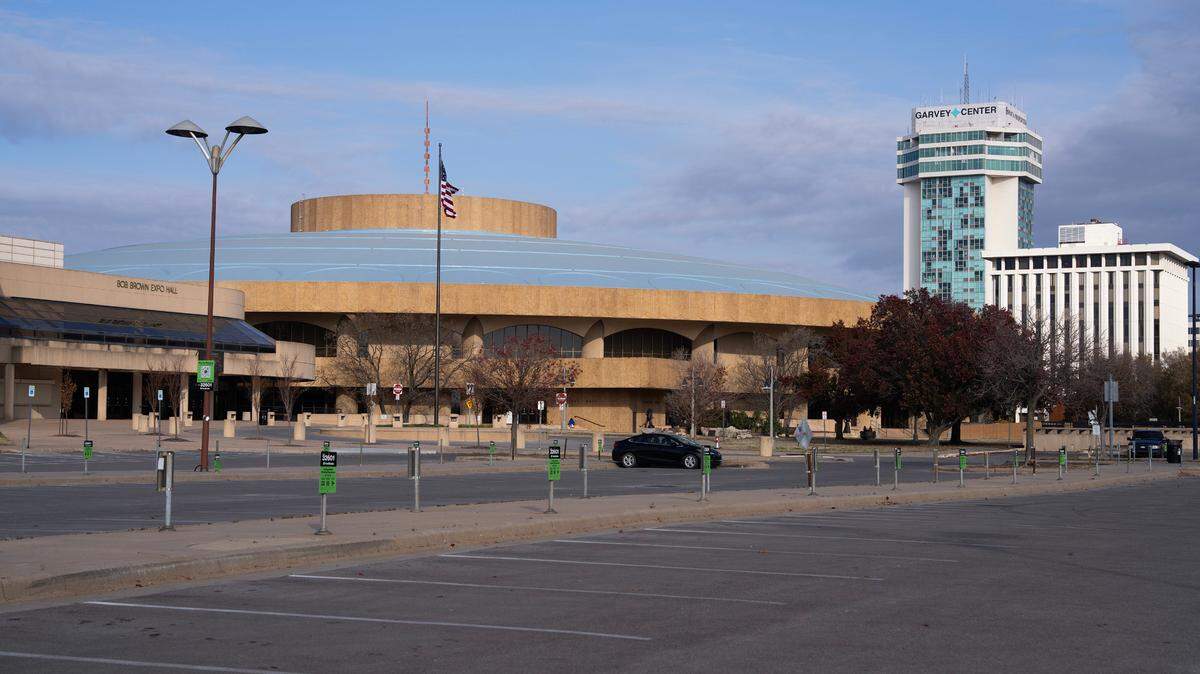
Visitors to downtown Wichita will have to start paying a dollar an hour for parking starting in the summer of 2025.
The new parking plan, approved by the Wichita City Council, allows for free parking for up to 15 minutes. After that, visitors would pay a dollar an hour or a daily rate of $5 in a parking lot or $10 in a garage. Monthly rates would be offered at $35 a month in parking lots and $70 in garages.
The city’s private contractor, The Car Park, would enforce parking regulations Monday through Thursday from 8 a.m. to 6 p.m. and 8 a.m. to 9 p.m. Friday and Saturday. Sundays would be free.
The city has created some carve outs for free parking under the recommended plan, including handicap accessible parking and loading and rideshare parking. Special events can also petition the city to adjust parking rates during certain time periods. The city lists the Old Town Farm and Art Market as an example, saying it could petition the city for free parking during its Saturday events.
Assistant City Manager Troy Anderson said the city expects to “soft launch” parking enforcement in June 2025, and begin to fully enforce paid parking by July.
Parking in the area is free now, with a few exceptions.
City officials previously said paid parking throughout downtown and Old Town was needed to maintain parking lots and garages and to pay a private company to enforce parking rates downtown.
The city estimated that the plan would bring in $452,645 in revenue in its first full year of implementation and more than a half a million by the third year.
These rules would be enforced downtown and exclude Delano and Old Town. However, the city report said paid parking could be expanded to Delano after construction is completed on the new multimodal center near Riverfront Stadium, which includes a parking garage with 400 spaces.
The plan, in lieu of installing meters in the Old Town area, directs Old Town business owners to petition the city for a two percent Community Improvement District (CID) tax and raises rates to $15 per space per month for business owners — double what owners now pay.
While meters will not be installed in the area, parking regulations and time limits would still be enforced in the area.
The city said it would need to know in the next 30 to 45 days whether business owners in the Old Town area are going to petition for the CID to allow it enough time to purchase parking meters. City policy requires 100% of business owners to be in agreement for the CID, but state law only requires 55%.
Many Old Town business owners who spoke during Tuesday’s council meeting were supportive of adopting the CID tax instead of installing meters in the area.
“We believe a CID would spread the cost indirectly, being embedded in the cost of goods and services rather than being an upfront fee,” Pump House General Manager Daron Adelgren said.
However, not all business owners see the sales tax as fair.
Tyler Cooper, who owns the soon-to-be-open Boulevard Theatres in what used to be the Warren Old Town Theatre, said the new plan is confusing, and implementing a CID would lose out on a financial tool for developers.
“Creating different parking plans in these three areas creates an unequal advantage for businesses and property owners who are neighbors,” Cooper said during the council meeting. “Most importantly, using the CID in Old Town is a gross misuse of a tool that is meant to help developers and businesses invest in a project and make it work.”
Old Town was at the center of the parking debate, as the city recently disclosed it lost out on $13.3 million over 25 years for not enforcing parking agreements made with area business owners.
“I’m a little concerned that in the recent past, not 25 years ago, we didn’t say, ‘Well, it’s not helping us recover costs,’” said Mayor Lily Wu, who eventually voted against the paid parking plan. “We’ve had this conversation from this bench, everything we do must … at the very least cover the cost so then it is revenue neutral. If not, we’re putting it on the backs of another project or another business.”
While the new parking revenue is intended to maintain parking lots and garages, the city said it has identified $18 million in deferred maintenance in its parking system, mainly in existing parking garages it owns.
Much of that will be able to be paid for by deferring or canceling some capitol improvement projects, according to the city.
Council member Mike Hoheisel voted against the plan because of debt incurred by deferred maintenance issues.
“I think if we want to have any effective plan, especially that we’re trying to catch up on the maintenance and debt, that any parking plan would have to have getting rid of some of that debt in regards to the infrastructure along with it,” Hoheisel said in an interview with The Eagle.
The city identified projects it plans to eliminate or delay to pay for the deferred maintenance. They include a $5 million floodplain mitigation project, funding for a Fire Department records management system, more than $1 million in street and pedestrian crossing projects, a parking lot for parks and recreation and $375,000 a year that would have paid for sidewalks and $625,000 a year for traffic signal projects.
A city document shows that, adjusted for inflation and construction contingency, the total number for deferred maintenance would likely be closer to $20.5 million over the next seven years.
In implementing paid parking downtown, the city will also have to pay a private contractor, The Car Park, to enforce the new plan.
In June, the council approved a contract with The Car Park that’s expected to cost the city more than $12 million by 2030.
Assistant City Manager Troy Anderson told the Eagle last week that that contract would have to be amended, which will likely happen in January.
This story was originally published December 17, 2024 at 1:21 PM.