
Wichita will divert $2.4 million from park upgrades to replace golf course sprinklers
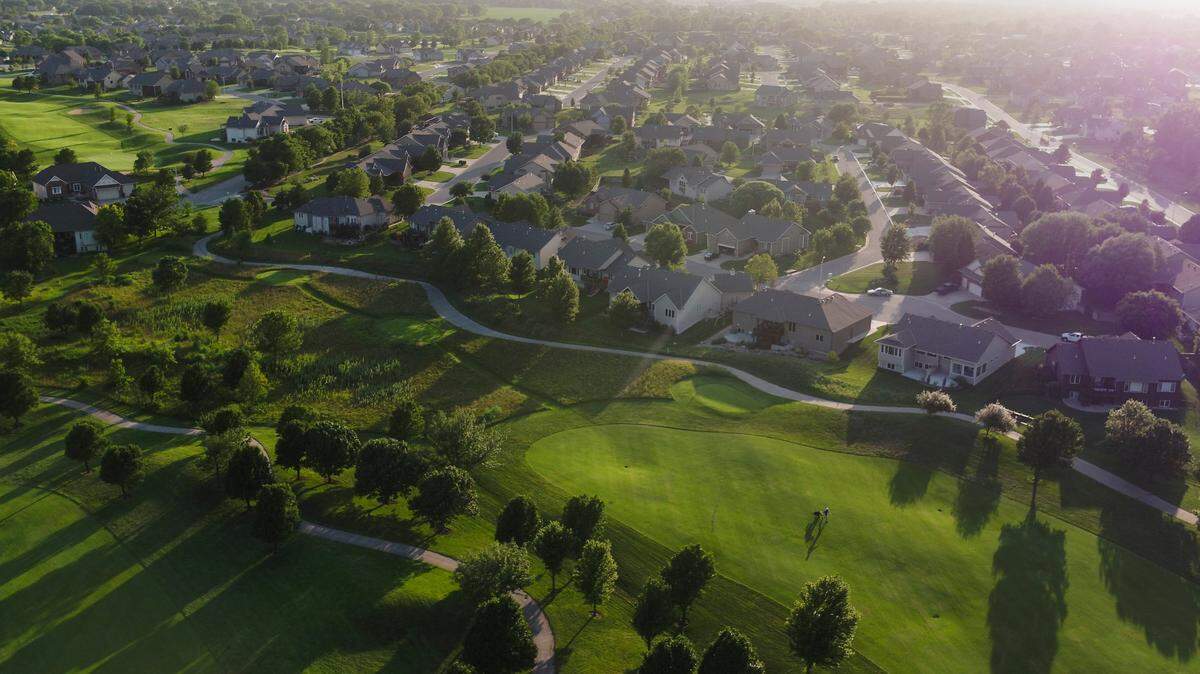
The Wichita City Council is diverting $2.4 million originally earmarked for park enhancements to replace golf irrigation systems at the city’s four public courses.
Sprinkler systems at Auburn Hills, MacDonald, Sim and Tex Consolver have all reached the end of their useful lives and are wasting water and electricity, Finance Director Mark Manning told council members during last week’s marathon budget hearing.
The plan is to replace the irrigation systems at one course per year between 2025 and 2028.
Golfers will also help pay for the improvements through fee increases starting next March. Golf Director Jesse Coffman said the golf board of governors will determine whether those will be higher green fees, cart rental fees or both.
Council member Becky Tuttle asked which future park improvements would have to be abandoned over the next few years to support the golf upgrades.
“Those funds typically cover repairs and upgrades to [park] irrigation systems, tennis courts, basketball courts, so anything that needs repairs in our parks system,” Parks Director Troy Houtman said.
“That sounds a little bit problematic that we’re just moving the money from one deferred maintenance issue to another deferred maintenance issue,” Tuttle said. “Is that correct?”
“To a certain point, yes,” Houtman responded. “Without those funds, there would be a lot of things that we would not be able to address and repair within our park system.”
City Manager Robert Layton clarified that the city has several other funds dedicated to park maintenance.
“We also have maintenance projects that go above and beyond the enhancements. Enhancements are maybe addressing some maintenance issues but we’ve got splash pad maintenance, you’ve got $80,000 every other year and park facility maintenance, you’ve got $262,500 every year,” Layton said. Athletic field renovation and athletic court funding are also separate, but park enhancement funding is used to supplement the other pools of money.
Layton told council members that the city’s 2025 parks master plan frees up several years of capital funding for the golf project.
“At this point, we’re not sure what resources are going to be needed because we don’t know what the improvements are going to be that are recommended in the master plan,” Layton said. “So we thought we had a gap here for a few years until those projects are identified.”
Public concern that the city could use that master plan to justify selling off park land to developers dominated another recent budget hearing after Mayor Lily Wu suggested cutting down on the number of park properties and reinvesting in the ones that attract the most visitors.
At Tuesday’s meeting, Wu cast the sole vote against diverting funds for golf irrigation.
“It bothers me to wait until a master plan, that we might have to do some deferred maintenance [on parks], and that to me will be the reason why I will vote no,” Wu said. “Because I’m very concerned that we have seven rec centers that they have some maintenance issues that we need to address, but now we’re really just focusing on golf.”
Manning, the finance director, said the golf system will also incur debt on top of $2.4 million in upfront costs for new sprinklers. $457,750 in this year’s parks surplus and another $395,910 in 2025 will go toward paying down that debt. Any surplus generated in future years will also go toward the debt until it’s paid off.
As part of the motion to fund sprinkler systems, the City Council also forgave $5.7 million that the golf system has owed the debt service fund since Auburn Hills was constructed in 1998. Manning said increased property values for houses built on the golf course have generated enough new property tax revenue over the years to justify writing off that debt, but that incremental revenue has not been systematically tracked since the course opened.
The golf system as a whole has remained profitable since experiencing a pandemic boom in 2020 and 2021. The council rejected a plan in 2022 to outsource management of public golf courses to Illinois-based KemperSports shortly after the company presented faulty data to the park board understating how much they stood to gain under their preferred profit-sharing agreement for food and beverage sales.