
If Biden should drop out, what happens to Kansas ballots? What state law says
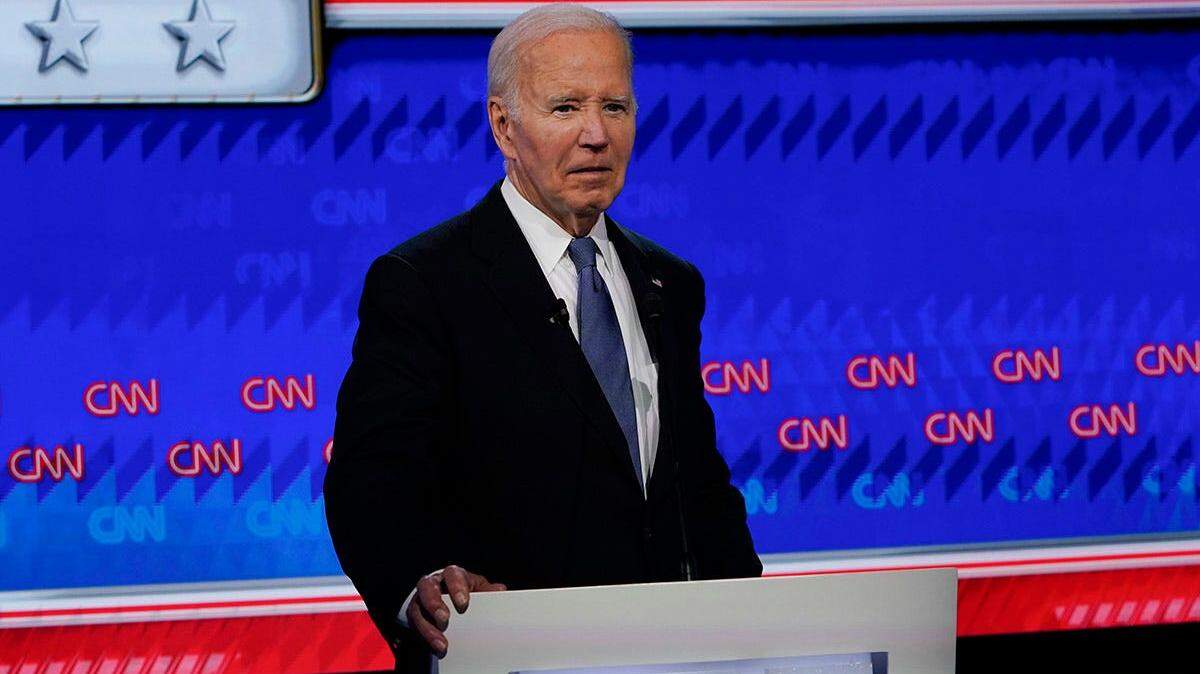
As President Biden faces calls to step aside, questions are surfacing about what would happen – including in Kansas.
Biden’s debate performance earlier this month, which triggered a wave of scrutiny surrounding his age and mental acuity, has led to pressure from some Democrats for the 81-year-old chief executive to drop out of the presidential race. Biden has so far signaled he plans to remain in the race.
If Biden drops out, the decision could hold consequences for the November election in Kansas, depending on when he makes his decision.
Here’s what we know about what would happen in Kansas if Biden drops out.
Can Biden be replaced on the ballot in Kansas?
Biden hasn’t actually been placed on any ballots yet, so there’s no one to replace.
Kansas finalizes the names that appear on the general election ballot after Republicans and Democrats hold their national conventions. The Republicans are meeting in Milwaukee on July 15-18 and the Democrats are meeting in Chicago on August 19-22.
Who the Democrats nominate at their convention – whether Biden or someone else – determines whose name is on the ballot.
What about other states?
The same thing goes for other states. Neither Biden nor Trump are the nominees – and therefore on general election ballots – until they’re formally nominated at their party conventions.
Ohio had a deadline of Aug. 7 for its ballots, well before the Democratic National Convention. But Ohio lawmakers passed legislation to fix the issue and the Democratic National Committee also scheduled a “virtual roll call” for early August to avoid any problem.
It’s unclear whether the DNC will move forward with the virtual vote. Some news outlets have reported Democrats are weighing moving up the formal nomination of Biden to a virtual meeting later in July.
What happens at the conventions?
Both parties at the conventions will formally nominate their candidates for president and vice president based on the votes of delegates – unless a virtual vote is held first.
Even though Biden won nearly all state and territorial caucuses and primaries this year – meaning that delegates from those states are pledged to him – he does not officially become the Democratic nominee until the convention votes to nominate him.
Before the convention, Biden could choose to release his delegates from their pledge to vote for him. That would lead to an open convention, which hasn’t taken place in the United States in half a century.
At an open convention, candidates for president and vice president would try to win over a majority of delegates to secure the nomination. The convention would go through multiple rounds of voting until candidates win a majority.
Some Democrats have said that if Biden steps aside, the party should quickly coalesce around Vice President Kamala Harris as the nominee. That could happen, but isn’t guaranteed.
Who are the delegates?
The delegates, several dozen, are a mix of elected officials, party activists and insiders who were chosen at state party conventions.
What happens after the convention?
The Republicans and Democrats, after their conventions, will certify to election officials in Kansas who is the presidential and vice presidential nominees. This determines whose names appear on the ballot.
In Kansas, there’s no deadline for the political parties to certify their nominees, but the parties must certify their choices to the Kansas Secretary of State’s Office.
Still, the parties typically certify their nominees soon after the conventions. In 2020, Democrats certified Biden as the nominee on Aug. 20 and then-President Trump was certified as the Republican nominee on Sept. 2, according to the Kansas Secretary of State’s Office.
What happens if Biden drops out after the convention?
The Democratic National Committee would select a new presidential candidate if Biden withdraws after he’s nominated at the convention.
In Kansas, state law says that if a candidate withdraws or dies before Sept. 1, the candidate’s name doesn’t appear on the ballot and the party must provide a substitute candidate name.
If the vacancy occurs after Sept. 1, election officials will replace the candidate with a substitute on ballots if possible, according to the Kansas Secretary of State’s Office. But that depends on how far along election officials are in ballot preparations.
While no hard deadline exists in Kansas, under federal law mail ballots sent to military service members overseas must be sent at least 45 days before the election, which is Sept. 21. The 45-day requirement applies to Kansas.
But what about the Electoral College?
The final wrinkle is the Electoral College, the 538 electors nationwide who actually, formally elect the president and vice president.
Even though the names of presidential and vice presidential candidates appear on the ballot, voters are actually voting for electors from their state for those candidates. Each state gets the same number of electors as electoral votes, which is the number of Senate seats (two for each state) plus the number of congressional seats.
Kansas gets six electoral votes. The electors themselves are chosen by the state political parties and are often party insiders.
The electors meet on the first Tuesday after the second Wednesday in December, which is Dec. 17 and cast their votes.