How many abortions happened in Kansas last year? In change, state won’t say until later
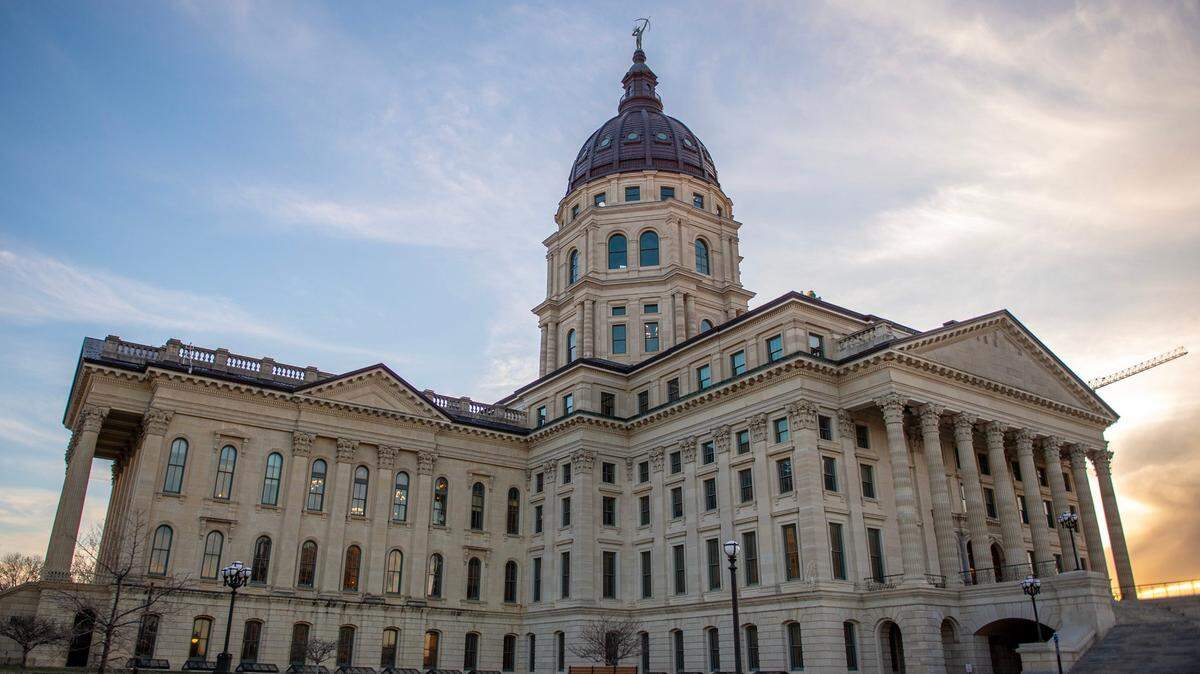
Kansas officials won’t release annual abortion statistics this summer, breaking with decades of precedent amid the state’s role as a critical access point in the region for women seeking to end their pregnancies.
The Kansas Department of Health and Environment has issued a preliminary report about abortions that took place the previous calendar year for at least 25 years. The report, typically coming in spring or more recently in early summer, provides detailed statistics, including on methods used, gestational age and patients’ county and state of residence.
The report provides a wealth of information to researchers and often becomes part of the public debate over abortion. Last year’s report, the first to include data since the U.S. Supreme Court struck down Roe v. Wade in June 2022, documented a surge in abortions driven by out-of-state patients.
But the Kansas Department of Health and Environment, which compiles the report, said Monday it won’t release 2023 statistics until much later this year – a decision that effectively means the state will release year-old data.
“All abortion data will be included in the KDHE Vital Statistics Annual Report, which is released in late fall,” Jill Bronaugh, a KDHE spokesperson, said in a statement.
Bronaugh gave no reason for the change.
The acknowledgment of the decision comes as KDHE prepares to implement a new state law that will mandate two abortion reports every year. The measure, passed by the Republican-controlled Legislature over Democratic Gov. Laura Kelly’s veto, marks another attempt by anti-abortion lawmakers to test the outer bounds of a 2019 Kansas Supreme Court decision that interpreted the state constitution to protect access to abortion.
Voters in August 2022 strongly rejected an amendment to the state constitution that would have overturned the high court’s decision, paving the way for an abortion ban. While the Legislature hasn’t advanced severe restrictions on abortion since the vote, lawmakers have made new efforts to regulate what women are told and asked before the procedure.
The law, HB 2749, mandates abortion providers to survey women, asking them to choose the most important reason for getting an abortion. Those reasons include financial stress, rape, fetal disabilities, or the health of the mother as options. The survey does not include an “other” option, a point of contention for opponents. KDHE will compile the data into a report publicly released twice a year.
As Kansas has become a key destination for out-of-state residents seeking abortion, especially from Missouri, Oklahoma and Texas, official statistical data has become a valuable resource for abortion opponents. Data on why women sought an abortion could help abortion opponents tailor their arguments against the procedure – and provide information to help justify future restrictions, either in Kansas or other states.
Even though Kansas won’t release 2023 data until this fall, some non-official estimates are available. Guttmacher estimates that 20,700 clinician-provided abortions took place in Kansas in 2023. If accurate, the count would represent a significant increase over the 2022 total.
Bronaugh didn’t say whether the decision to not release a preliminary report was related to HB 2749, only that it was made before the legislation was codified into law.
“KDHE made the determination to release all abortion data in the annual report prior to HB2749 being codified,” Bronaugh said. “KDHE is evaluating the reporting requirements and internal methods to determine when the bi-annual reports will be released, no dates have been set at this time.”
Emily Wales, president and CEO of Planned Parenthood Great Plains Votes, the organization’s advocacy arm, welcomed the decision to not release a preliminary report.
“It is nice to see abortion treated like other types of statistics in the state,” Wales told reporters at a news conference marking the second anniversary of the end of Roe.
“Instead of being a political report that comes out all on its own and gets lots of attention, it makes sense that public health officials would use data like they do with every other type of medical care,” Wales said. “So I’m happy to hear that there is maybe a depoliticization of abortion in that way.”
House Speaker Dan Hawkins, a Wichita Republican, called KDHE’s “negligence in regard to this report a prime example” of why the new survey and reporting law is needed. He said lawmakers would watch closely to ensure KDHE isn’t suppressing statistics.
“I’m curious why now, after reporting this data since 1998, KDHE would be less transparent and choose not to release this report even under current law?” Hawkins said in a statement. “This is especially concerning in light of the passage of HB 2749 which requires biannual reporting of anonymous abortion data.”
Hawkins said better and more accurate data will “better ‘inform public debate’ as was previously stated by the Guttmacher Institute, the abortion industry’s research arm” – a reference to a 2005 paper that included authors from Guttmacher Institute, a research organization supportive of abortion rights.

New abortion reporting law challenged
The new survey and reporting law will take effect July 1 unless blocked by a court. Abortion providers are seeking to challenge it in Johnson County District Court, but for now, the law remains on track.
The providers are asking permission from Johnson County District Court Judge K. Christopher Jayaram to amend an existing lawsuit to include claims against the new law. Kansas Attorney General Kris Kobach, a Republican, is defending the law in court and has urged the judge to not allow the new claims.
A hearing is set for July 1.
Attorneys for the abortion providers in court papers have called HB 2749’s requirements “another legislative attempt to co-opt abortion providers to serve as the State’s conduit—this time to pry into patients’ personal medical decisionmaking via intrusive, government-scripted inquiries.”
Wales said Planned Parenthood’s clinics were preparing to follow the new requirements but that it will be challenging the rules. Wales said the law “absolutely violates” patients’ rights to conversations with their providers.
“We are looking at how to comply, at least at the beginning, and how to do it in a way that causes the least trauma to our patients,” Wales said.
This story was originally published June 24, 2024 at 5:47 PM with the headline "How many abortions happened in Kansas last year? In change, state won’t say until later."