
Developer seeks $11M incentive to build around Wichita ballpark. City Council to vote
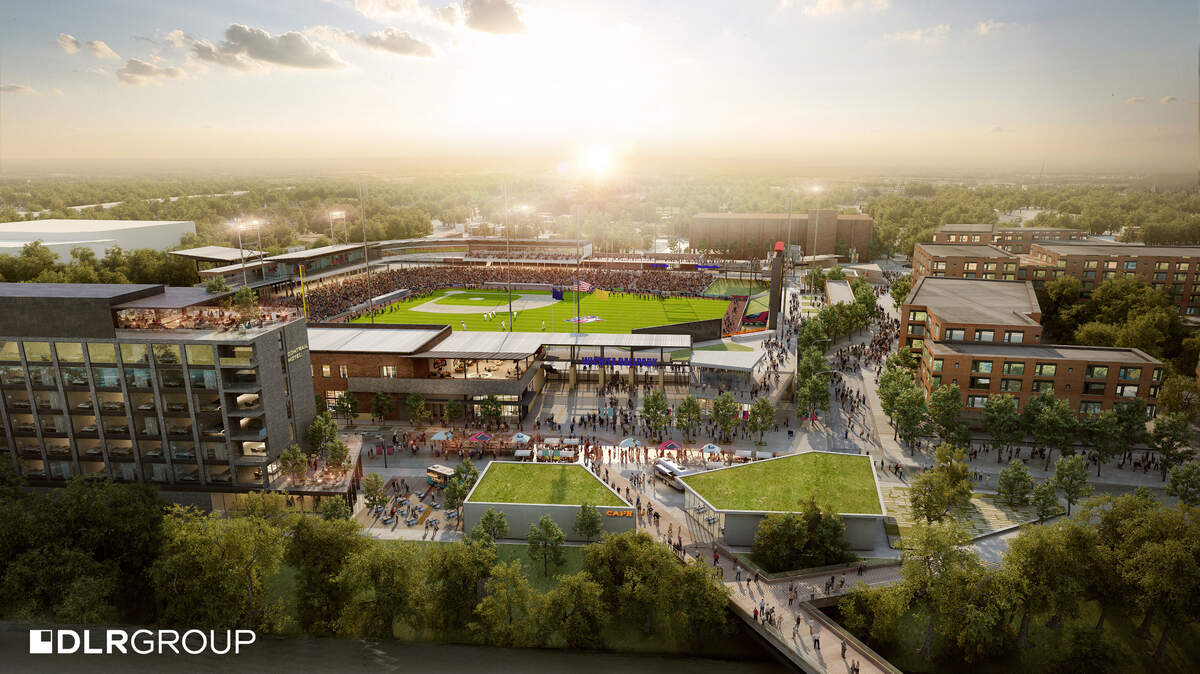
Wichita City Manager Robert Layton and city critic Celeste Racette don’t agree on much about the public incentives used to build Riverfront Stadium and encourage development around it.
But they see eye to eye on one point: If the promised development doesn’t happen, the city eventually will have to use property tax dollars to pay down $83 million in ballpark debt.
“You and I are on the same page regarding liability,” Layton told Racette last week.
His comment came at an open house where city staff explained why Overland Park developer EPC will need to be reimbursed $11.3 million to build a hotel, a parking garage, multi-family apartments and retail space on two acres bought from the city for $1 apiece.
EPC says that’s the only way they’ll be able to get banks and investors to back their project.
After a public hearing Tuesday, the City Council is expected to vote on a proposal to carve out EPC’s development site from the existing tax increment financing (TIF) district designed to help pay for Riverfront Stadium. With city approval, the first $11.3 million in TIF funds would go back to EPC for eligible construction costs — not toward paying down ballpark debt.
TIFs lock in existing property tax rates for 20 years and retire debt with additional revenue. EPC would be reimbursed with the property tax dollars they generate, meaning they couldn’t obtain the incentive money without realizing development.
Already, development around the ballpark is slower than expected. Completion of the first phase was promised by July 2024. After a contract dispute nearly ended in the city taking developers to court, EPC expects to break ground on its $110 million project by mid-2024 at the earliest.
Return on investment
Language about the TIF incentive was included in the development agreement with EPC that the council approved in August. But some council members seemed blindsided when it was brought up at a staff meeting last month.
“Did we know about this when we were negotiating with EPC? . . . Did they give any indication that this is the route that they were wanting to take?” Vice Mayor Mike Hoheisel asked at the time.
“Oh absolutely,” Assistant City Manager Troy Anderson responded.
EPC Executive Vice President Austin Bradley told The Eagle last week that the TIF incentive is “100 percent” necessary for his firm to move forward with the project.
“If you’re not hitting a certain debt-service coverage ratio — in other words, if you are breaking even or losing money, you’re never going to get a loan, so without a reduction of your expenses, then no bank is ever going to come in here and finance that project,” Bradley said.
With the carve-out, EPC is expected to generate $9.35 million in profits over the next two decades, accounting for an 8.5% return on investment, city data shows.
“Normally, when we were talking about that, we’ve talked anywhere from 12 to 15 percent being an acceptable developer return,” Layton said. “This is lower than we’ve talked about.”
Bradley said “the lion’s share” of incentive funds would go toward construction of the 260-stall parking garage, which EPC plans to sell to the city and lease back.
Even with the incentive redirecting TIF funds, staff said the city stands to receive $39 million in other revenue from the completed project over the next 20 years.
“What I want you all to focus on is the fact that none of this happens without this project. If this project doesn’t occur, none of these numbers are real numbers,” Anderson told open house attendees, gesturing to a chart showing how the EPC project would boost revenue for other stadium funding sources, including generating additional sales tax revenue in the community improvement district and STAR bond district.
Expectations
Council member Jeff Blubaugh, whose district includes Riverfront Stadium and the surrounding neighborhood, was the only vote against approving the new development agreement with EPC over the summer.
“I do not want to do a bait and switch with the taxpayers,” Blubaugh said. “I think this is a good project, but we’ve got to take care of the debt-service on the stadium first because the stadium was the catalyst site. Now, I feel like we’re saying this development is the catalyst site.”
Bryan Frye, who has also been on the council since talks about the stadium began, is more optimistic. He called EPC’s proposed development “fantastic.”
“This project now has gone from no hotel to a $77 million project to a $110 million project, creating additional revenue to pay for the stadium,” Frye said. “This is what we’ve envisioned all along for the stadium project.
“There have been setbacks and challenges, but I’m confident that this project is going to be the first of many surrounding the stadium.”
Blubaugh said EPC’s assertion that the project doesn’t make financial sense without the TIF incentive comes off as “a little noncommittal.”
“I’m kind of worn out with the city being the only one that makes commitments,” he said. “We’ve got to allow more teeth, more strength in some of these agreements.
“Every time we get into tough negotiations, we always get this message from staff that the sky is falling rather than strengthening up our language and holding firm.”
Frye said he has complete confidence in the city’s negotiations to this point.
“These type of development agreements take a long time because there is a lot of due diligence to be done,” he said.
There were no provisions for clawing back land if development fell through in the initial 2019 development agreement between the city and the Wind Surge’s development team, which EPC later signed on to.
The new EPC-only agreement establishes construction milestones, but failure to deliver would not result in any financial or legal consequences other than EPC forfeiting the right to develop the land around the ballpark.
Racette, who ran unsuccessfully for mayor this year, said the city is not negotiating from a position of strength.
“They’ve got us under a hammer now,” she said of developers. “They’re like saying, ‘I know the clock is ticking on your debt for the ball stadium and this development hasn’t occurred.’ So we’re kind of screwed unless we do something to jumpstart this development.”
Blubaugh said there’s still plenty of Delano property in the original redevelopment district that can be used to generate money for paying down the debt-service.
“But I just don’t want to carve out another piece of the pie that goes back to the developer incentive,” he said.
“This isn’t a new TIF. This is just an adjustment,” council member Becky Tuttle told The Eagle.
“Not only is it helping to move this project forward but it’s also meeting demands that we hear from our community members . . . I hear consistently that we need more residential units in the city’s core, downtown, and people also say we need more public parking.”
Layton maintains that a council vote against approving the EPC carve-out would be “inconsistent with the development agreement” that everyone but Blubaugh already voted to support.
“If this thing doesn’t move forward, I don’t know how long that pushes the project back,” Layton said. “Every year we lose, I have a greater chance of having to use property tax dollars [to make payments].”
But he said he’s confident EPC will make good on its promises.
“We’ve got a really good developer.”