
Wichita plans to spend $4.9M to change downtown streets, make them more walkable, bikeable
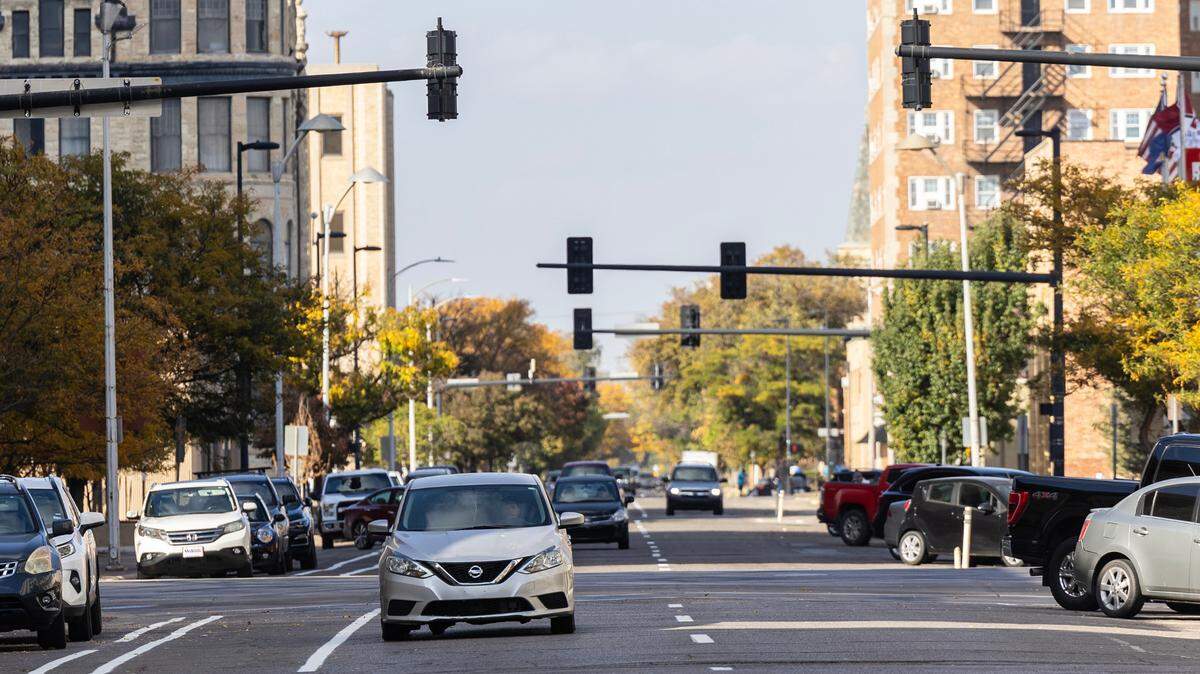
When voters approved a 1-cent sales tax in Sedgwick County, part of the money was supposed to go to relieve traffic congestion.
Now, 38 years later, the city of Wichita wants to use local sales tax dollars to fund a plan that intends to slow down traffic.
The Wichita City Council voted Tuesday to use $4.9 million in local sales tax to fund the first phase of the Wichita Downtown Street Plan. The council approved the project concept in February and hired a design firm in August. The first phase focuses on converting one-way streets to two-way streets, likely reducing the number of lanes.
The move was approved unanimously on Tuesday’s consent agenda without discussion or public comment.
The downtown street plan aims to decrease motor-vehicle lanes in downtown Wichita and increase lanes for bicycle traffic. It would also convert one-way streets to two-way streets. The goal is to make downtown more pedestrian-friendly and less car-centric.
Proponents of so-called road diets say they make streets safer and improve quality of life in dense metropolitan areas. Detractors say they inconvenience drivers and needlessly slow traffic in areas that need it most, diverting people away from downtown businesses.
The Federal Highway Administration has found that streets with less than 10,000 annual daily traffic counts are “great candidates” for road diets in most instances without affecting vehicle capacity while streets with 10,000 to 15,000 vehicles a day are “good candidates” that could have less traffic capacity without proper intersections and signal timing.
A 2015 traffic study produced by the Kansas Department of Transportation, the most recent and comprehensive study of downtown Wichita traffic available, found daily motor vehicle traffic in downtown Wichita ranged from a low of 1,050 vehicles a day on Lewis Street to more than 15,000 a day on Central. Douglas had 11,515 vehicles a day at the time.
Several major development projects have been completed or approved since 2015. It’s unclear how those developments — or changing work habits since the pandemic — have affected traffic counts downtown.
Tuesday’s vote also authorized Professional Engineering Consultants, or PEC, to order traffic signals and locate underground utilities as the company redesigns Market, Main, Topeka, Emporia and English streets. Those streets will be changed from one-way traffic to two-way traffic from Kellogg to as far north as 13th Street.
The city’s receives just above 58% of local sales tax revenue collected in Sedgwick County. It has traditionally used a majority of that money on Kellogg projects. But with the Kellogg expansion mostly complete, the city plans to use that money for arterial road improvements, which is an allowable expense.
The first series of changes will include converting the following from one-way streets to two-way streets by 2027:
▪ Market from Kellogg to 13th
▪ Main from Kellogg to 13th
▪ Topeka from Kellogg to Murdock
▪ Emporia from Central to Murdock
▪ English from Main to Emporia
This story was originally published October 24, 2023 at 5:53 AM.