
New Sedgwick County warning system to go in where multiple accidents have occurred
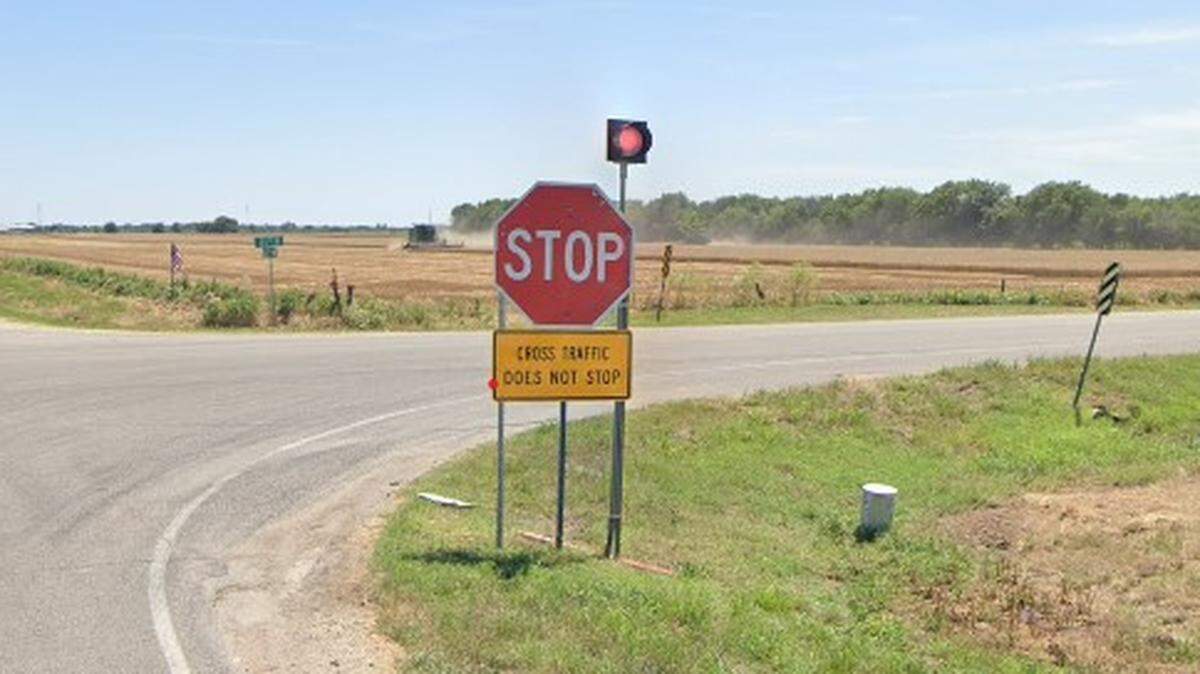
A traffic study at the 21st Street and 167th Street intersection in west Sedgwick County has determined that a traffic signal or four-way stop is unwarranted.
Instead, the county plans to spend roughly $125,000 on a new system designed to give drivers on 21st Street an extra layer of warning when cross-traffic is detected.
“Flashing yellow lights operate only when potential conflicting traffic is detected on 167th,” Public Works Director Lynn Packer told the County Commission on Wednesday.
“Drivers on 167th will also have an additional layer of warning in the form of alternating flashing lights that are on constantly at the intersection with an additional (overhead) stop sign.”
The intersection has been the site of three fatalities in the last 10 years, Packer said. A 2016 Federal Highway Administration study found that intersection conflict warning systems reduce the rate of severe crashes by 20-30%.
“I’ve just been dreading, worrying about when we can do something more at this intersection so we don’t have another fatality,” said Commissioner David Dennis, who represents District 3, where the intersection is located west of Wichita.
He said the optimal solution is a roundabout, but that would cost more than $1 million.
“If we wait for that type of a solution, how many more deaths are we going to have at this intersection?” Dennis said.
The intersection conflict warning system is a pilot program that the county plans to evaluate over the course of three years.
Commissioner Jim Howell cast the sole vote against the project, which he deemed a “$125,000 experiment,” saying he believes the system could stoke driver confusion.
“There’s an issue of timing,” Howell said. “If you pull up there and you slow down a small amount and you blow through the intersection on 167th, it triggers the light to flash on 21st . . . There’s nobody there, and then [drivers on 21st] begin to distrust the lights because they know sometimes the lights are flashing and no one’s there.”
It will be up to public works to determine how long the lights should flash when cross-traffic risks are detected.
Howell said he would have preferred a four-way stop at the intersection.
A traffic study from earlier this year found an average of 5,000 vehicles cross the intersection on 21st Street every day and another 3,000 traverse it from 167th. The speed limit is 55 miles per hour in both directions, but the study found average speeds of 65 and 64 miles per hour on 21st Street and 167th Street, respectively.
The county considered adding rumble strips on the road to alert drivers of the upcoming intersection, but the prospect of increased noise was unpopular with nearby residents.
“They were not inclined to put up with trucks going across rumble strips at 3 o’clock in the morning when they’re trying to sleep,” Dennis said.
Because of the additional cost, the county does not plan to add a battery backup to maintain the new warning system in the event of a power outage.
Packer said if the pilot program is determined to be unsuccessful, the signs and light components can be repurposed by public works.
The department is awaiting the results of a Kansas Department of Transportation-commissioned consultant study assessing the safety of each intersection and road segment in the county.
This story was originally published July 19, 2023 at 2:10 PM.