
Wichita City Council OKs millions more in public money for Riverfront Stadium district
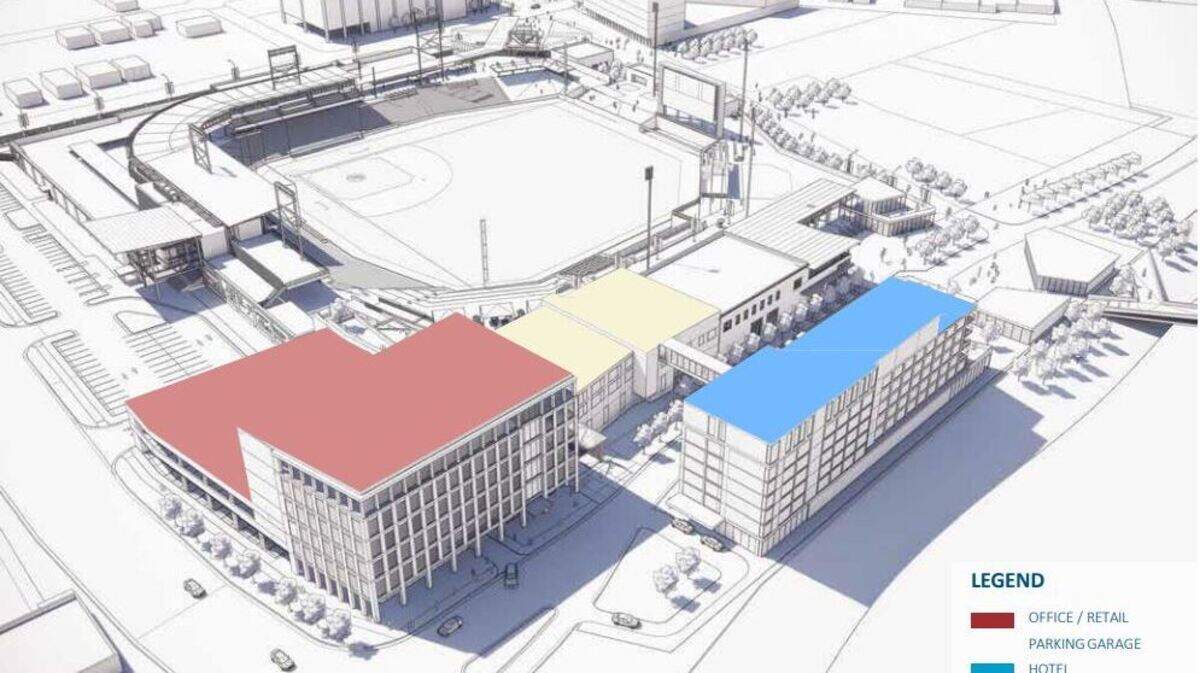
The Wichita City Council on Tuesday approved pumping nearly $10 million in additional public incentives into its minor league baseball stadium district, including a tax-funded parking garage and tax breaks on two office buildings for developers.
The move is meant to jump-start development of two office buildings and a hotel along McLean Boulevard. Taxes generated at those businesses would help pay off the debt on $75 million Riverfront Stadium.
The city approved diverting $8.7 million in property taxes collected in the Delano Tax Increment Financing (TIF) district to pay for a 283-stall parking garage directly east of the stadium. With the vote, the council approved issuing up to $40 million in industrial revenue bonds (IRBs) for the team’s office buildings, which provides a $906,500 tax exemption on building materials for the Wind Surge owners and EPC Real Estate. The sales tax exemption does not apply to the hotel building.
City officials said the additional subsidies are needed to speed up the project and help pay down the debt for the stadium.
Part of the city’s stadium debt is $40 million in STAR Bonds from the Kansas Department of Commerce. STAR bonds divert all sales tax in the district — which would normally pay for state services — to pay off the debt.
“My vote today is to make sure that we help cover our debt,” Council member Mike Hoheisel said. “That’s the important thing to me. I keep thinking about how if we keep falling short on attendance and paying back the STAR Bonds, we will be paying out of our general fund. So in order to do that, to make sure that we have money for quality-of-life things further down the road, I do feel like we should accelerate this and that way we can make sure and cover the STAR Bonds.”
The parking garage is expected to be open to the public on nights and weekends, excluding Wind Surge game nights and other events, when it will be paid parking.
Changes to TIF financing, which locks in property values in a district and sets aside future property tax increases, require a two-thirds majority vote. The Wichita City Council approved the additional funding 7-0.
In return, the developers have agreed to develop two acres sold by the city at $1 an acre in 2019. The plan calls for two new office buildings between the stadium and McLean and a 160-room hotel across the street, overlooking the Arkansas River and downtown Wichita.
City Manager Robert Layton said the newest batch of public incentives is estimated to generate an additional $23.8 million for the city to help pay for Riverfront Stadium. A projected $10.5 million would go toward debt service on the ballpark, which was financed using a mix of public spending.
The majority of the rest of that money would go to Visit Wichita for tourism marketing and into the city’s local sales tax fund, city officials said.
The additional investments bring the total public price-tag for the ballpark district to nearly $120 million, which includes nearly every economic development incentive at the city’s disposal: STAR Bonds, American Rescue Plan Act funds, a 2% district sales tax, TIF and industrial revenue bonds.
Here’s what’s been committed so far, including what the Wichita City Council approved on Tuesday:
▪ $82 million — stadium and surrounding improvements, including a plaza and reconfiguration of McLean Boulevard. Funded by the city of Wichita through STAR bonds, CID, TIF and general obligation bonds.
▪ $19.2 million — multimodal transit facility and 500-space parking garage, including a $14.2 million federal grant and $5 million in general obligation bonds.
▪ $8.7 million — parking garage and “site infrastructure” to support the Wind Surge owners’ private development east of the stadium. This investment was originally planned for $5 million but has increased and changed to “pay-as-you-go” financing, meaning increased property tax in the area would reimburse the developers as they complete the project. The parking garage would add 283 parking stalls.
▪ $5 million — “riverfront improvements” and a skybridge connecting a hotel and office building near the stadium. It’s funded by a $5 million grant from the Kansas Department of Commerce using dollars from the American Rescue Plan Act. It requires a 25% match by the city of Wichita, which city officials say is already met by the other city spending in the district.
▪ $3.4 million — The city bought property west of the stadium that had been accumulated by Riverfront Partners (George Laham, Jerry Jones, David Burk and David Wells) leading up to the new ballpark announcement and leased parking spaces for public use. The land is for parking and a multimodal transit facility.
▪ $906,500 — tax exemptions on building materials for up to $40 million in Industrial Revenue Bonds issued by the city to the Wind Surge owners to complete an office building near the ballpark.
This story was originally published April 19, 2022 at 2:58 PM.