After KS welcomed financial firm, CEO accused of defrauding investors at past company
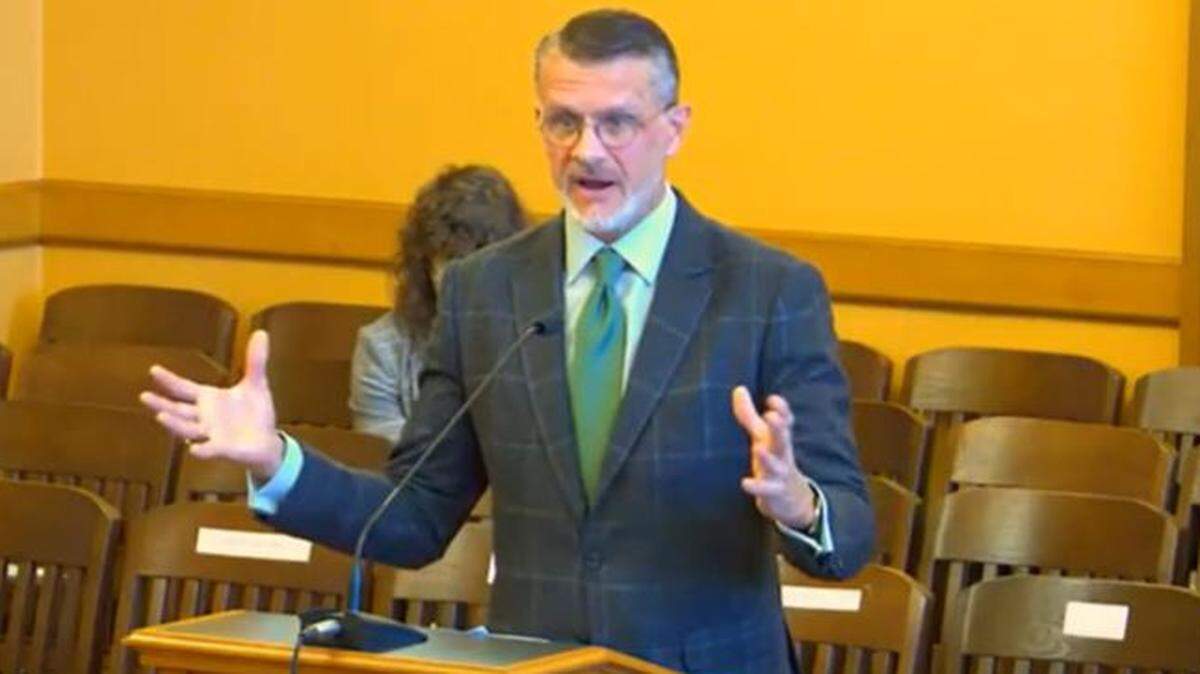
A Texas company trying to establish in Kansas a new way to quickly provide wealthy investors with cash closely collaborated with state officials to develop the regulations their business will follow — all while showering elected officials with campaign cash.
The company, Dallas-based Beneficient, has promised the financial tool it’s creating will allow rich individuals to receive loans against their investments and, at the same time, generate revenue for much-needed projects in rural communities. That work could begin in Hesston, a city of 3,500 north of Wichita where the mayor hopes to build a new grocery store.
Beneficient quickly convinced legislators last spring to pass a bill, signed by Gov. Laura Kelly, allowing the company to set up shop in the state. Although a few questioned the arrangement, legislators were overwhelmingly supportive.
But the CEO is now facing allegations that he engineered a scheme to enrich himself at a company that, until last fall, had control over Beneficient.
Chairman and CEO Brad Heppner, as well as several members of Beneficient’s board of directors, are defendants in a federal lawsuit accusing GWG Holdings and officials at that company of misleading investors. GWGH sold hundreds of millions in bonds that are now, the suit alleges, “virtually worthless.”
GWGH has paused payments to investors and is under investigation by the Securities and Exchange Commission, according to company statements. Beneficient was a subsidiary of GWGH until late November, when they were legally separated, at least partly in response to concerns raised by Kansas banking regulators.
The companies still share two directors, according to their websites, and Heppner previously chaired GWGH’s board of directors. Six members of Beneficient’s nine-member board are defendants in the lawsuit, filed last month in Texas by two investors.
Beneficient called the lawsuit “baseless.” In a statement, the company said GWGH has no involvement in the management of Beneficient or legislation creating the new financial tool, called a Technology Enabled Fiduciary Financial Institution, or TEFFI.
Kansas lawmakers easily approved a bill last year authorizing Beneficient to obtain a banking charter, with unanimous support from the Senate and a strong bipartisan majority in the House. Gov. Laura Kelly signed the measure into law.
At first, Beneficient’s TEFFI operated as a pilot project, part of a temporary state-sanctioned monopoly on the market while regulations were created. According to the Kansas bank commissioner, the pilot project ended in December.
By the end of February, $357 million had been invested in the TEFFI, according to Beneficient, with $15 million set aside for community investment.
The TEFFI allows rich individuals to receive loans against assets difficult to quickly convert into cash, such as trusts or hedge funds. Proponents say this kind of financing was often previously unavailable unless you were a large institution. A leading trust expert said traditional trust law doesn’t allow these kinds of loans because they are difficult to regulate in a manner that ensures companies are acting in the best interest of beneficiaries.
Beneficient makes money by charging interest and fees on the loans. Kansas receives revenue by charging its own fee, with the money earmarked for rural communities.
The company, company officials and family members last year donated more than $50,000 to the campaigns of lawmakers and candidates for governor. They collectively donated at least $22,000 each to Kelly, a Democrat, and Attorney General Derek Schmidt, the presumptive Republican nominee for governor.
Company officials also contributed to the campaigns of key lawmakers who work on financial issues, including Rep. Jim Kelly, an Independence Republican who chairs the House Financial Institutions and Rural Development Committee, and Sen. Jeff Longbine, an Emporia Republican who chairs the Senate Financial Institutions and Insurance Committee.
Rep. Stephen Owens, a Hesston Republican and the most vocal TEFFI proponent in the House, also received campaign donations, along with House Speaker Ron Ryckman, an Olathe Republican.
TEFFI supporters say Kansas has the chance to be the site of a new innovation in the world of finance. TEFFIs will fund positive changes in rural areas, they say, at very little risk to taxpayers.
Lawmakers gave Beneficient wide latitude to partner with the Office of the State Bank Commissioner in crafting the rules governing what lawmakers hope will become a burgeoning new industry. Under a plan approved by the Legislature, Beneficient paid the bank commissioner’s office $1 million to fund the agency’s development of TEFFI regulations.

The few vocal critics of TEFFIs are alarmed by the degree of coordination between Beneficient and regulators. They are suspicious of claims the venture is truly risk-free to Kansas and concerned by the SEC investigation into GWGH. A leading expert on trust law also said the arrangement with the bank commissioner appears to go against best practices.
“The promises that they were making the Legislature in order to get the initial legislation and the promises they continue to make … they appear to be at a scale that is not commensurate with what you would expect,” Rep. John Carmichael, a Wichita Democrat, said.
“Sometimes people like that are known as promoters and sometimes promoters with a wallet get heard in the Legislature.”
Derek Fletcher, Beneficient’s president and chief fiduciary officer, said the company “collaborated closely” with the Office of the State Bank Commissioner, the Kansas Bankers Association and the American Bankers Association — as well as “various law firms” — to establish regulations.
Bank Commissioner David Herndon said it is unusual for a company to be so involved in the development of the regulations they will work under. However, he said the process is necessary because of how new the industry is.
“This is a little bit outside the traditional realm of the safety and soundness examination,” Herndon said.
Owens rejected the idea that Beneficient should have had a more limited role. He compared its involvement in the process to criminal justice reform advocates’ drafting reform legislation.
“You can’t review a TEFFI the way you review a bank,” Owens said. “That’s where there is the pilot program to work out all those rules and regs to come up with what language makes sense.
“That is hopefully the bank commissioner’s responsibility to ensure the principles applied for that industry are what is necessary.”
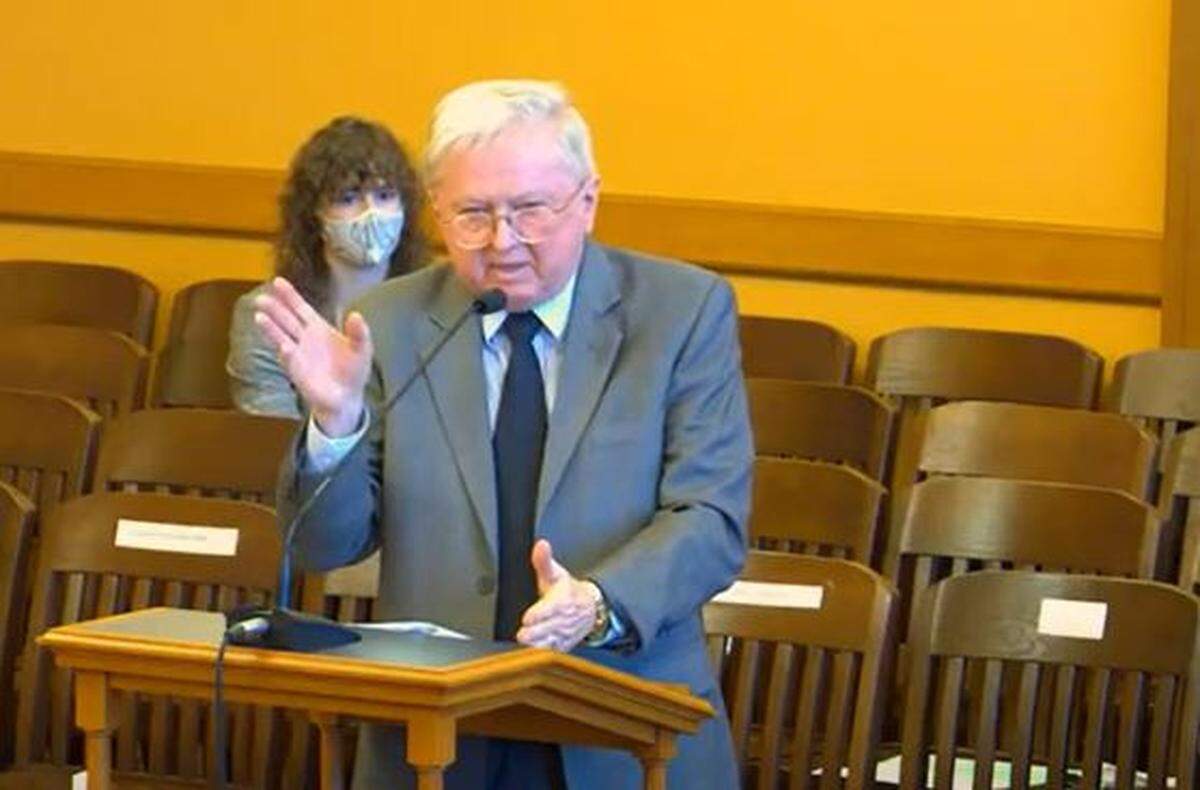
Fletcher said in an email the program was designed to create a comprehensive industry beneficial to Kansas, not to benefit one company.
“The TEFFI Act will first and foremost benefit customers and the people of Kansas,” Fletcher said. “The legislation was designed to create trust companies that operate under a fiduciary standard and that customers can trust as regulated entities that are focused on safety, security, soundness, and the overall best interest for the customer.”
Steward Sterk, a Yale Law School professor who specializes in trust and real estate law, said best practices dictate Kansas should involve consumer groups or industry experts aside from Beneficient in drafting the law. Involvement from interested companies, he noted, isn’t uncommon in drafting trust law and it is difficult to find consumer advocates for high net worth investors.
However, Sterk said the risk is relatively low to the state even if the TEFFI law is tilted in Beneficient’s favor.
Kansas tax dollars don’t appear at risk. And even if Beneficient’s TEFFI implodes, the state hasn’t used its own funds to set up the TEFFI or provide capital for it.
“This is one of those disputes of the rich against the rich,” Sterk said. “If there’s any risk, the risk is largely going to be to people outside of Kansas, which is why this is attractive to states that don’t necessarily have a huge population of big investors.”
L bonds lawsuit
Even as Beneficient works to grow its new TEFFI business, its CEO and other board members face a federal lawsuit from GWGH investors demanding their money back.
California residents Shirin Bayati and Mojan Kamalvand purchased $50,000 and $35,000, respectively, of L bonds from GWGH. The two filed a lawsuit in U.S. District Court for the Northern District of Texas on Feb. 18 and are seeking class action status.
L bond are a type of high-yield bond created and sold by GWGH.
“I’ve been contacted by dozens of investors who have invested a substantial portion of their retirement in L bonds. There’s significant concern about what’s happening with the company and we look forward to representing them in this case,” said Adam Polk, one of the attorneys representing the plaintiffs.
The lawsuit names GWGH, Heppner and nine other defendants. In addition to Heppner, five other defendants sit on Beneficient’s board: Peter T. Cangany Jr., Thomas O. Hicks, Dennis P. Lockhart, Bruce W. Schnitzer and David H. De Weese.
The suit alleges Heppner engineered GWGH’s L bond distribution platform “so as to enrich himself,” leaving the company insolvent and the bonds virtually worthless. The suit alleges Heppner defrauded GWGH and investors “in a scheme that would inevitably collapse.”
In public filings, GWGH has disclosed that since October 2020, the company has received multiple subpoenas from the SEC. GWGH said in a November 2021 filing that the SEC is seeking information primarily related to its investment products, including L bonds, as well as “various accounting matters.”
According to the company, that includes “the consolidation for financial reporting purposes of Beneficient” by GWGH. The lawsuit alleges that between 2018 and 2019, GWGH transferred more than $359 million in cash to Beneficient and its subsidiaries and issued $366 million in L bonds to a Beneficient subsidiary.
“These transactions culminated in GWGH’s consolidation of ownership and control of” Beneficient, the suit says, alleging that “a substantial percentage of the cash proceeds were not used for their stated purpose.”
Beneficient announced on November 29 that it had become a fully independent company and had eliminated GWGH’s right to appoint members to Beneficient’s board.
In December, GWGH said there was “substantial doubt about GWGH’s ability to meet its financial obligations” over the next year. In a January 24 letter to investors, CEO Murray Holland wrote that Grant Thornton LLP no longer wanted to be the company’s independent registered public accounting firm.
Since January, GWGH has paused interest, maturity, dividend and redemption payments on L bonds. A GWGH spokesman declined to comment on the lawsuit, saying the company doesn’t comment on pending litigation.
But Carmichael, the Wichita Democrat, said “the existence of these types of allegations should be a strong message to the Kansas Legislature that we need to do our due diligence and we need to do our investigation.”
A Google search of “L bonds” or “GWGH” now produces ads for law firms aimed at investors who lost money.
“This was sold as being a relatively safe investment with modest returns,” Jake Zamansky, an attorney who specializes in securities and investment fraud, told Investment News.
“We’ve been contacted by at least half-a-dozen investors with hundreds of thousands of dollars each invested in this product” who want to file arbitration claims, he said.
In a statement, Beneficient dismissed the lawsuit’s claims as baseless and unrelated to their work in Kansas.
“Ben is a profitable, independent company with a strong balance sheet that is laser-focused on serving the growing market of investors seeking regulated fiduciaries that provide liquidity, custodial and administrative services for their alternative assets,” the statement said.
“This lawsuit is completely baseless, as will be demonstrated in court. All risks associated with L Bonds were fully disclosed and none of Ben’s Directors, including Mr. Heppner, were involved in GWG’s decision to invest in Ben. As a separate entity, GWG has no involvement in the management of Ben’s business or the TEFFI legislation.”
Longbine, the Emporia Republican who chairs the Senate Financial Institutions and Insurance Committee, said he was confident the TEFFI legislation had been thoroughly vetted by lawmakers, despite the allegations against Heppner and GWGH.
“It’s important to watch the court case and see what happens,” Longbine said. “Lots of times accusations are made that aren’t necessarily factual.”
Kelly, the Independence Republican who chairs the House Financial Institutions and Rural Development Committee, said he believed proper safeguards were in place to allow the bank commissioner to act if the lawsuit and SEC investigation finds serious concerns tied to Beneficient and TEFFIs.
“I think there’s some good guardrails on it that will help us watch all of it before things expand,” Kelly said. “Set up as a pilot I think it makes things comfortable to watch to see if everything works.”
Sen. Jeff Pittman, a Leavenworth Democrat who supported the program, said the existence of the lawsuit posed a concern but he believed the bank commissioner had set good safeguards in the TEFFI regulations.
“I do know that the OSBC did not work with them to enable it but more ‘how do we build safeguards and understand that better,’” Pittman said. “I think they acted very independently, under some pressure though from the Legislature.”
Hesston roots
Beneficient’s effort to turn Kansas into a TEFFI destination first took root in Hesston.
Heppner, a Hesston native, approached Mayor David Kauffman in September 2020, then brought the idea to Owens, the Republican legislator representing the city, that December.
Owens became one of the bill’s most vocal proponents. The Legislature approved the program and established a committee to oversee it in just one session — a quick timeline for a Legislature that can spend years on major changes to policy.
The vote in the House was 103-20 and 39-0 in the Senate.
In addition to funneling 2.5% of each investment into rural communities, Beneficent offered to put up the $1 million Kansas wanted to pay for the creation of a regulatory framework and hire staff in the bank commissioner’s office to manage the project.
The law gave the state banking board until the end of 2021 to draft and implement regulations so Beneficient could begin doing business, first as a pilot project involving a conditional banking charter. When regulations were established and Beneficent was granted its full charter, Herndon said, the pilot project ended and the market opened up to other businesses.
TEFFIs don’t lend themselves to many traditional measurements of soundness that regulators would typically use to size up a new bank before granting a full charter. Because of that, Herndon, the bank commissioner, said in the fall all he could provide was a pass/fail grade as to whether the company has complied with state law.
Beneficient told lawmakers that existing investors wouldn’t invest if the company had not earned a full charter. As a result, the company said, it would never have the business needed for the banking commission to complete a full examination.
In the process of obtaining its charter, Beneficient underwent a financial review by the bank commissioner. Fletcher said in an email that the company submitted more than 100 documents to the state during the review process.
Fletcher said Beneficient “consulted closely” with the bank commissioner and other industry partners to develop rules mutually beneficial to the state and potential industry members.
In a December interview, Fletcher said the pilot program provided a forum for a “public-private partnership” with Beneficient partnering with the OSBC.
“We’ve had dialogue. They’ve been very collaborative and very professional and obviously they have a job to do and there’s learning on both sides,” Fletcher said.
The Legislature is currently weighing amendments to the TEFFI law that would change how the bank commissioner conducts examinations.
The bank commission had proposed provisions that would govern what happens if a TEFFI fails and how solvency for a TEFFI would be defined. Following negotiations with Beneficienct, the language was removed.
Representatives of the bank commissioner and Beneficient told lawmakers they had agreed to revisit the issue after the agency completed its first examination of Beneficient. Remaining provisions of the bill do add some reporting and disclosure requirements for TEFFIs.
Owens has characterized the project as a no-lose situation for Kansas with the majority of the risk falling on Beneficient.
“Anytime you have something like this it often takes one leader in the industry that is willing to come in and take the risk and do the work,” he said last year.
He remained unconcerned after learning of the lawsuit against Heppner and other Beneficient board members.
“Anybody can sue anything for any reason that doesn’t mean there’s validation or reason to it. I’m not overly concerned; we’ll let the court sort it out,” Owens said.
“The legislation we passed here has zero impact on the taxpayer. It has zero impact on the citizens. It’s not like we’ve given them any incentives or put any taxpayer money at risk by passing that legislation.”
Beneficient has opened an office in Hesston and is working with a 13-member board to determine where to send the $12.3 million allocated for community reinvestment. Owens said in early March excitement was starting to build for a new grocery store.
This story was originally published March 17, 2022 at 2:58 PM with the headline "After KS welcomed financial firm, CEO accused of defrauding investors at past company."