28 companies hijacked 200,000 homes’ worth of natural gas during Kansas freeze disaster
Twenty-eight large natural gas users hijacked gas intended for regular customers – enough to heat about 200,000 homes – during last winter’s freezing weather disaster, according to state records.
Now, Kansas regulators are poised to forgive hundreds of millions in potential penalties for it.
The select group of gas marketers and commercial/industrial customers took more gas from the Kansas Gas Service system than they were entitled to during Winter Storm Uri in February of last year.
They could have faced a theoretical maximum of $888 million in gas costs and penalties.
But that amount has been bargained down to $65.4 million in repayment for the misappropriated gas. The price is heavily discounted from the extremely high spot-market gas prices that prevailed during the emergency.
And hundreds of millions of dollars in potential penalties for violations of state regulations have been waived.
The Kansas Corporation Commission will decide in the next three weeks whether to accept the negotiated settlement.
Meanwhile ordinary customers will be paying off more than $300 million in debt from the freeze for up to a decade.
Higher bills and a secret
All Kansas Gas Service customers have a stake in this issue. The smaller the settlement, the more ordinary customers will have to pay.
About two weeks ago, the commission approved a financial plan for KGS to recover $366 million in costs for gas during the emergency, when gas was selling at 100 to 200 times the normal price.
KGS and KCC officials estimate that will add $5 to $9 a month to ordinary customers’ bills for the next five to 10 years. It will be a flat charge for all customers because daily gas prices fluctuated by hundreds of dollars day to day during the disaster, and it’s impossible to determine precisely who used how much gas and when.
The identities of the companies that misappropriated gas during the disaster is a state secret, blacked out of public documents in the case.
But a careful reading of the information that is publicly available indicates that Kansas’ largest gas marketer, Houston-based Symmetry Energy Solutions, took the most during the emergency and could have been liable for more than half a billion dollars in penalties.
Symmetry was the last company to join the settlement — and only after KCC staff agreed to discount their settled gas cost from $32.1 million to $26 million.
“Staff agreed to this reduction in Symmetry’s financial obligation . . . because that is the maximum amount that we could get Symmetry to agree to in negotiations,” according to written testimony filed by Justin Grady, the KCC’s accounting chief.
Symmetry held leverage because if the settlement wasn’t unanimous, it would have to be litigated at the commission and possibly in court, which could take years.
Even one year of litigation and appeals could cost KGS and its regular customers $6.3 million in charges on the debt KGS is carrying while the case is resolved — $200,000 more than Symmetry is getting from its latest discount, Grady testified.
Symmetry is already facing more than $100 million in lawsuits, including a nationwide class action suit in Texas alleging price gouging during the February 2021 storm, Grady said.
In the Kansas settlement, Symmetry will pay KGS $8 million up front and provide a corporate guarantee to pay the rest of its $26 million liability over four years.
Symmetry officials did not return a phone message seeking comment.
Historically, the commission has been reluctant to reject or amend unanimous settlements recommended by its staff.
Although Symmetry has joined the settlement, it’s reserving the right to go back to litigating the case “in the event that the Commission rejects . . . or makes material modifications to the Unanimous Waiver Settlement,’’ according to a written filing by its lawyer, Frank Caro.
Earlier in the case, Symmetry argued that KGS hadn’t been prudent enough in its purchases of gas to cover the emergency needs and that the overall $366 million in extraordinary costs should be reduced.
“Any such reduction in KGS’s total gas costs would necessarily affect the amount KGS could reasonably seek to recover from marketers like Symmetry in the Waiver Proceeding,” Caro wrote in a January filing in the case.
KGS lawyer James Flaherty argued that Symmetry’s “attack on KGS’s gas purchasing practices was contemptible” and said in the filing that the company bought what it needed to avoid service interruptions.
Two kinds of customers
To fully understand the situation, you need to understand that there are two kinds of gas customers on the KGS system:
▪ “Sales” customers buy gas directly from the utility. Generally homes and small- to medium-sized businesses, they represent nearly all of KGS’ 640,000 customers.
▪ “Transportation” customers buy their gas on the open market and pay to have it delivered through the KGS system. There are about 6,200 transportation customers, including businesses, schools and hospitals. Transportation customers can obtain their own gas directly from well operators, but most buy it through marketers specializing in such transactions.
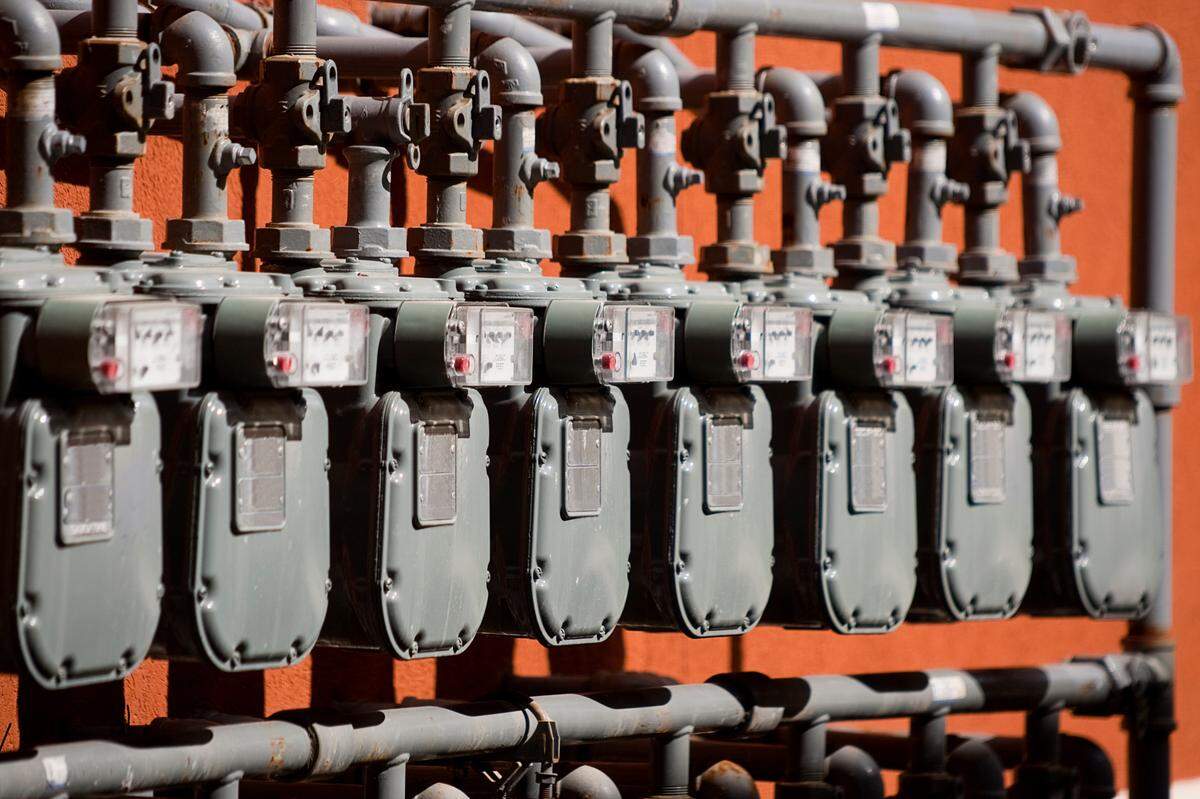
While they are few in number, transportation customers account for about 54% of the gas that moves through the KGS system.
By buying gas directly and paying KGS to deliver it, they can usually save about 20% to 30% compared to buying gas from the gas company.
Transportation gas is delivered by interstate pipelines to what are called “city gates,” where KGS takes over for the final delivery.
State regulations require transportation customers and marketers to deliver enough gas into the KGS system to make up for what they take out.
When they take out too much during a disaster, it can be disastrous.
“The actions of marketers and individually balanced transportation customers during winter storm Uri threatened the integrity of the KGS system and jeopardized KGS’ ability to serve the needs of its gas sales customers,” KGS lawyer Kelly Daly said in a hearing on the penalty settlement.
The shortage of transportation gas stressed the KGS system to nearly a breaking point, but the company was able to get enough gas from other sources to cover the shortfalls without interrupting service to any customers, Daly said.
According to a KCC chart released at a Feb. 4 hearing, transportation customers and marketers took out 223,000 decatherms more gas than they put into the system during the nine days of the emergency.
Each decatherm was approximately enough gas to heat a typical Wichita single-family home for the entire month including the winter storm.
Penalties waived
When transportation customers take more gas than they put in during a gas emergency, they’re required by a regulatory tariff to pay the spot market price for the gas, plus a penalty of 2.5 or 10 times the cost of misappropriated gas. The multiplier depends on the severity of the emergency.
The penalty money doesn’t go to the gas company, but would be flowed through to the company’s sales customers because the gas that was taken actually belongs to them, Daly said.
For Winter Storm Uri, the total gas costs and multipliers, if fully enforced, would have exceeded $888 million, Daly said.
KGS agreed early in negotiations that would be unreasonable, given the extent and nature of the storm. So the company filed a motion with the KCC asking commissioners to waive the multipliers.
Assessing the penalties would have resulted in many of the marketers and transportation customers “declaring bankruptcy and/or being unable to pay the large penalties,” said testimony filed by Janet Buchanan, KGS’ director of rate and regulatory affairs. “This would have had a detrimental impact on the Kansas economy and businesses operating in Kansas.”
KCC staff, which advises the commission, also supported the waiver.
“The cold weather that we experienced, the duration of that cold weather and supply deficiencies that resulted when wells were freezing off because of that weather and the incredible pricing volatility that occurred, it became apparent that something other than the business-as-usual approach to penalty calculation and implementation needed to take place,” KCC lawyer Terri Pemberton said in a Feb. 4 hearing.
Although the total penalty calculates out to $888 million, that’s not on the table and never really has been, said David Nickel, the state’s utility consumer counsel.
Charging the full penalty would actually exceed the extra amount that KGS had to spend for gas for all its customers during the crisis, which would be an unreasonable and unlawful windfall for the sales customers, said Nickel, executive director of the Citizens’ Utility Ratepayer Board, the state agency that represents residential and small-business utility consumers.
CURB supported waiving the multipliers, but thinks the current settlement proposal may be too generous to the marketers and transportation customers. The agency didn’t sign on to the current settlement, but doesn’t oppose it either because the longer it goes on, the worse it could become for the sales customers, Nickel said.
Just waiving the penalty multipliers would have resulted in a $117.2 million liability for the transportation customers and marketers, based on daily spot-market rates for gas during the emergency, Daly said.
Of the $65.4 million they’ve agreed to pay for the misappropriated gas, $52.4 million will go to sales customers and $13 million to gas marketers who put more gas into the system than they took out on some days during the emergency.
Incredibly high prices
Before the cold snap, gas was selling on the spot market around $3 per decatherm.
Spot-market prices at the height of the emergency peaked at $622.79 for the same amount of gas, more than 200 times the price just a couple of weeks before.
To get a settlement, KGS and KCC negotiators agreed to charge the transportation customers and marketers the same price that sales customers were paying for gas during the storm.
That made it significantly cheaper for the marketers and transportation customers, because much of the sales customers’ gas was purchased before the winter storm at lower prices.
So instead of paying the spot price of $622.79 per decatherm for gas used on Feb 17, the transportation customers and marketers will pay $347.62 under the settlement.
For Feb. 13 through 16, when the index price was $329 per decatherm, they’ll pay between $259 and $269.
A KCC settlement is considered unanimous when none of the involved parties oppose it.
Despite its non-opposition stance, CURB isn’t particularly pleased with the settlement, in part because of the 93% violation rate among the transportation customers and marketers during the winter storm.
“Twenty-eight out of 30 of them violated (the regulatory tariff) on one or more days,” Nickel said.
KGS doesn’t make money on the price of gas, which is passed along directly to the sales customers.
But when KGS buys gas for those customers, it often pays a premium price to lock in supplies in advance to prevent shortages and price shocks that can come amid fierce winter weather.
Nickel compared the marketers’ and transportation customers’ situation to not paying for car insurance but expecting to get bailed out after a wreck.
The premiums for guaranteed gas pile up “month after month, year after year,” he said. “I have trouble explaining to a low-income (sales) customer why their premium didn’t count.”
Another potential problem Nickel cites is “moral hazard,” the possibility that a too-generous settlement could encourage bad behavior in the future.
“Do we really want to provide a precedent that may lead to transportation customers defaulting on their obligations in order to get a better price? he said.
He said he’s somewhat reassured on that because KCC staff has been adamant that this settlement is a one-time deal.
Despite the misgivings, “CURB believes there are benefits that flow out of this unanimous settlement agreement that inure to the benefit of our sales customers,” Nickel said.
The biggest benefit is that a unanimous settlement can bring the case to an end quickly and reduce the amount of interest that customers will eventually have to pay.
“It adds certainty, it provides a clearer path to use of low interest bonds (to spread out sales customers’ payments), therefore we do not oppose the unanimous settlement agreement,” he said.
The KCC has committed to issuing a decision on the settlement agreement by March 7.
This story was originally published February 20, 2022 at 4:19 AM.