As Kansas lawmakers gather to fight COVID-19 vaccine mandates, some want to go further
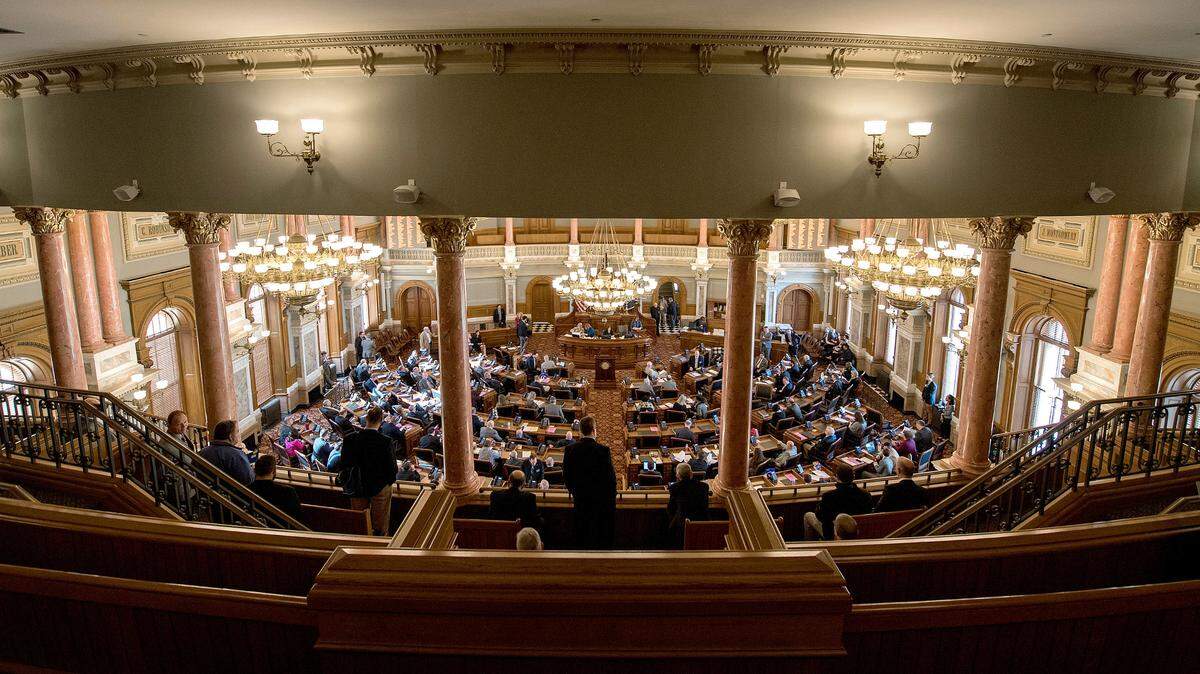
After President Joe Biden announced a series of federal rules to boost COVID-19 vaccinations earlier this fall, Kansas Sen. Mark Steffen circulated a petition to call the Legislature into special session to fight back.
The first petition failed to gain support, but just a few weeks later, the Hutchinson Republican is getting his wish. Another petition, this one backed by GOP leaders, won the signature of every Republican lawmaker.
As they convene Monday, rank-and-file legislators say they’ve been assured by top Republicans that the session will be quick — limited to a couple of specific measures. One would ensure unemployment benefits to workers fired for refusing to get vaccinated. The other would make it easier for those under a mandate to opt out.
But Steffen, an anesthesiologist, and other hard-right conservatives want to take the fight beyond COVID-19. They seek to reopen debates over rules and mandates for other vaccines, which have typically enjoyed overwhelming support.
Steffen plans to introduce a bill in January that would ban all business or government vaccine mandates and block any new additions to the childhood vaccine schedule. During the special session, he said, he will push to expand exemptions for conscientious objectors. In an interview, he spoke of building “a wall to solidify our rights.”
Public health experts, legislators and other officials fear that this week’s gathering will open the door to rhetoric that erodes public trust in vaccines. The convening of the special session gives the anti-vaccine movement, once considered a fringe peddler of medical misinformation, a major win that could motivate more rigorous efforts moving forward.
Though Steffen and his allies haven’t disclosed plans to push against other vaccines this week, the session may set the stage for explosive fights in next year’s regular session.
“While all of this is really probably coming from a place of legitimate concern with federal mandates, it has the potential to impact things that we’ve been able to accomplish as public health successes,” said Sarah Good, a board member at the Immunize Kansas Coalition, an organization focused on regularly-scheduled childhood vaccines.
“I think the power behind that train is the same power that’s kind of been behind the vaccine opposition population for years. They’re using COVID-19 and reservations about that to drive an agenda that they have outlined for years.”
In recent weeks, lawmakers have held fiery public hearings about Biden’s policies, which mandate COVID-19 vaccines for federal contractors and most health care workers. An additional rule — and the most contentious — requires large employers to ensure their workers are vaccinated or tested regularly. All three proposals are being challenged in court.
Lawmakers have also absorbed days of public testimony falsely calling a wide range of childhood vaccines unsafe and labeling all mandates an infringement on freedom. A small number of public participants even likened mandates to the treatment of Jewish people during the Holocaust.
Already, other state legislatures pushing back on COVID-19 vaccine mandates have reached beyond the pandemic. Last week, Ohio approved a bill establishing wide ranging exemptions for all vaccine requirements in schools, businesses and universities.
Nationally, school children are also falling behind on their vaccine schedules because of delayed medical appointments. Adriane Casalotti, chief of public and government affairs at the National Association of County Health Officers, said she worried that the delays could be compounded by hesitancy and new laws.
Current political debate, Casalotti said, has given the impression that genuine medical debate exists over the safety and efficacy of vaccines.
“We traditionally have had a very strong vaccine base in the country,” she said. “What is this going to look like in the next few years when folks are lifting up mis and disinformation?”
Narrow session promised
Legislative leaders have powerful parliamentary tools to thwart measures they oppose. They can instruct committee chairs not to consider them or tightly control what amendments can be offered during floor debate.
“Our hope is to address that immediate need and provide relief now so those families don’t have to face the holidays with the uncertainty that they could lose their livelihoods. Any additional agenda items will be looked at during the regular session in January,” Senate President Ty Masterson, an Andover Republican, said in a statement.
House Speaker Ron Ryckman, an Olathe Republican, noted that, while anti-vaccine bills had been brought to the Legislature before, they have never gained much traction.
“I would be opposed to undoing the progress our nation has made toward eradicating disabling diseases like polio and meningitis. But anytime a new vaccine comes on the market, I think people need adequate time to watch the data and reach a comfort level so they can make the best decision for themselves and their families,” Ryckman said in a text message.
But COVID-19 has transformed the politics around long-accepted vaccine and public health policy. Challenges are certain to emerge this year.
In addition to Steffen, who is promoting a “Patriots Bill of Rights” banning most mandates, Sen. Caryn Tyson, a Parker Republican, wants to ban contact tracing, an important tool health officials use to track and contain the spread of contagious diseases.
Sen. Richard Hilderbrand, a Galena Republican who chairs the Senate Health and Human Services Committee, said Kansas needs to take another look at who determines which vaccines are required in schools.
The secretary of the Kansas Department of Health and Environment currently has authority to add to the list of vaccines required for schoolchildren. Previous attempts to place that power with the Legislature have failed. But Hilderbrand said the situation is different now because of fear the COVID-19 vaccine would be required for students.
“We’ve seen the use of mandates and, depending on where you fall, I believe a not appropriate use of mandates,” Hilderbrand said.
The conservative senators said they think the prescribed plan for the special session doesn’t go far enough. Hilderbrand said he was unsure whether he would introduce amendments or new bills. Steffen said he planned to push for an addition to the bill on exemptions, allowing conscientious objectors to be excused from getting a vaccine.
By Sunday night, lawmakers had already amended the draft bill to expand the definition of religious beliefs to include non-theistic moral and ethical values.
Sen Pat. Pettey, a Kansas City Democrat, called the idea of pulling control of the vaccine schedule away from the KDHE secretary “scary.” A former teacher, Pettey started her career before the mumps vaccine existed. At the time, she said, teachers had to shut down their classrooms because of outbreaks.
“If you haven’t been exposed to it it doesn’t seem like it’s serious any longer,” Pettey said. “Yes it’s a different pandemic but we’ve been down this road before where we have outbreaks and we know we’re a country where we have the wherewithal and ability to prevent it.”
But COVID-19 and the Legislature’s response to it, Pettey said, has empowered anti-vaccine voices in the state. The same organizations that for years have called Pettey and other lawmakers to advocate for anti-vaccine legislation were at the forefront of the groups calling for the special session.
“Anytime you have a cause that gets a lot of attention then you’re going to feel that you’re empowered and that there are more people interested,” Pettey said. “It definitely makes sense that we’re going to reach beyond COVID-19 vaccinations and talk about all vaccinations.”
Less interest in House
House Republicans appear less interested in changing existing vaccine requirements.
Rep. Steve Huebert, a Valley Center Republican who held a hearing on removing control over vaccine requirements from KDHE in 2020, said he did not plan to return to the issue in the 2022 session.
In 2020, Huebert said, he was concerned about the procedure KDHE employed in adding to the vaccine schedule but said he was assured that the agency would go through a full hearing process moving forward.
Rep. Brenda Landwehr, a Wichita Republican and chair of the Health and Welfare committee, said she supported leaving the existing vaccine requirements alone.
“We look at the results with smallpox and with polio and other things and I think we have protected our country,” Landwehr said.
It’s a sentiment echoed by Rep. John Eplee, an Atchison Republican and a physician. He said that while he supports limiting federal COVID-19 vaccine mandates, he is concerned the special session risks undercutting confidence in other vaccines.
“We know how safe they are, we know the risk versus benefit ratio,” Eplee said, referring to non-COVID vaccines. “Everyone understands that. There’s no question about that.”
Alan Morgan, CEO of the National Rural Healthcare Association, said that overall, trust in vaccines has held steady in rural communities.
“A lot of opinions are being voiced and shared that are not majority opinions and in many cases are very minority positions,” Morgan said.
Good, with the Immunize Kansas Coalition, said the organization is most worried about continued ability of schools to require vaccines and for hospitals to require their staff receive an annual flu shot.
With its continued proliferation, misinformation about vaccines could gain increased acceptance and possibly change state law, Good said.
“The biggest fear is as concepts that are generally untrue or misleading or partial truth become repeated more frequently, they gain more legs and they become more prolific and more impactful.”
This story was originally published November 22, 2021 at 5:00 AM with the headline "As Kansas lawmakers gather to fight COVID-19 vaccine mandates, some want to go further."