Kansas lawmakers question impact of critical race theory, DEI on mental health
Kansas lawmakers are questioning whether critical race theory or related curriculum may be contributing to the mental health struggles of Kansas’ youth.
Critical race theory is a college and law school-level framework for evaluating the impact of racism on key institutions. There is no evidence that it is being taught in Kansas K-12 schools. But the term has been appropriated by conservatives nationwide to attack a range of diversity and equity initiatives.
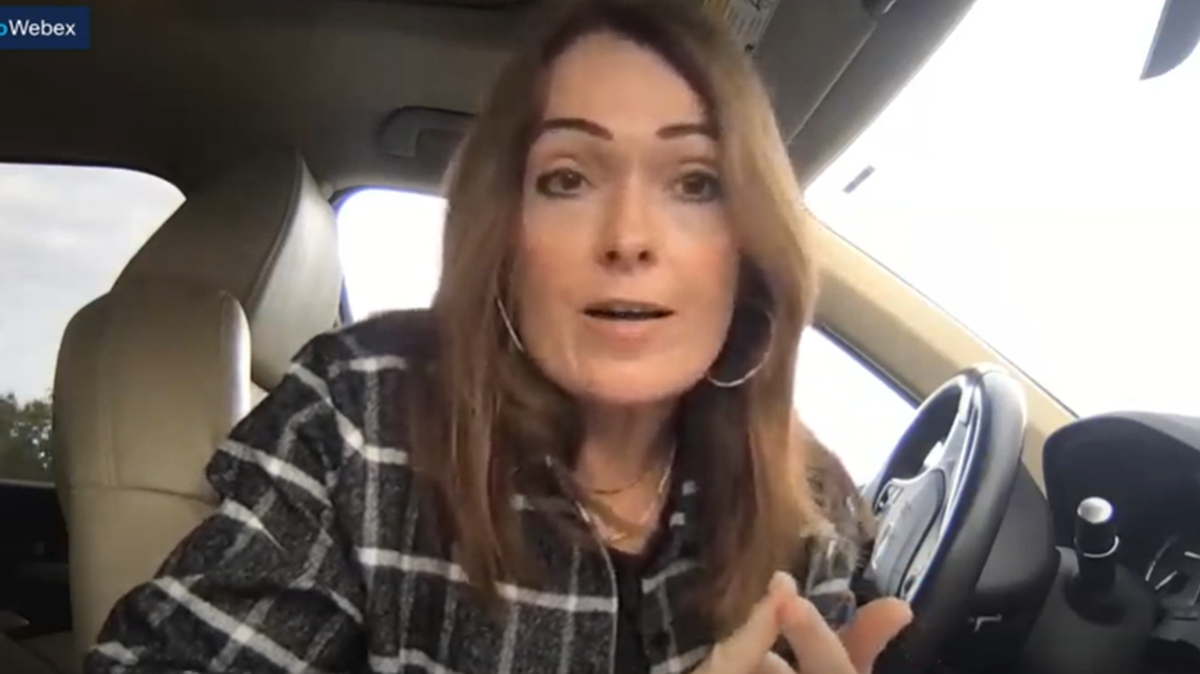
In testimony Thursday to a committee evaluating mental health in Kansas, Rep. Kristey Williams, an Augusta Republican, urged the panel to consider whether critical race theory was leading young white students to feel shame unnecessarily.
“If you are confronted with the fact that you because of the color of your skin are racist that can manifest shame,” Williams said.
Such feelings, William said, are unproductive when students have no control over the color of their skin or the past and when they are too young to fully understand the content.
Williams testimony comes before next Tuesday’s school board elections in Kansas, where conservative candidates in some districts have pledged to eliminate critical race theory from schools — even though there is no indication that it is being taught.
BEHIND THE STORY
MOREThe Bigger Picture: Critical Race Theory
Until recently, critical race theory was a body of advanced study discussed primarily in law schools beginning in the 1970s.
Developed by a group of Black legal scholars led by Harvard’s Derrick Bell and Kimberle Crenshaw, critical race theory is a response to what they perceived as the failure of the 1960s civil rights movement to bring about the kind of structural change it promised. CRT examines how racism and white supremacy remain embedded in essential institutions such as education, criminal justice, real estate and finance.
Nothing approaching the complexity of critical race theory is taught in most public elementary or secondary schools. Over the last couple of years, however, a network of conservative think tanks, activists and wealthy donors have seized on CRT and depicted it as an attempt by liberal educators to indoctrinate schoolchildren in an ideology of hatred for the U.S.
CRT has evolved into an umbrella term to denounce any attempt by schools to introduce more context to the uglier chapters of American history, such as slavery, Jim Crow and the treatment of Indigenous people. This distortion has spawned dozens of bills in state legislatures to eliminate an essentially nonexistent threat.
Concern over the concept has been a major conservative talking point in recent months. Kansas Attorney General Derek Schmidt pledged this summer to reject any teaching of critical race theory in schools if he’s elected Governor. Several Kansas lawmakers have indicated plans to introduce legislation banning what they view as critical race theory from Kansas classrooms.
In July the Kansas Board of Education issued a letter explaining that critical race theory is not in the state standards.
Despite this, Williams and other Republican lawmakers raised concerns Thursday about the impact of related teachings in schools.
“You don’t have to label them as critical race theory, that’s really unnecessary in the discussion,” Williams said in an interview with The Star. “What really is necessary is to look at the content. What is being taught. What kind of questions are being asked and how is that being inferred by the students.”
Williams said she is especially concerned about elementary and middle school children.
Rep. Brenda Landwehr and Sen. Renee Erickson, both Wichita Republicans, acknowledged that critical race theory is not in Kansas schools but said diversity, equity and inclusion efforts in schools could have the same effects.
“I don’t think you’ll see critical race theory formalized in curriculum but you see it in other ways in offices of diversity equity and inclusion,” Erickson said.
Mark Tallman, a lobbyist for the Kansas Association of School Boards, said he has not heard of districts seeing mental health impacts because of critical race theory or diversity-based curriculum. But mental health, he said, is a serious issue in Kansas schools.
“One of the concerns about critical race theory and programs that some feel are based on it is a feeling that it will result in group blaming or group shaming,” Tallman said. “What districts are saying is we’re already dealing with that with some of our students of different races for different reasons. So districts are struggling with how to reach these kids and help all their students.”
Sen. Tom Hawk, a Manhattan Democrat and former teacher, questioned how Williams wanted schools to address racism in history courses.
“I do think diversity is a good thing to teach because I think we do have a history of racism,” Hawk said.
This story was originally published October 28, 2021 at 2:29 PM with the headline "Kansas lawmakers question impact of critical race theory, DEI on mental health."