
Is city street funding fair? Mayor, council member want to pave south-side dirt roads
The city of Wichita is on track to spend $11.5 million on road repairs next year, but the mayor and a council member say the city should do more to pave roads in poorer neighborhoods, particularly south of Kellogg.
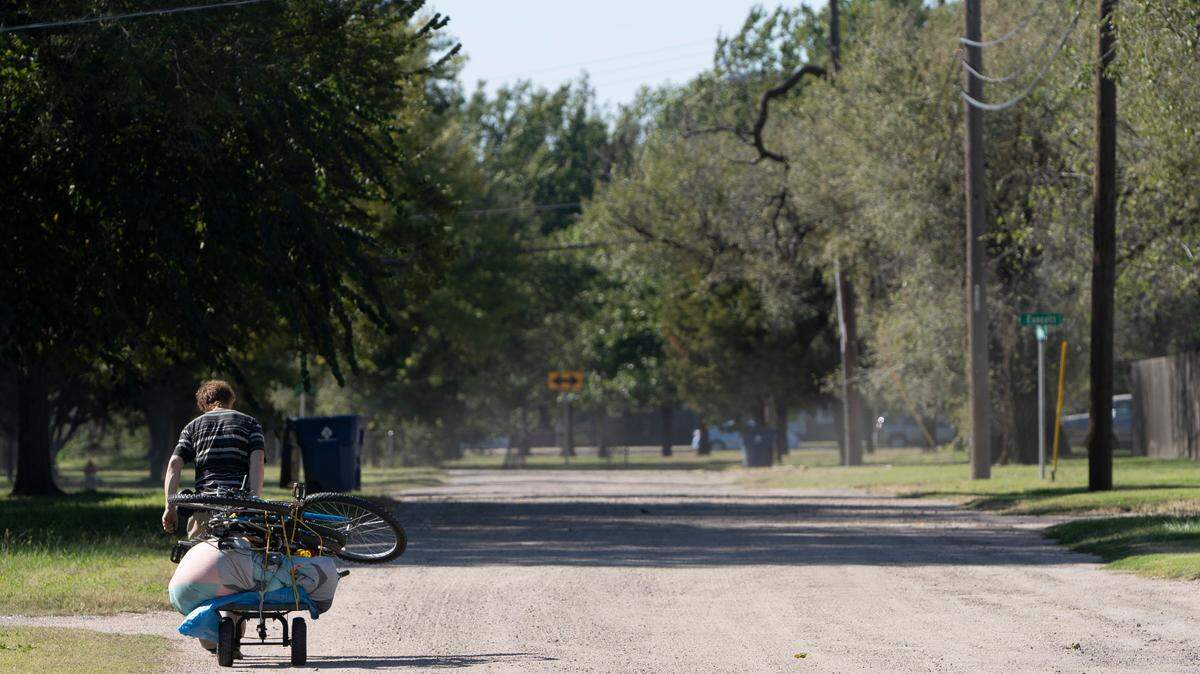
Wichita has roughly 100 miles of unpaved streets. Covering those roads in pavement requires property owners to undergo a lengthy and arduous process of gathering petition signatures and convincing neighbors to accept tax increases.
Wichita Mayor Brandon Whipple made his case for paving some of those unpaved streets Tuesday during the City Council’s debate over the city’s street-repair program. City Council member Jeff Blubaugh, whose district includes southwest Wichita, also spoke in favor of paving unpaved streets.
That could even out the percentage of money spent on road repairs and preservation in each district, Blubaugh said.
“There’s not as much road maintenance going on, not as much pavement preservation, because we don’t have the pavement down there,” Blubaugh said. “District 4 — it has a lot more streets than the rest of the districts. It’s just a lot more dirt (roads).”
The city has proposed funding pavement repair projects in proportion to the share of paved roads in each district, with District 2 receiving the most at 18.2% ($2.097 milion) and District 3 receiving the least at 14.1% ($1.626 million).
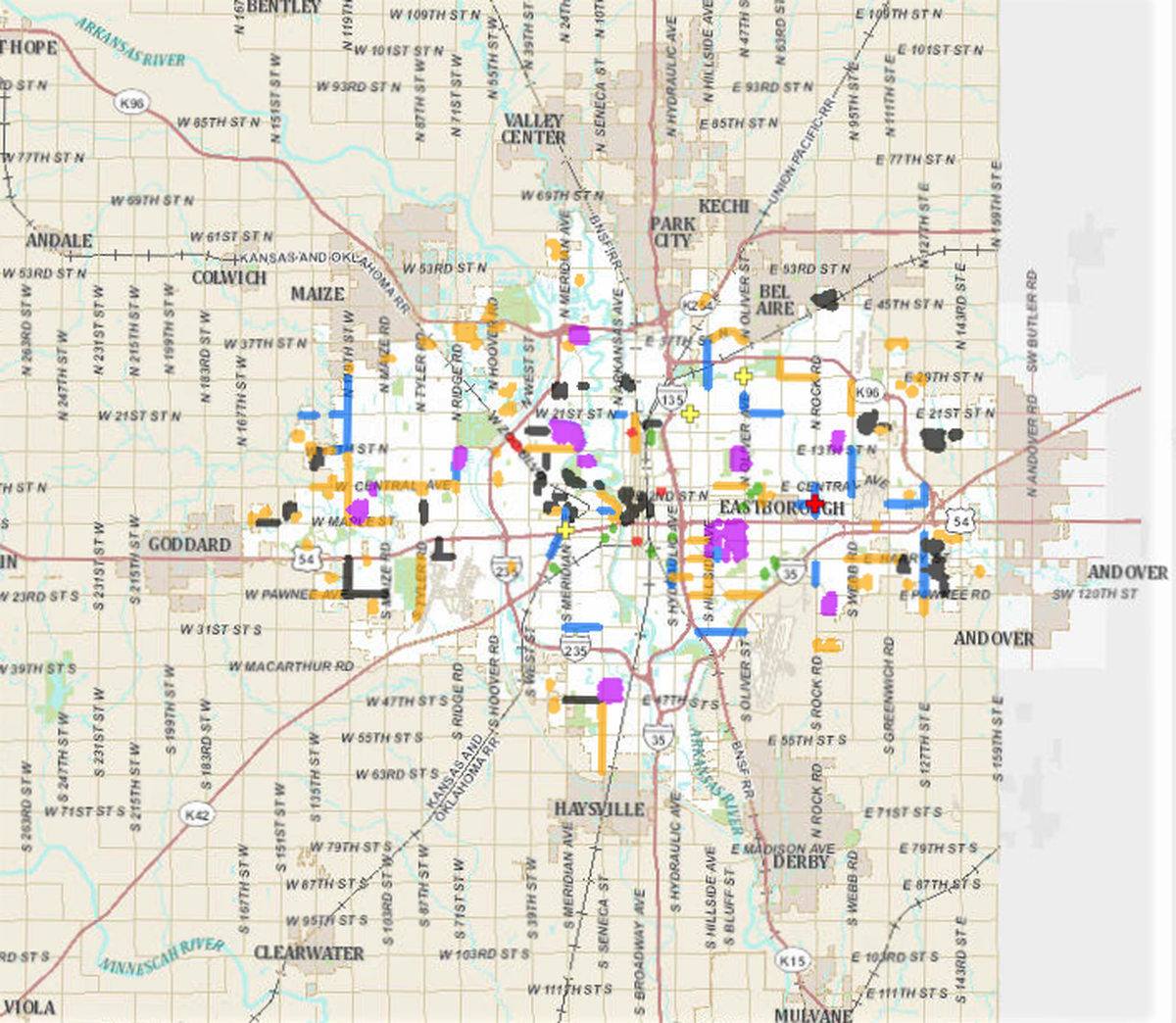
There’s also a difference between the kinds of repairs across districts, with 31.7% of the city’s resurfacing in District 2, which encompasses the area east of Woodlawn to the city limits. That’s more than District 3 (9.7%), District 4 (15.1%) and District 6 (4.9%) combined. District 3, in southeast Wichita, is also alone in receiving no money to seal cracked roads, compared to $170,000 in District 2.
Ben Nelson, assistant director of Public Works, said the difference in funding between districts can be explained by each district’s share of paved roads. District 3 has the fewest paved roads in the city and thus receives the lowest investment from the city.
Whipple said the disparity between districts could be addressed by paving more streets south of Kellogg — and using street maintenance funds to do it. It would be an attempt by the city to break a cycle of repairing streets in wealthier neighborhoods and neglecting those with less money, he said.
Using street maintenance funds to pave streets would be a major departure from the way the city has traditionally funded roads.
“I know that properties on dirt roads in the core of Wichita are likely worth less, they’re more of a health hazard, breathing in the dust with the air quality, and it’s more wear and tear on your vehicle, so that these folks are paying more vehicle repairs as well.”
“I know that where I live in District 3, there’s a lot of dirt roads, and, frankly, that’s going to keep home values down,” Whipple said. “That’s going to keep, really, opportunity down in that area. And if we have the budget and have been steadily increasing the maintenance of roads in other districts, is there any plan to move forward on trying to pave the roads that are within the city of Wichita?”
Nelson said the city has no such plan in place. Any such plan would require a change to the capital improvement plan approved each year by the City Council, which has primarily funded new road paving projects through special assessments paid by homeowners.
“This program has not in the past been designed to pave unpaved streets,” Nelson said. “How those generally have occurred over the years. . . . When neighborhoods have been built, special assessments that are paid by the homeowners that are benefiting for the paved roads are the ones who end up paying for it.”
“Decades ago, when some of these neighborhoods went in, there wasn’t a requirement to pave streets. And so there were never special assessments, and they never got paved.”
Nelson said the city has a process for paving roads, but it requires support from a majority of nearby homeowners and property owners.
“We’ve still got a process — our engineering division works on it every year where we help citizens who want to pave their streets, but it usually requires a majority of homeowners and property owners in those areas. But beyond that, we don’t have a specific CIP project for it. That would be a policy discussion at another date. Maybe during the CIP.”
City Manager Robert Layton said the city has studied the issue previously and found paving those roads would be “a pretty extensive cost.”
“If the city were to participate, that would be a significant difference in what we’ve done in the past,” Layton said.
Layton said he’s open to ideas for how to fund paving for roads that don’t have it. He said he would provide the council data from the city’s previous studies.
“I think there’s an opportunity to have a discussion about it,” Blubaugh said. “And as we look at these infill strategies, maybe there’s something we could start developing some of this out and get some new properties in there or renovate some existing properties and get it to where it’s not so cost prohibitive for the neighborhood to want to do it.
“It’s going to require some outside of the box thinking instead of just doing it the way we continue to do because we’re not doing it,” Blubaugh said.
This story was originally published October 19, 2021 at 4:43 PM.