Privatization of Century II and golf courses emerging as city budget issues
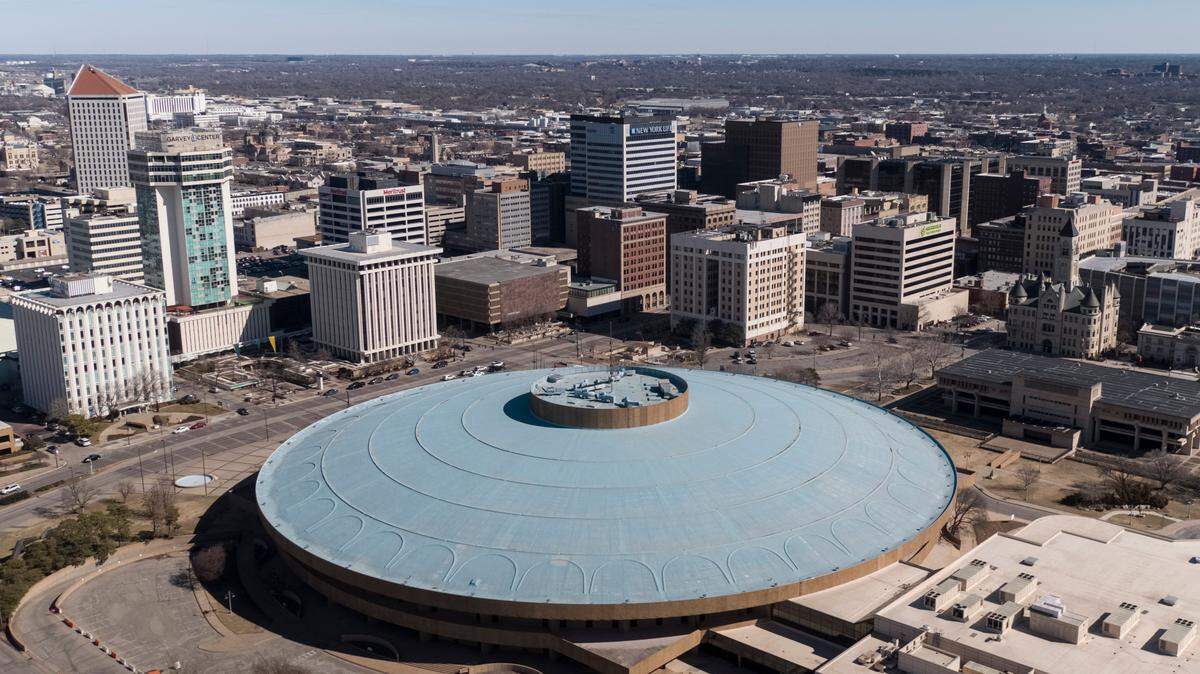
The annual release of the Wichita city budget foreshadowed a coming battle over privatization of two of the city’s major assets, the Century II Convention and Performing Arts Center and the city’s four golf courses.
The $670 million spending plan was presented Tuesday by City Manager Robert Layton and is due to be finalized on Aug. 24.
Tuesday’s meeting was technically the first public hearing on the budget. The document was posted online Friday, but despite the short turnaround time, Celeste Racette, leader of the Save Century II movement, delivered a fiery speech scoffing at Layton’s assertion that contracting for management of Century II and golf would reduce costs and enhance customer service.
Her Exhibit A was the Wichita Ice Center, which was privatized in 2012 and is managed in conjunction with the Genesis Health Club that shares the city-owned building.
“Enhanced customer service? Is that what you heard from the women who spoke to you on the agenda about the awful customer service at the Wichita Ice rink center?” Racette said. “They told you about broken scoreboards, plywood covering holes, mold on the walls, broken lights and broken shower heads.”
She promised to speak again at upcoming hearings.
There will be three. The next one will be a special evening session at 6 p.m. Aug. 5 to allow a chance for members of the public who can’t attend day meetings to weigh in on the city’s spending priorities. The other two will be at the regular 9 a.m. council meetings on Aug. 17 and Aug. 24.
Overall, the budget turned out better than anyone expected when they started the process just a few months ago.
City staff originally projected a $10 million to $11 million shortfall because of the COVID-19 pandemic. Those fears are now largely allayed, due to a $70 million infusion from the federal American Recovery Plan Act and unexpected increases in sales tax revenues.
That extra money will allow the city to fill a number of positions that have been kept vacant to save money. The first wave of hiring will include 139 civilian positions, and an additional seven police officers, the budget says.
The budget also includes a provision for a minimum wage of $15 for city employees. No one will be hired for less and current employees will be brought up to that level.
It will also allow the city to increase spending for street maintenance and repair to $163 million over the next 10 years.
ARPA funds will pay $13 million for two of four new police substations planned in the next 10 years and one of six fire stations planned in the same time frame.
Some $20 million in ARPA money will be set aside for community priorities, a roster of which is still developing.
The original proposed spending lists four: affordable housing, workforce development, small business assistance and smart manufacturing/digital transformation, essentially an update of automation in the local manufacturing sector.
The first three have proven popular in public engagement on the ARPA spending. The smart manufacturing has not.
Layton said the ARPA guidelines on that portion of the funding require evidence of public support of whatever the city undertakes and he can’t in good conscience recommend the smart manufacturing spending at this point.
Council member Brandon Johnson said he expects that to work itself out.
“This is the part of the process where people get to see what’s being proposed and let us know what they think is good and bad,” Johnson said.
Overall, he said it’s a pleasure to have money to plug holes and restore services instead of having to make further cuts in a budget that “has been skin and bones for so many years.”
“If we make a multi-million-dollar investment in affordable housing, I think that would be amazing,” he said.
The property tax mill rate will stay essentially flat for the 28th year in a row, at 32.749 mills.
But because of growth and rising property values, the city will exceed the state-imposed cap on overall revenue, which would essentially cap city income at last year’s level. That will require the city to make additional public disclosure reports on its spending increases before taking final action on the budget.
This story was originally published July 20, 2021 at 5:04 PM with the headline "Privatization of Century II and golf courses emerging as city budget issues."