Evictions went on in Kansas despite a ban. Will tenants see a new wave of displacement?
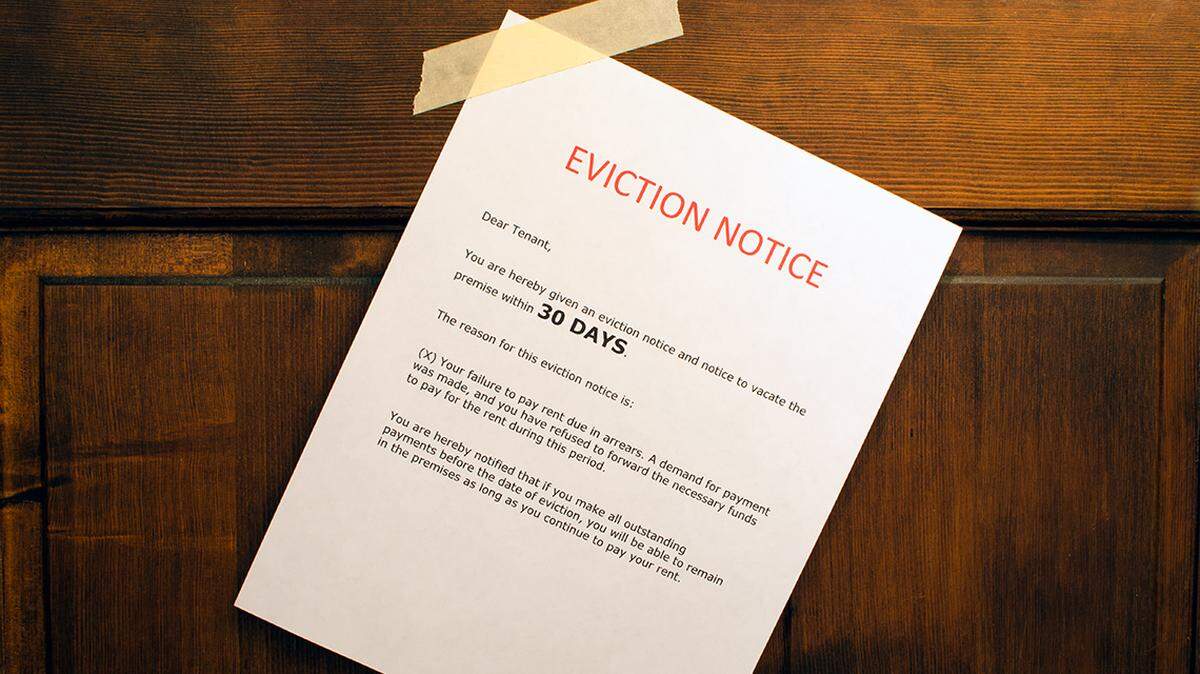
With two young children in tow, Ashley McClelland spent Wednesday moving her belongings out of her KCK apartment. She didn’t know where she was going to go yet but she could no longer stay.
The 39-year-old single mother has struggled financially since a COVID-19 outbreak at the warehouse where she worked. Pregnant at the time with her second child and diagnosed with an autoimmune disorder, she was forced to quit her job. Finding a new one, and child care for an infant, has proved difficult.
“I’m kind of just playing it by ear,” McClelland said. “I know the baby doesn’t know what’s going on but especially my daughter I don’t want her to feel worried or anything because she is a child, and I want her to stay a child.”
Gov. Laura Kelly’s executive order banning evictions was still in place in April when McClelland’s landlord began sending her notices. That pause ended last week (a federal ban, imposed by the CDC, is in place until the end of this month for those eligible). But community aid and tenant advocacy groups said they don’t expect a statewide spike in evictions. That’s partially because formal and informal displacements, like McClelland’s, have continued throughout the pandemic.
Vince Munoz, an organizer for Rent Zero Kansas, said the machinery of eviction was never truly halted by state or federal moratoriums, leaving tenants in a constant state of uncertainty during the public health crisis.
“In most places they’re allowing the evictions to be filed and even if the tenant claims the protections of the executive order it’s only a delay in the process,” Munoz said. “It doesn’t wipe the eviction clean, it just says we will push the date of the hearing past the expiration of this executive order.”
The moratoriums helped McClelland stay in her home for months. But in late May, her landlord insisted that the prohibitions had expired and told her to be out by June 1 or taken to court.
McClelland had some resources to help stay in the apartment. But she said the Puckett Pointe complex near Rosedale Park refused to accept grant dollars offered by the Kansas Emergency Rental Assistance program. The property manager, Lana Latham, said a new owner declined and opted to evict her because she had moved slowly to seek assistance in the past.
“The new company didn’t want to proceed forward with her because this has been an ongoing issue since November,” Latham said.
McClelland believed her landlord was wrong, that evicting people who couldn’t pay rent for COVID-19 related issues was still illegal, but she didn’t want to risk a court-ordered eviction so she moved out.
Her landlord, she said, told her she wouldn’t owe back rent because they want the best for her.
“But how can you want the best for me and my daughters when you want us out on the streets?” McClelland asked.
Evictions still happened
Statewide data on evictions is not tracked or easily accessible. But in Sedgwick County, one of the state’s largest, many evictions have moved forward in the last few months despite the moratorium.
The first Kansas eviction ban expired at the end of May 2020. In June last year, evictions in Sedgwick County jumped again — from just 61 filings in May to 425. That nearly reached pre-pandemic eviction filings from the same period in 2019.
A filing does not necessarily mean the tenant was ultimately evicted but that a landlord was seeking eviction.
Eviction filings in Sedgwick County have remained below 2019 levels for the most part so far this year, aside from creeping back up in March. But even with a federal and state ban in place, evictions in April and May this year were well above April and May 2020.
The bans halted evictions for non-payment of rent that were related to COVID-19. But landlords have been able to evict for other reasons, including through a notice to not renew a lease, said Steve Minson, a staff attorney in Wichita with Kansas Legal Services.
“Those evictions have been going through, so it’s not gonna be as much of a flood as one might fear,” Minson said of eviction filings. “But by the end of the month, there’s gonna be some more.”
In order to be eligible for the CDC eviction moratorium declaration, a tenant should have made their best efforts to make partial payments toward the rent owed and be looking for government assistance.
Minson said tenants shouldn’t assume they can stay in their homes any longer because of a backlog in evictions. When the time for an eviction arrives, many will have to pack up and depart quickly. Some leave behind important papers like birth certificates, medicine or clothing.
“Once the lawsuit is filed, they’re in a real emergency,” Minson said. “They could be put out the next day on a moment’s notice.”
The Center of Hope, which offers rent and utility assistance in the Wichita area, is still getting “bombarded by telephone calls” from people seeking relief, said Executive Director George Dinkel.
He’s already seen tenants evicted who weren’t covered by the moratoriums or couldn’t make payments on what they owed. Some residents owe $1,000 to $2,000 in utility bills alone.
“There’s no way they’re gonna dig out of that without assistance,” Dinkel said.
Rental relief programs
Minson saw some landlords in Sedgwick County hold off on evicting tenants while they wait for payments from emergency rental assistance programs.
Other landlords decided not to wait — the programs paid out slowly at first. Wichita had approved funds for about 9% of applicants after more than two months. Some tenants could have been evicted while waiting for their application to process.
Statewide, the Kansas Emergency Rental Assistance Program was established at the beginning of the pandemic to stave off COVID-19 related housing problems.
By June, however, the program had only provided assistance to 287 households despite receiving 6,692 applications.
As of Thursday, the city of Wichita approved just over $2.3 million in its local relief program and deemed 629 tenants eligible, said Sally Stang, director of housing and community services for the city of Wichita. That’s out of 3,604 individual applications and $12 million in program funding.
The rental relief programs, although behind on making payments, have been just as important to landlords as to tenants, said Ryan Farrell, executive director of the Apartment Association of Greater Wichita, a nonprofit organization for property owners.
While most landlords supported the reasoning behind the eviction moratorium, the bans meant a loss of income for them too.
“Most people picture a landlord as a rich person somewhere collecting rent,” Farrell said. “But most of them use those rent payments to pay the mortgage. If that’s not coming in, they’re immediately behind.”
If a landlord loses their property, the tenant then has to leave anyway. The most recent Kansas eviction moratorium also included a ban on foreclosures that helped property owners too, Farrell said.
Like others, he doesn’t expect to see a large wave of evictions next month. The court filings will likely return to pre-pandemic levels after an initial bump in evictions.
“This just pushed that finish line,” he said. “They’ve just been stacking up. Once it does open up and people can file, they have to catch up before it will get normal.”
Uncertainty for tenants
Munoz of Rent Zero said judges have allowed for evictions, or in some cases wage garnishments for back rent, when it can be argued that COVID-19 was not a contributing factor. Landlords can also kick out tenants who are in violation of other lease provisions unrelated to COVID-19. And they can simply decline to renew a lease.
There is no central agency tracking these situations, or even formal evictions, Munoz said, making it difficult to have a sense of the true scope of the problem.
“It kind of depends on what jurisdiction you’re in as to how lenient the judges are,” Munoz said. “At the beginning of the pandemic judges were obviously very lenient and I think they have since gotten significantly less lenient.”
Dustin Hare, an organizer at Wyandotte County Mutual Aid, said he had not yet seen significant problems with evictions in the area. The Wyandotte County judge that handles eviction cases, he said, has not been moving forward with those cases.
His organization, he said, has focused on getting the word out about the moratoriums in order to stop evictions before they start. Hare said he wasn’t concerned about the end of the state moratorium but worried what would happen when federal protections were lifted.
“If the federal moratorium goes away I don’t know what the picture looks like, I’m definitely concerned,” Hare said. “People still haven’t gotten their money from the Department of Labor, people still aren’t getting their money from (Kansas Emergency Rental Assistance).”
“I know people are still struggling really hard and there doesn’t seem to be acknowledgment of that in our leadership.”
This story was originally published June 6, 2021 at 5:00 AM.