
About 3,000 on Wichita gang list; lawsuit claims it’s unconstitutional discrimination
A secretive police list of alleged gang members and associates is unconstitutional, frequently abused and unfairly targets African-American and Hispanic residents, alleges a lawsuit filed Thursday by two statewide legal associations.
“I think that an important thing to note here is that there’s 3,000 people listed on this gang list,” said Sharon Brett, legal director of the American Civil Liberties Union of Kansas. Some are as young as 12 and “there’s even a number of individuals who remain on the gang list even if they’re deceased.”
No one can know if they’re on it, or if they’re associating with someone who is, which can get them put on it. That information is shrouded and can only be shared with other law enforcement agencies, although it sometimes slips out into background checks run by landlords and potential employers, Brett said.
The federal court suit, filed by the ACLU and the Kansas Appleseed Center for Law and Justice, seeks two outcomes: abolishing the Wichita list and a declaration that the state law authorizing it is unconstitutional, so no other agencies could follow Wichita’s lead.
“It’s like saying somebody’s a criminal without having to try them, or even accuse them of a crime, so that’s the real issue,” said Teresa Woody, litigation director for Appleseed. “(Police) don’t have to prove they’re a gang member. There’s no evidentiary requirement. There’s no due process to challenge that and say they’re not gang members and give you evidence they’re not. There’s none of that.”
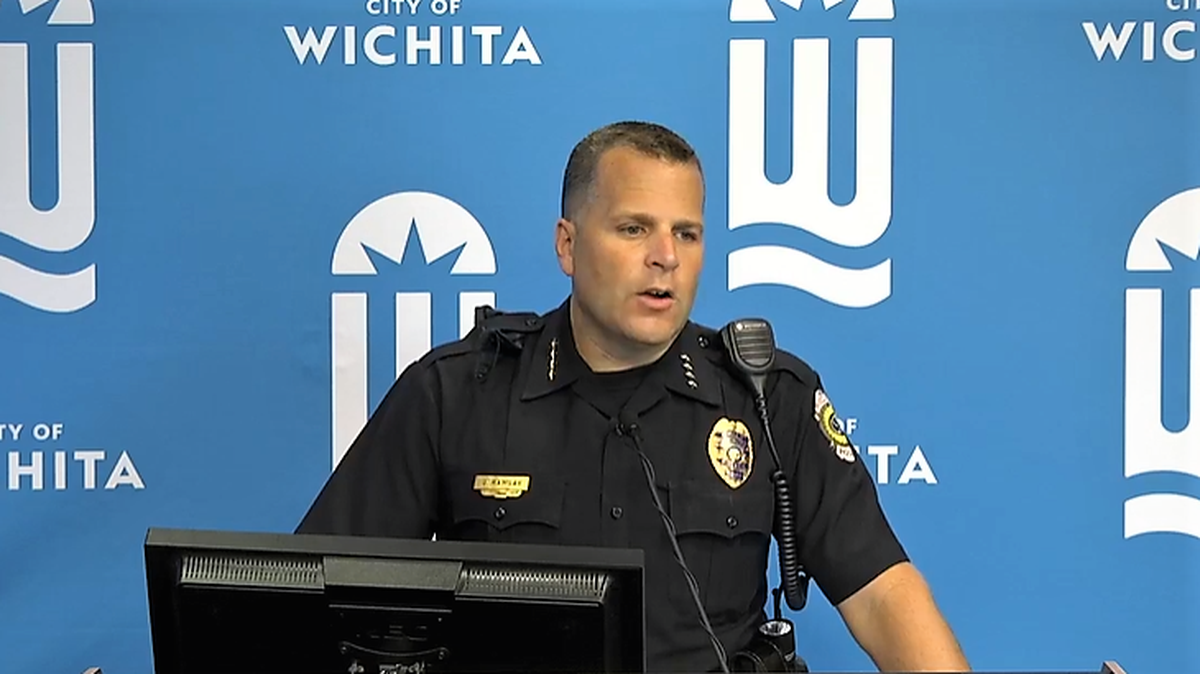
The named defendants are Police Chief Gordon Ramsay and Lt. Chad Beard, who heads the WPD gang unit. A Wichita police spokesman said they could not comment on the litigation.
‘Vague and expansive’
Appleseed and the ACLU say being on the list can have profound consequences and ruin people’s lives.
List members are subjected to intense police scrutiny, frequent stops and searches over minor traffic infractions, minimum $50,000 bail if charged with a violent crime and longer sentences in higher-security prisons if convicted.
Under city policy and the state law empowering it, most Wichitans could be added to the list, which identifies a person as a gang member or gang associate based on a loose set of criteria such as where a person lives, what color clothing they wear, where they shop or buy gas and with whom they are photographed, the suit alleges.
“The criteria are so vague and expansive that the majority of Wichita citizens, including most judges, lawyers, clergy, union members, and other professional and social service providers, could be discretionarily designated as a gang member or associate and added to the Gang List,” the suit alleges. “Indeed, under the statute and policy, most WPD officers themselves qualify as gang members.”
Once on it, there’s no way off. Police might move an individual from “active” to “inactive” status, but they can be put back on the active list for three years at a time if they’re seen talking to the wrong person at a social event or wearing the wrong style of hat, the lawsuit alleges.
Brett said the existence of the list is especially chilling against the backdrop of current events, such as the trial in Minneapolis where former police officer Derek Chauvin faces charges of murdering George Floyd, and current unrest over the police shooting of a 20-year-old African-American man in a Minneapolis suburb by an officer who says she mistook her gun for her taser.
Being on the gang list “really subjects you to a level of harassment and targeting by the police that can be incredibly scary and potentially violent, especially for black and brown motorists in Wichita,” she said.
Race, ethnic disparity
Minorities are the overwhelming majority on the gang list, the suit said.
Appleseed and the ACLU allege that 60% of the people on the gang list are African-American and 25% are Hispanic. Only 6% are white.
“WPD officers include on the Gang List a small number of certain ‘biker groups’ and ‘white supremacists’ comprised mainly of white individuals, but do not make the same efforts to surveil those individuals, nor to categorize the individuals they associate with as gang members or gang associates,” the lawsuit says. “While all of those listed on the Gang List are harmed by the lack of procedural and substantive due process, the statute and the WPD policies are used to disproportionately target racial minorities.”
The four individual named plaintiffs in the case all have been convicted of or pleaded guilty to crimes. All allege they were treated more harshly than similarly situated defendants would have been because of their inclusion on the gang list.
One reason the named plaintiffs are people with criminal records is because, in general, no one can find out if they’re on the gang list unless they’re charged with a crime and prosecutors seek larger bail because of it, the ACLU and Appleseed lawyers said.
The fifth plaintiff is Progeny, a community group that assists young people who get in trouble with the justice system and that advocates for community-based alternatives to incarceration.
Progeny says its mission is hampered by the existence of the gang list because anyone active in the group could be tagged as a gang associate by the Wichita Police.
List started in 1980s
The list was started in the late 1980s by Officer Bob Bachman, nicknamed “Dirty Harry,” who kept boxes of index cards in the trunk of his patrol car with mugshots, names, addresses and aliases of all suspected gang members in Wichita, the Eagle has reported previously.
Bachman’s list along with information collected by other officers in the Wichita Police gang unit was eventually digitized and made available to the department, with authorization by the gang unit supervisor.
Police officials have said it was instrumental in building federal RICO cases in 2007, when 28 Crip gang members were arrested and charged under federal law. That sweep was credited with dropping gang crimes for at least the next five years.
Wichita police said at a recent Citizen Advisory Board meeting that 105 gangs, and 52 subsets, have been documented in the city.
The gang list classifies 1,781 people as active gang members and 288 as associates. An additional 577 names on the list are people who are incarcerated and 244 who are dead.
Police keep dead members listed because they are often honored by their gang posthumously, which helps identify living gang members, Beard told the advisory board on Jan. 28.