2020 pandemic blues hit Kansas state-owned casinos; Kansas Star at Mulvane down 24%
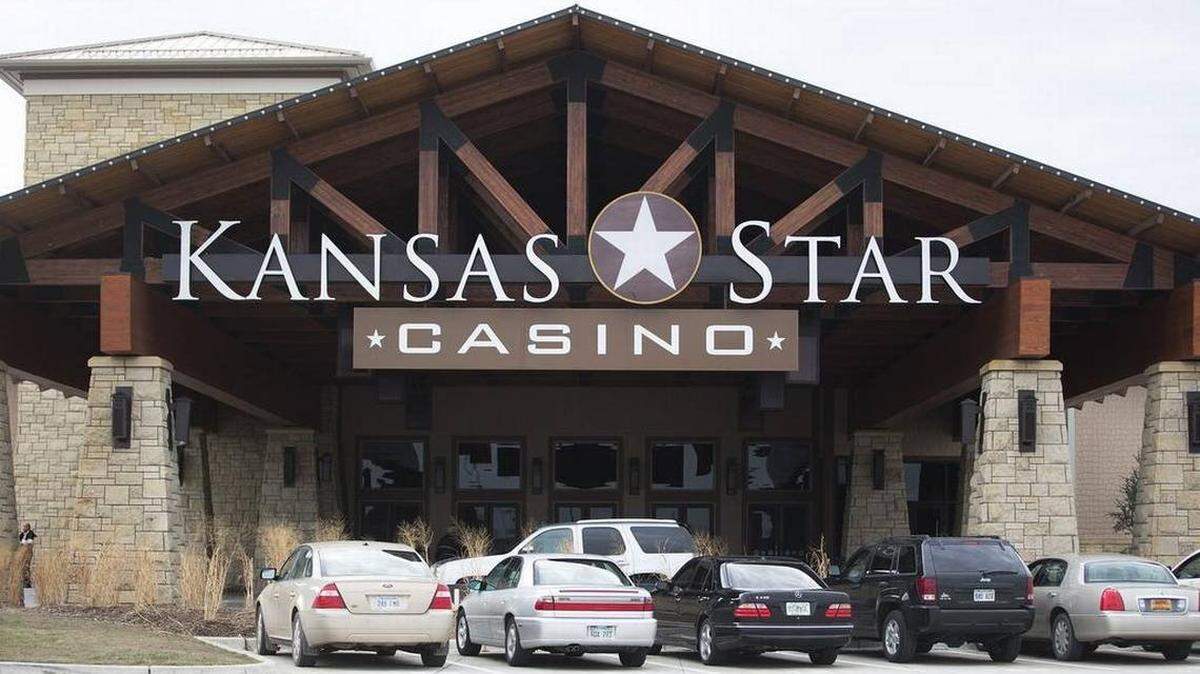
When the Kansas Legislature gambled on state-owned casinos, they weren’t betting on a year like 2020.
Amid the COVID-19 pandemic, the state casinos went from their best year on record to their worst year ever.
Revenue generated by Kansas’ four casinos — Kansas City, Mulvane, Dodge City and Pittsburg — dropped from $416 million in 2019 to about $300 million in 2020, according to public records.
That $116.5 million decline represents a 28% year-to-year drop.
The share of the casinos’ proceeds that goes to state and local government coffers also fell 28%, from $112.5 million in 2019 to about $80.9 million in 2020.
At the Kansas Star Casino, at the Mulvane exit off the Kansas Turnpike south of Wichita, revenue was down 24%.
“It’s been a really difficult year for a lot of businesses and obviously, our casinos are part of that,” said Stephen Durrell, executive director of the Kansas Lottery.
The Kansas Constitution bans gambling except through the state lottery or Native American tribes, so the Kansas Lottery technically owns and operates the four state casinos, splitting the income with private-sector partners who built the facilities and run them day-to-day.
The state’s share of casino income is mainly used to pay off debt, build infrastructure and reduce local property taxes. State universities get a portion to boost engineering programs and another slice helps pay off unfunded liabilities in the state’s KPERS pension program, according to state records. Counties and cities get a small split for the extra law-enforcement and social-service costs that go along with hosting a casino.
No games, no bucks
As the seriousness of the COVID-19 pandemic started to become obvious last March, all state casinos were shut down as part of broader stay-at-home orders issued by Gov. Laura Kelly, who was seeking to slow the spread of the coronavirus that causes the disease.
The casinos closed March 17 and weren’t permitted to reopen until May 22.
“Two months out of the 12, not being there revenue-wise . . . is obviously going to make a giant impact on what your bottom line is,” Durrell said.
And it did. But that wasn’t the end of it.
When the casinos were allowed to reopen, it was at reduced capacity to allow space for at least six feet of social distancing between players, as required by state and local health orders.
The Kansas Star ordinarily runs 1,650 slot machines and 62 gaming tables along with a 10-table poker room.
Now, it’s running about 900 slots and 44 tables at about half-capacity. Like all state casinos, the poker room remains closed.
The casinos also had to spend extra on cleaning, sanitizing and Plexiglass barriers between players and dealers. Masks are required and supplied at the door, another added cost of doing business.
In all, the Kansas Star in Mulvane saw revenue decline by almost $45 million, from $186.4 million in 2019 to $141.4 million in 2020. Proceeds to the state and local governments were off $12.2 million year over year.
While the lottery generally leaves the detail work to the operating partners, state officials now meet weekly with the casino managers for various reports including COVID-positive test rates among employees and problems with patrons who refuse to follow safety protocols.
“We’ve taken a much more proactive role with patron safety in the last 10 months,” Durrell said.
Boyd Gaming, the private partner in the Kansas Star, is a publicly traded company and could not comment because it’s in a “quiet period,” mandated by the Securities and Exchange Commission before a planned announcement of final 2020 earnings, said company vice president David Stroth.
Poker still folded
In the age of COVID, poker offers a unique challenge and remains shut down throughout Kansas because the players sit in close proximity, which isn’t safe, said Keith Kocher, the lottery’s director of gaming facilities.
Unlike other casino games, poker players don’t bet against the house, they bet against each other.
Success in poker often depends on reading opponents’ “tells,” slight physical reactions that can signal whether a player has a winning hand or is bluffing.
“In order to have a poker room, a poker table, they’ve got to sit right next to each other,” Kocher said. “Partitions don’t work well. It’s very face-to-face.”
Although poker itself is only a small fraction of the casino business, “it brings in other revenue, it brings in other players, it brings in spouses who play the machines,” Kocher said.
The poker ban fell hardest on the Hollywood Casino at the Kansas Speedway in Kansas City, which “basically owned poker in Kansas City until the pandemic,” Kocher said.
Unlike the Kansas Star, the Hollywood Casino is in what Durrell called a “mature gaming market.” There are five competitors in a 10-to 20-mile radius, including four Missouri River casinos and a small tribal casino on the Kansas side.
The Kansas Star’s closest competitors are Oklahoma tribal casinos, 40-50 miles south.
That’s one reason why the Kansas City casino suffered the biggest 2020 declines.
Revenue there was down about 35% or $53.4 million, from $152.8 million in 2019 to $99.4 million in 2020. The state and local shares were down about $14.4 million.
The state’s two smaller casinos were down, but their revenue declines were closer to the Kansas Star’s 24% drop.
▪ The Kansas Crossing Casino near Pittsburg, the state’s newest casino, was down 25% year to year, from $35.4 million to $26.5 million.
▪ The Boot Hill Casino in Dodge City, the state’s oldest, has outperformed the others through the pandemic. It saw a 22% revenue drop, from $41.4 million in 2019 to $32.1 million in 2020.
There’s no telling when business will rebound to pre-pandemic levels, Durrell said.
“I think that’s something that every economist on earth would like to know,” he said. “It will depend on a number of different factors . . . how the virus numbers are going to pan out over the next several months, how vaccinations are rolled out and who’s willing to take those.”
Right now, the casinos seem to be “recovering a lot quicker than I thought they would,” Durrell said. “They do have a long way to go.
“I wish that we weren’t where we were, (but) overall, I think they’re making a pretty steady progression back to normal. Knock on wood.”