Death risk was too high for Tabitha Lehman to run election from the office, doctors say
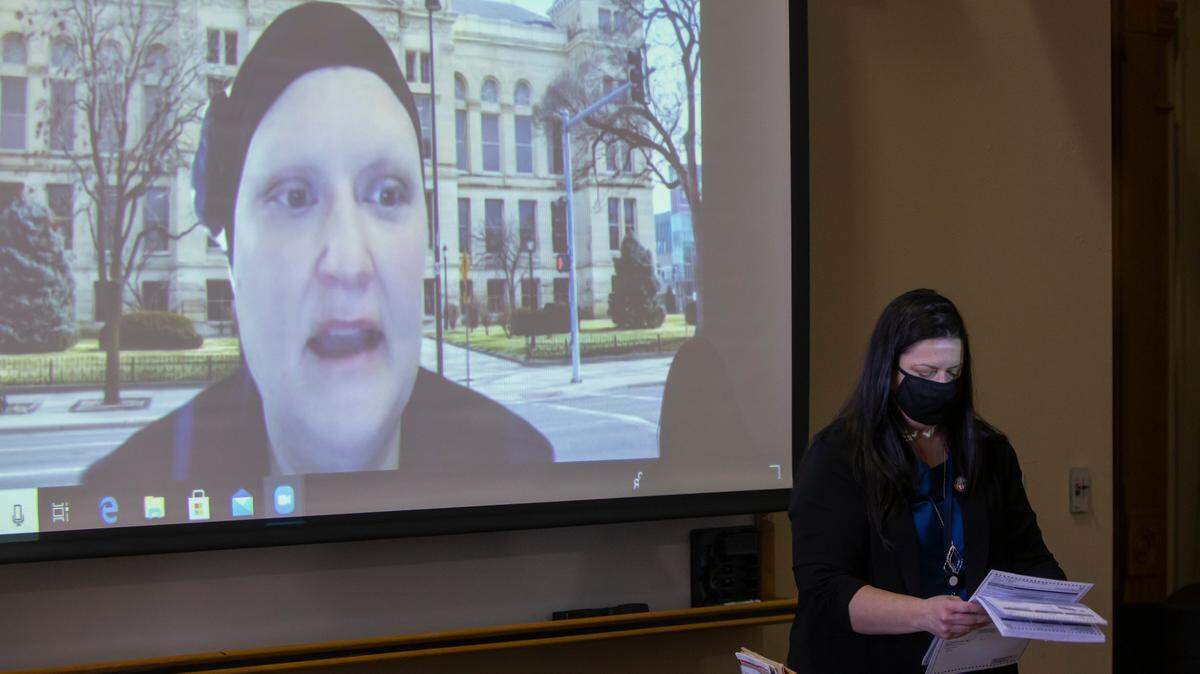
Two doctors who treated Tabitha Lehman for cancer say she would have been unnecessarily risking her life if she’d worked in her office during the last election, the issue that contributed to her losing her job as Sedgwick County election commissioner.
Lehman’s oncologist, Dr. Dennis Moore and her infectious disease specialist, Dr. Tom Moore, who are brothers, both spoke to The Eagle with Lehman’s consent and said she faced a one-in-four chance or more of dying if she got COVID.
“I think it’s outrageous what happened to her,” said Dennis Moore, of the Cancer Center of Kansas. “It’s hard to believe at a time when people who have no underlying illness are given explicit permission to work from home, that this is an excuse for someone to be summarily fired.”
A spokeswoman for Secretary of State Scott Schwab, who this month informed Lehman she wouldn’t be reappointed when her current four-year term expires in July, said the election commissioner was never told she couldn’t work from home.
“She was told, along with the 104 other local election officials, that she could NOT access the statewide voter registration database from her home,” spokeswoman Katie Koupal wrote in an e-mail.
Lehman accessed the database through a Virtual Private Network connection set up by the county Information Technology Department. She said she was assured that the connection was as secure as if she’d been sitting at her desk in her office.
Schwab disagreed.
“The security of the statewide voter registration system is a top priority of the Secretary of State and is, in no way, under the purview of the Sedgwick County IT officials,” said a statement issued Wednesday by Schwab, explaining Lehman’s pending dismissal after nine years as election commissioner.
“There is never a reason to compromise that system,” the statement said. “Unfortunately, Mrs. Lehman thought there was.”
Lehman said without access to the database, she could have only done about half her job, which includes making sure deadlines are met for entering registrations into the database and proofreading her staff’s work to eliminate errors.
The August and November elections were particularly challenging amid the COVID pandemic, with high interest and turnout for the presidential race between Donald Trump and Joe Biden, an unprecedented number of mail and early ballots from voters skittish about standing in election-day lines, and a general distrust of the election process fueled by partisan and social media.
In the runup to the election, Lehman was on a very aggressive form of chemotherapy for lymphatic cancer that is now in remission, her doctors said.
“She would have been at increased risk of serious infection or death from COVID had she been exposed at work,” Dennis Moore said. “And the workplace is a very common place where people contract COVID.
“The death rate for cancer patients nationally with COVID is extremely high, in excess of 23 percent,” he said. “It’s scary. We have a lot of people with cancer who have been dying from COVID.”
He said when the statistics emerged recently, “all of us oncologists were shocked. We knew they were high. We had no idea they were that high nationally.”
Tom Moore, of Infectious Disease Consultants and the director of infection prevention at Wesley Medical Center, has treated numerous COVID patients since the coronavirus came to the Wichita area in March.
He said the COVID death risk would have been higher for Lehman than the national statistics.
“That (23% death rate) is all comers, like breast cancer, lung cancer, people who have brief periods of neutropenia (low white-blood cell count) while they’re on chemotherapy,” Tom Moore said. “When you start talking about patients with lymphoma, and certainly aggressive lymphoma like she had, and the need to give it a very aggressive treatment, then the rate goes up.”
He said in his experience, “Patients with leukemia and lymphoma (who catch COVID) more often than not, they did not do well at all, they died.”
“If somebody told you you have a one in two chance or one in three chance of dying if you go to the office and get COVID, the choice is pretty straightforward for those who value their lives,” he said.
Dennis Moore said he’s had “quite a few” patients die from COVID, including some whose cancer was basically cured and were on precautionary chemotherapy to prevent relapse.
“It wasn’t the cancer, it wasn’t the treatment, it was COVID that did them in,” he said. “There are some distinct things that happen with COVID, whether it’s the neurological events, (blood) clotting events, pneumonia. There are things you can only account for with COVID.”
At the election office, the risk was elevated in July when Schwab issued a directive that voters could not be required to wear facemasks to prevent the spread of COVID when casting their ballots, Dennis Moore said.
In her e-mail, Koupal defended that policy.
“The guidance was based on Article 5, Section 1 of the Kansas Constitution (which) states there are only three criteria to be qualified to vote in Kansas: age, citizenship, and residence,” Koupal wrote. “If a properly registered voter, state law dictates the individual be allowed to cast a ballot. The guidance was on casting a ballot NOT individuals coming into election offices.”
The election office in the Historic Courthouse downtown where Lehman works was open for voting 15 days prior to the August and November elections and hundreds of voters cast their ballots there.
Moore said if he’d been asked, “I would have said ‘please accommodate this very vulnerable person (Lehman) who’s immunologically quite frail and is at significant risk — I would say almost the highest risk — of having a severe case of COVID if she gets it.’ That’s certainly what I would recommend if I were asked today.”
Dennis Moore said in his experience, workplace issues like Lehman’s don’t come up that often.
“It’s actually uncommon for our patients to be discriminated against or have their illness used as the excuse to fire them,” he said. “It’s not rare, but it is uncommon. Patients, they receive a lot more respect than you might think.”
This story was originally published January 25, 2021 at 5:01 AM.