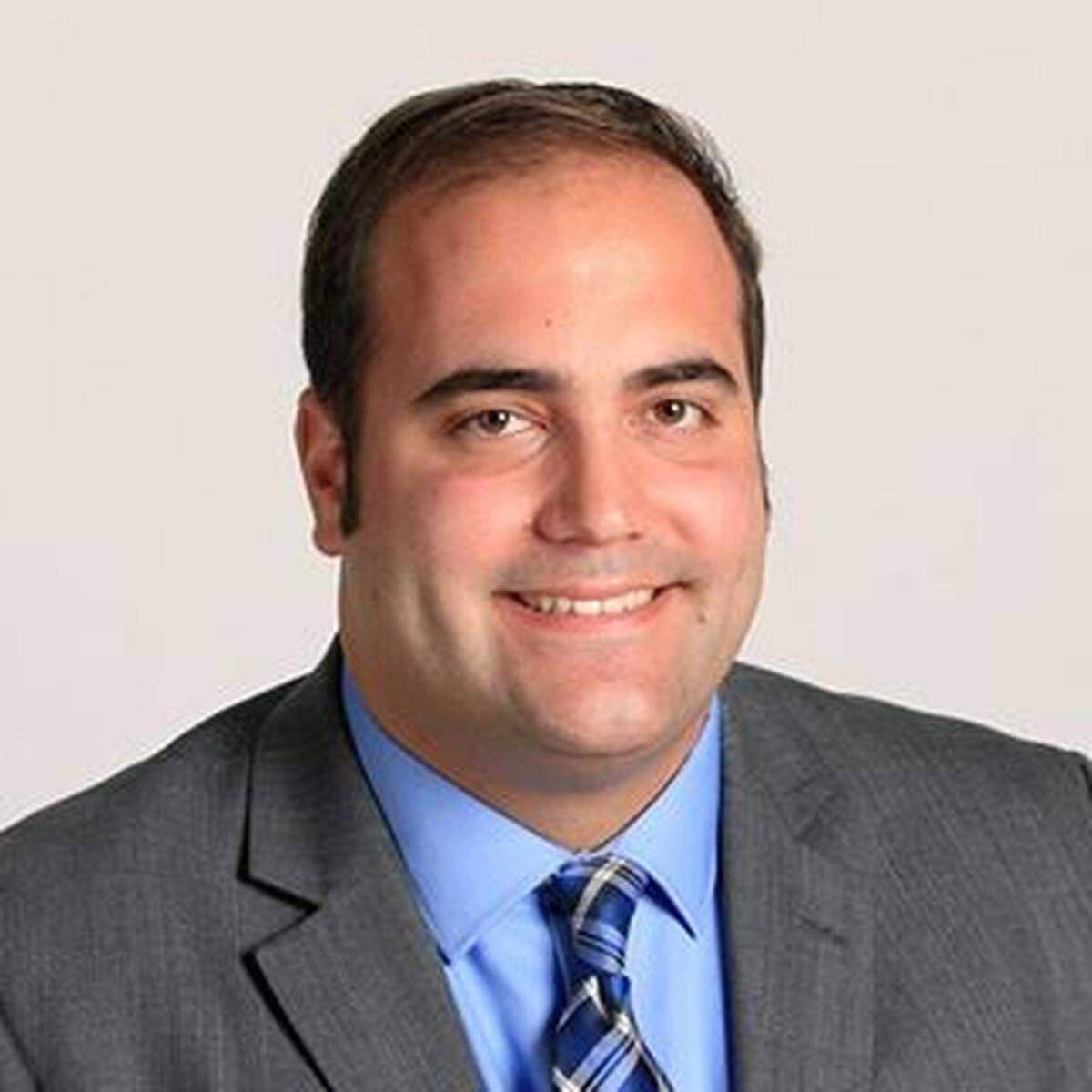
Race in Kansas’ ‘Big First’ pits ex-lieutenant governor against former Wichita teacher
Ten years ago, Tracey Mann suffered a tough defeat when he lost the Republican primary to Tim Huelskamp during his first run for Congress.
Two years ago, Mann had to watch as running mate and lieutenant governor for Gov. Jeff Colyer as the party nominated Kris Kobach and Wink Hartman over his ticket in the closest gubernatorial primary in history.
And he had to watch from the sidelines as Democrats Laura Kelly and Lynn Rogers went on to defeat the GOP ticket that November.
“One of the hardest days of my life was sitting on the Capitol steps in 2019 and turning over Kansas to a new administration,” Mann said.
But after these bitter defeats, Mann finally tasted victory last Tuesday when he won the Republican nomination in the 63-county Kansas 1st Congressional District with 54 % of the vote, more than 20 points above his closest competitor and more than double his 2010 percentage.
He’ll now face Democrat Kali Barnett in the general election. Mann said he’s not taking the race for granted and looks forward to a robust campaign.
Barnett, a 35-year-old music teacher from Garden City, has raised a record amount for a Democrat of more than $341,000 over the course of the campaign, but that’s still less than half of Mann’s fundraising total.
Unless Barnett is able to pull off an unprecedented upset, Mann is on the fast track to Congress after his Tuesday victory. It puts him in a position to be a major force in the state’s politics for years to come.
A Democrat has never won the district since it was reorganized as the western Kansas seat following the 1960 census. Republicans make up roughly 54 % of the district’s registered voters, while unaffiliated voters are about 27 % and Democrats account for a little more than 18 %.
Since 1968, three of the six Republicans to hold the “Big First” seat have used it as a launching pad to the U.S. Senate — Bob Dole, Pat Roberts and Jerry Moran — and the seat’s current occupant, GOP Rep. Roger Marshall, is attempting to do the same.
“You shouldn’t even enter my name into that sentence. Those guys loom large on the impact of agriculture and our state,” Mann said. “Big shoes to fill. We’re excited to do our absolute best.”
Tenure as lieutenant governor
Mann, a 43-year-old commercial real estate broker from Salina, said he was out of politics until Colyer approached him about serving as lieutenant governor in 2018 after Colyer had assumed the office following Sam Brownback appointment to President Donald Trump’s administration.
“If it wasn’t for Gov. Colyer, I would not have won the race,” Mann said Wednesday.
“When he weighs in on races and exerts his leadership, people around the state listen,” Mann said. “We showed you can lead the state conservative to great results. We did not raise taxes, fully funded schools.”
Colyer called Mann “one of those guys who what you see is what you get” and “the epitome of the western Kansan.”
“As we were looking at different lieutenant governor candidates, Tracey was someone who I trusted implicitly,” Colyer said. “He had good advice and was not afraid to say, I don’t think it works that way.”
Colyer and Mann both touted the $900 million surplus the state had when they left office, but they both glossed over the fact that the surplus was largely the result of the Legislature’s decision to override Brownback’s veto and repeal his signature tax cuts the year before Colyer rose to governor.
Mann described his platform in the congressional race as “Pro-life, pro-ag, pro-gun and pro-Trump” and he said he would draw out distinctions with Barnett on these points during the general election campaign.
Barnett’s “pro-people” campaign
Barnett said voters in the district deserve a better conversation about their needs, including on health care and greater access to broadband in rural areas.
“I’m pro-people. I’m pro-listening to what their needs are,” Barnett said.
Barnett has pointed to her father’s death from a heart attack when she was 17, which caused her family to lose its farm, as a pivotal moment in both her life and the formation of her politics.
“We found out after the autopsy that he had one or two heart attacks before the massive one that ended up killing him and I’m confident that if we had better health care systems in rural Kansas we’d be having a different conversation right now,” she said.
Barnett attended Friends University in Wichita, where she studied musical theater. A professor urged her to pursue a career as a music teacher, which led to jobs teaching in public schools both in Wichita and New York City.
“As soon as I stepped into a classroom, I just fell in love,” said Barnett, who said that every class period gave her a new audience that she had to both entertain and teach a lesson.
During the COVID-19 pandemic, she’s been providing music lessons online for people around the state to watch. Barnett said — like Democratic Senate nominee Barbara Bollier — she’s been mounting a fully virtual campaign during the pandemic as a precaution against spreading the virus.
She said her teaching experience is a key asset as parents around the district are anxious for solutions about how to teach their children during the pandemic.
“Education is at the forefront of everyone’s mind right now,” she said.
Mann criticized what he believes has been a “one-size-fits-all approach” to the pandemic, contending that many counties in western Kansas have few cases and shouldn’t have to abide by the same restrictions as areas where the virus is more prevalent.
He also said if he’s elected he will be skeptical of passing any coronavirus aid package that he considers to be a “blue state bailout,” citing the size of the national debt.
Asked specifically about bailing out Kansas, which is also grappling with budget shortfalls as a result of the pandemic, Mann reiterated his concern about the debt.
The two candidates differ sharply on agriculture. While both candidates emphasized the importance of trade, Mann defended Trump’s trade war with China that has adversely affected exports of soybeans and other key Kansas crops.
“Now agriculture is in the crossfire… in this trade war. The president has acknowledged that by providing some relief to farmers and farmers appreciate that,” Mann said.
“Farmers are patriots. If we need to be the tip of the spear here to renegotiate our relationship with China, they’re willing to do it. And that’s a testament to Kansas farmers.”
Barnett said that both Marshall and Mann have downplayed the impact of the trade war, but farmers in the district are acutely aware of the damage it’s done to their business.
Barnett also criticized Mann for attacks he made against Finney County Commissioner Bill Clifford during the GOP primary, which hit Clifford for supporting the resettlement of Somali refugees and referred to Somalia as a “terrorist hotbed.”
In 2016, the FBI foiled a bomb plot by three Kansas men against a mosque and an apartment complex in Garden City that is home to many Somali immigrants.
Barnett, who lives in Garden City, said Mann’s attacks were “full of hate” and she said was proud of how the community rallied around the refugee community following the foiled bomb plot.
“Garden City has a Statute of Liberty in it and has always had a significant immigrant community,” she said.
Mann defended his ads and noted that in 2016 the state of Kansas, under Brownback, withdrew from the federal refugee resettlement program.
Brownback’s withdrawal didn’t prevent refugees from being resettled in Kansas, but it meant that the state agencies did not offer any cooperation to the U.S. Office of Refugee Resettlement.
“The Brownback administration stopped supporting the program. Counties could if they wanted to,” Mann said. “My message is that I disagreed with Bill Clifford’s vote on the issue.”
This story was originally published August 10, 2020 at 5:01 AM.