
How Gov. Kelly plans to cut $682M from the Kansas budget to close pandemic shortfall
Facing the massive financial hole created when the COVID-19 pandemic sent tax revenues crashing, Kansas Gov. Laura Kelly will cut nearly $700 million from the state budget by reducing spending, delaying loan payments and effecting other one-time savings, according to a draft proposal.
Kelly plans to delay $77 million in aid to K-12 schools, although education experts called the decision an accounting maneuver that won’t actually slash school funding. She is also proposing to save $264 million by delaying payments to a board that invests idle state funds – another move that won’t impact government operations but will require legislative approval.
“There’s no general operating reductions to state agencies in this plan,” Larry Campbell, the state budget director, said.
The Democratic governor will cut $44 million from evidence-based juvenile programs under the Department of Corrections. Campbell said there will still be funding left for programs even after the cut. Expansion projects at prisons in Lansing and Winfield will be delayed to save $6 million.
The draft plan, released Thursday, comes just days before the new budget year begins on July 1. Kelly and the Legislature have known since April that Kansas faced a shortfall of more than $650 million in the coming year because of revenue loss.
Lawmakers didn’t adjust the budget as the economy shrank and unemployment soared this spring, leaving Kelly to institute cuts, known as allotments, to balance the budget. Still, Kelly and Republican leaders sparred on Thursday over whether she had gone far enough, with some lawmakers calling for across-the-board cuts.
“There’s always room to cut, there’s always a way to have a hiring freeze,” Senate President Susan Wagle, a Wichita Republican, said, adding “there’s two choices: cuts in the budget or a big tax increase next year.”
Campbell, who was appointed by Kelly, unveiled the draft plan Thursday during a meeting of the State Finance Council, which is chaired by Kelly but dominated by top Republican lawmakers. Kelly called the meeting to ask for approval of a $900 million certificate of indebtedness – essentially a move to allow the state to borrow from itself during the coming year to ensure cash flow to cover expenses. The certificate is issued every year, but it fluctuates in amount.
Republicans said they wanted more time to study Kelly’s allotment plan. House Speaker Ron Ryckman, an Olathe Republican, said lawmakers need to make informed decisions. But Senate Minority Leader Anthony Hensley, a Topeka Democrat, said Republicans were refusing to approve the certificate after approving past certificates during budget shortfalls caused by Gov. Sam Brownback’s tax cuts.
Ultimately, the council voted to consider the certificate at a meeting in early July. Kansas will begin missing payments on July 8 if the certificate isn’t approved by then, Campbell said.
“I thought that meeting was sort of the height of hypocrisy,” Kelly told reporters. “These same folks who just voted to delay the certificate of indebtedness, which allows us to operate, allows us to fund our schools, allows us to fund our roads – the same folks who just delayed this and put it in peril are the same folks that thought nothing of passing an unconstitutional budget at the end of the session.”
Kelly said she was “beyond disappointed” and accused Republicans who had voted against the certificate of “playing with Kansans’ lives and livelihoods.” Kelly announced she will call a meeting of the State Finance Council everyday until the certificate is approved, beginning Friday.
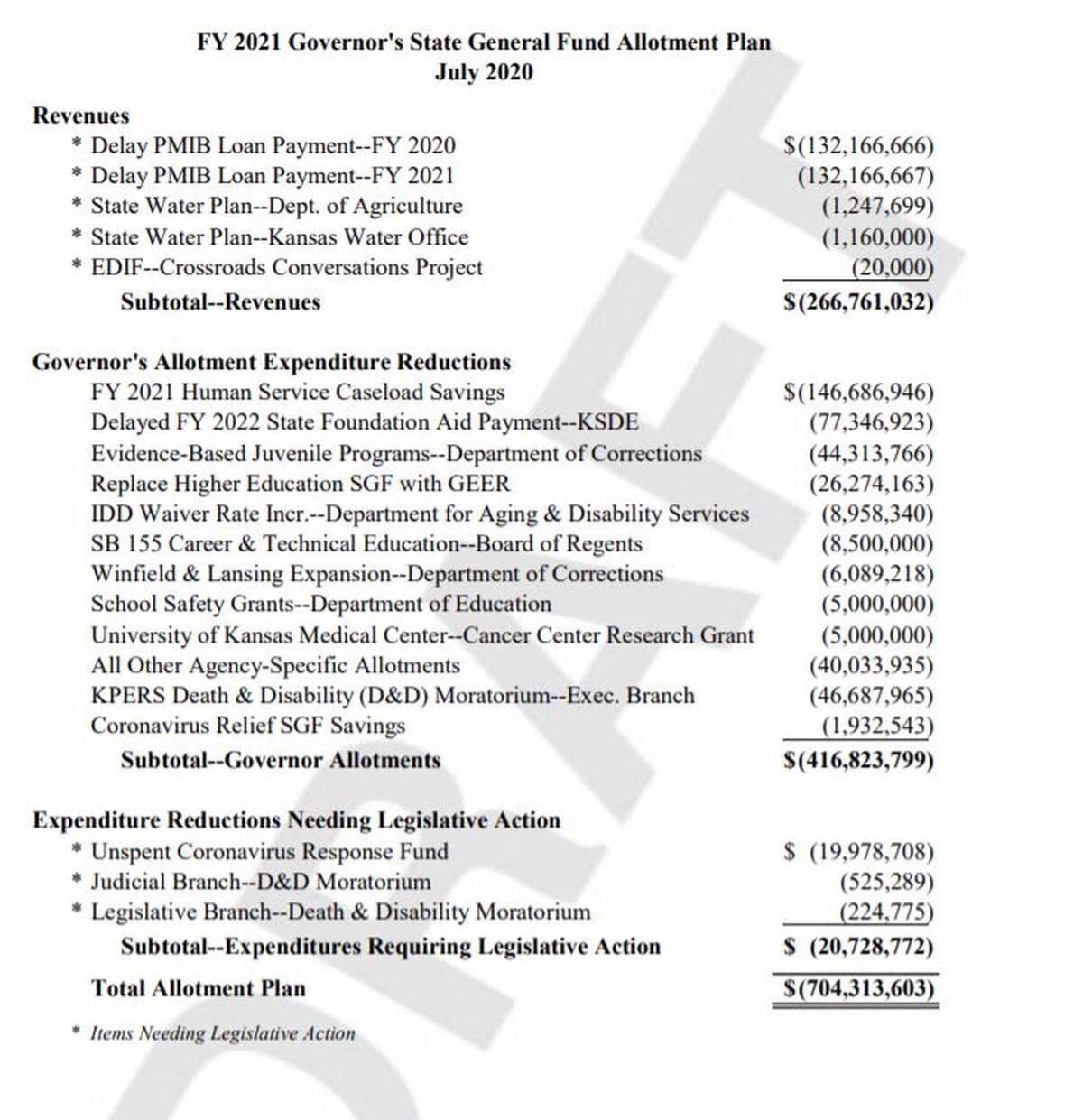
Kelly’s proposed cuts, roughly $682 million, while large, don’t impose the kind of draconian reductions that some had feared. She is also avoiding large transfers out of the state highway fund that Brownback frequently used to fill budget shortfalls.
Campbell emphasized that the plan remains a draft subject to revision, but indicated significant changes aren’t expected.
A $77 million delay in state foundation aid to K-12 schools is unlikely to actually affect school budgets, said Mark Tallman, a lobbyist with the Kansas Association of School Boards. Each year, Kansas delays some portion of state aid to that is supposed to be paid to schools by the end of June into early July. Kelly’s proposal appears to only increase the amount being delayed.
“As I understand it, this just means $77 million more than they thought they would (delay) will be delayed,” Tallman said.
About $264 million will be saved over two years by delaying payment to the Pooled Money Investment Board, which invests state funds until they’re needed. The Legislature approved taking out an interest-free $317 million loan from the board in 2017 to help cover a budget shortfall at the time. Kelly’s proposal would extend out the amount of time Kansas will take to repay the loan.
Kelly’s plan includes $147 million in human services caseload savings -- essentially an expectation that Kansas will spend less on welfare programs in the coming year than previously budgeted. The proposal also shows $40 million in cuts to state agencies, but the specific reductions weren’t listed.
About $26 million of state spending on higher education is expected to be replaced by federal dollars, under the draft plan. School safety grants will be cut by $5 million and a cancer research grant to the University of Kansas Medical Center will also be cut by $5 million.
“A lot of these are one-time adjustments,” Senate Majority Leader Jim Denning, an Overland Park Republican, said. He predicted that crafting the budget for the following year will prove a “miserable process.”
This story was originally published June 25, 2020 at 4:04 PM.