
Health expert: Medicare in better shape than most people think
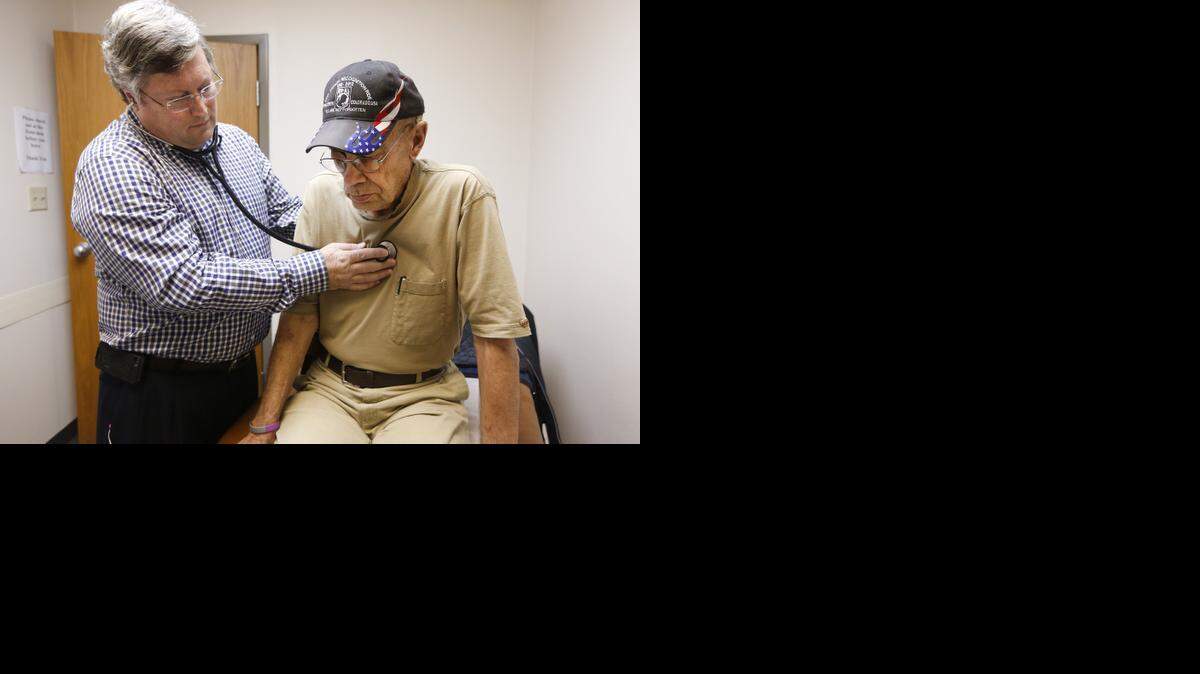
A national health policy expert says Medicare isn’t the basket case some people might think it is and shifting its responsibilities to a multistate compact –– an idea endorsed by Kansas government –– could lead to reduced benefits for seniors and rural hospitals.
“I think people think that Medicare’s growing out of control,” said Patricia Neuman, senior vice president of the Henry J. Kaiser Family Foundation, one of the nation’s leading health research groups.
“They may think it’s the Pac-Man of the federal budget, and of late Medicare’s been growing very slowly,” Neuman said. “Medicare’s not in a dire situation by any stretch of the imagination.”
Neuman heads the foundation’s Program on Medicare Policy and its Project on Medicare’s Future.
She’s in Kansas as the keynote speaker at Tuesday’s Sunflower Fair at the Bicentennial Center in Salina. The annual health and wellness event for seniors is sponsored by the North Central-Flint Hills Area Agency on Aging.
Neuman said one of the key themes of her speech will be that Medicare is actually in better shape now than it has been for years.
“For each of the past several years, the Medicare trustees continue to say that the Medicare trust fund is going to be solvent for longer,” she said. “So now, they’re saying it will be solvent through 2030, which is better than it’s been in many, many years.”
She said there have been a lot of misconceptions that the system is in trouble because it makes up 15 percent of the federal budget and has been part of ongoing debates in Washington over federal spending and debt.
“A couple years ago … there was a lot of attention given to policies that could slow the growth of Medicare spending because people talked about Medicare, rightly so, being a big part of the federal budget,” she said.
The current strength of the system is “good news, because while it’s true there is an aging population and there are more and more people coming on to Medicare; it buys a little bit of time to think about how to prepare Medicare for the future.”
One idea Neuman is leery of is the proposed Health Care Compact.
Under that scenario, the federal government would give participating states the funding that now goes to Medicare, Medicaid, the State Children’s Health Insurance Program and federal subsidies for Affordable Care Act health insurance exchanges. The states would have to spend the money on health care, but would set their own program rules and be free to ignore federal regulations.
Deeply opposed to the federal ACA, the Kansas Legislature and Gov. Sam Brownback have embraced the health compact in state law.
Compact supporters say the states are in a better position to tailor health programs to their needs instead of having to follow “one-size-fits-all” rules from Washington. Nine states in the Midwest and the South have signed on so far, but it would take an act of Congress to make the compact a reality.
In a signing statement when he approved the bill in April, Brownback said: “The Health Care Compact will allow states to restore and protect Medicare for generations to come.”
Neuman said the compact concept “raises a lot of questions” about the future of medical care for the elderly.
“That’s where the devil’s in the details because it would depend on how the compact is written and whether under the compact there would be an entitlement to a defined set of services, clearly spelled out and legally enforceable,” she said.
“With respect to Medicare, that’s a major shift for the program. It is not clear what (the compact) would mean in terms of the benefits to which people on Medicare are currently entitled.”
If the federal government turns over the federal dollars for Medicare to the states, or a set of states, “it’s not clear whether those dollars will increase to meet needs that may not be anticipated today but may arise in the future.”
In addition, she said, “It breaks apart the broad insurance pool, it breaks apart the sense of we’re all in it together.”
And it is uncertain whether states would continue to fund Medicare programs that fall outside basic patient care. For example, Medicare has a separate program that boost payments to rural hospitals, she said.
“So a question would be if you start to break apart the program, will the additional dollars that flow for rural hospitals continue to flow?” she said. “That would be a question for rural states and for other states, they might be looking for additional help that flows to teaching hospitals.
“In that kind of a situation, you’d want to know if we’re not all in it together, do the various subsidies that the federal government has agreed to, will they continue?”
Reach Dion Lefler at 316-268-6527 or dlefler@wichitaeagle.com.
This story was originally published September 23, 2014 at 10:00 AM with the headline "Health expert: Medicare in better shape than most people think."