
Clapp Golf Course land has best potential for development, possibly as senior housing
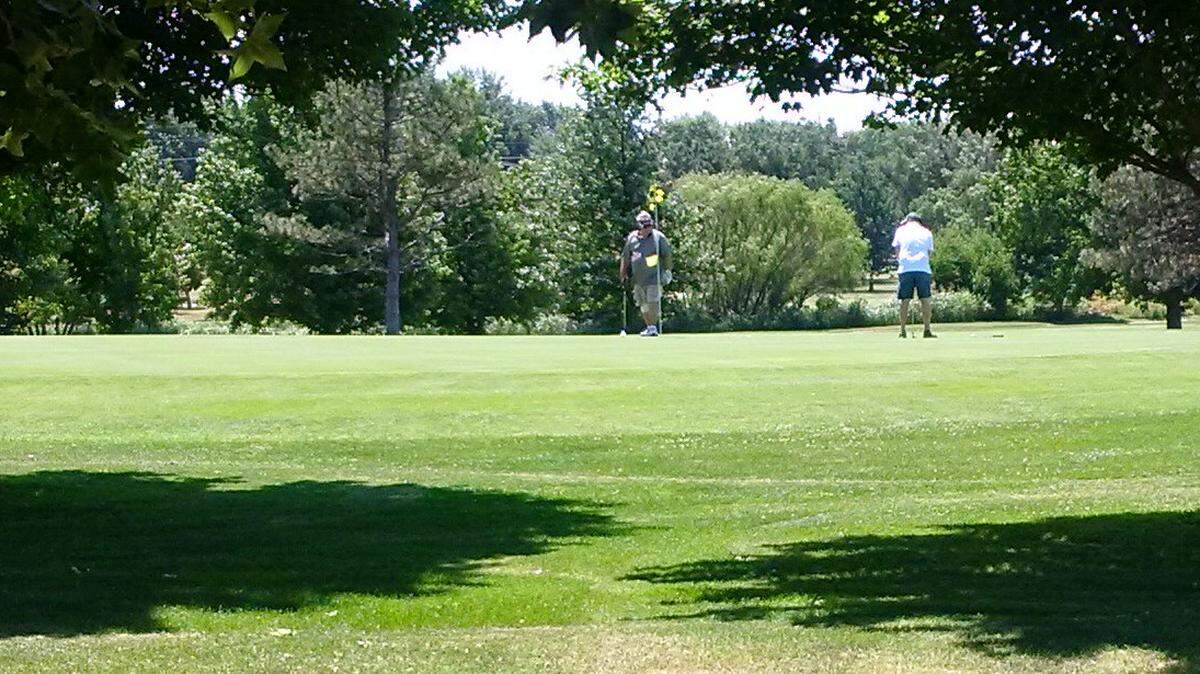
With a pivotal decision on closing L.W. Clapp Golf Course set for Friday, an economic analysis of all five city-owned courses has identified it as the only one where the city could make a profit by selling the land to developers.
The other four courses are tied up by land restrictions and/or situated in areas that lack potential for profits, the report said.
But at Clapp, "there potentially could be many redevelopment opportunities, since it has frontage on three arterial streets," the report concluded. "The financial benefit of closing this course would be significant."
The city Board of Park Commissioners has scheduled a special meeting Friday to vote on closing Clapp. The recommended action is to close the course immediately, subdivide the land, sell or lease part of it for commercial and/or housing development and create some other kind of park use on the remainder.
Mayor Jeff Longwell said Thursday that he thinks assisted senior living might be a possibility for some of the land that is part of the course.
The course is next-door to Via Christi Villages on Georgetown, one of Wichita's largest senior housing compounds.
"I'm looking for what could help that community be more successful," Longwell said. "Commercial doesn't quite fit the neighborhood. But if someone wanted to put in maybe some assisted-living type homes or something along that frontage that might fit into there better, I think that would be a good choice."
He said that wouldn't necessarily mean an end to golf at Clapp.
"Some of my options include can we maybe potentially keep at least a nine-hole course there?" Longwell said. "Should we put some other park amenities there like splash pads and some of those things?
"My goal would be to encourage that community to invest in itself, not break apart and sell Clapp."
City Council member Bryan Frye said he grappled with some of the same issues the last time Clapp was considered for closure in 2011. He said the course takes up a lot of space in a neighborhood that doesn't have many recreational amenities.
"It's challenging to have such a large green space in that neighborhood to be used exclusively for golf," Frye said, adding he might entertain the idea of an "executive" course with shorter holes. That would take up less space and use less water, while freeing up part of the site for some other park use.
If Clapp is closed, it will be the second publicly owned course to close since 2014, when Wichita State University tore out Braeburn Golf Course to build its Innovation Campus, a combination of educational and private-business buildings.
The report recommending Clapp be shut down was prepared by a committee of city staffers from Park and Recreation, the city manager's office and the Metropolitan Area Planning Department.
It went over the pros and cons of keeping or shutting down each of the five courses. Among those findings:
▪ Arthur B. Sim Golf Course is the least marketable course in the system, according to the report. The property was donated to Wichita by the Sim family, but the land grant specifies that it be used for public park purposes. If the city stops using it as a park, the land reverts to the family.
▪ Auburn Hills Golf Course is the city's newest, most upscale and most country club-like course. probably the most untouchable course other than Sim. Profitability has been mixed, but the staff report hails it as "the system's crown jewel" and "one of the finest public courses in Kansas." So much of it lies in a flood zone that its only redevelopment use would be for single-family homes in "an inefficient neighborhood design that would likely be difficult to develop profitably," the report concluded.
▪ MacDonald Golf Course, the former Wichita Country Club, was deeded to the city by the club in 1949. But the report noted there might be a restriction on taking it out of golf-course use and that more research would be needed to determine whether it could be redeveloped. The report said it could best be redeveloped as low-density housing with possible commercial space along its frontage at 13th Street North. Another barrier to redevelopment is a public-private partnership with First Tee, which has agreed to invest $1.5 million in building a driving range and youth golf training center there.
▪ Tex Consolver Golf Course suffers from its location when it comes to redevelopment potential. Across Tyler Road from Eisenhower Airport, it's partly on airport land, would most likely be suitable only for industrial development and there's already a glut of that kind of property in the area. It's also profitable as a golf course. "Financial benefits of closing this course would be minimal," the report said.
That leaves Clapp.
And the city report talks about its potential for redevelopment into some use other than golf.
"The golf course has frontage along three arterial streets, Harry, Oliver and Mount Vernon," the report said. And the surrounding neighborhood is already well developed with residential and commercial properties.
"Therefore, L.W. Clapp has significant potential for mixed-use development that features the existing floodplain as a community open space amenity," the report said.
Clapp has been profitable in the past, but has seen declining use and revenue since 2012. It's the only course that doesn't have its own wells or lake, so it's watered using city drinking water.
That's a huge expense for the course and a large part of the $235,000 loss booked there last year.
"I think you have to take a look at all of the numbers and what makes sense for the entire golf system," Frye said. "That has to be a factor when you weigh what you do."
The Park Board meeting to consider closing Clapp and to consider other financial issues facing the golf system is scheduled for 4 p.m. Friday at City Hall, 455 N. Main, Wichita.
This story was originally published July 5, 2018 at 5:27 PM.