
Ads urge Kansas lawmakers to keep tax exemption for businesses
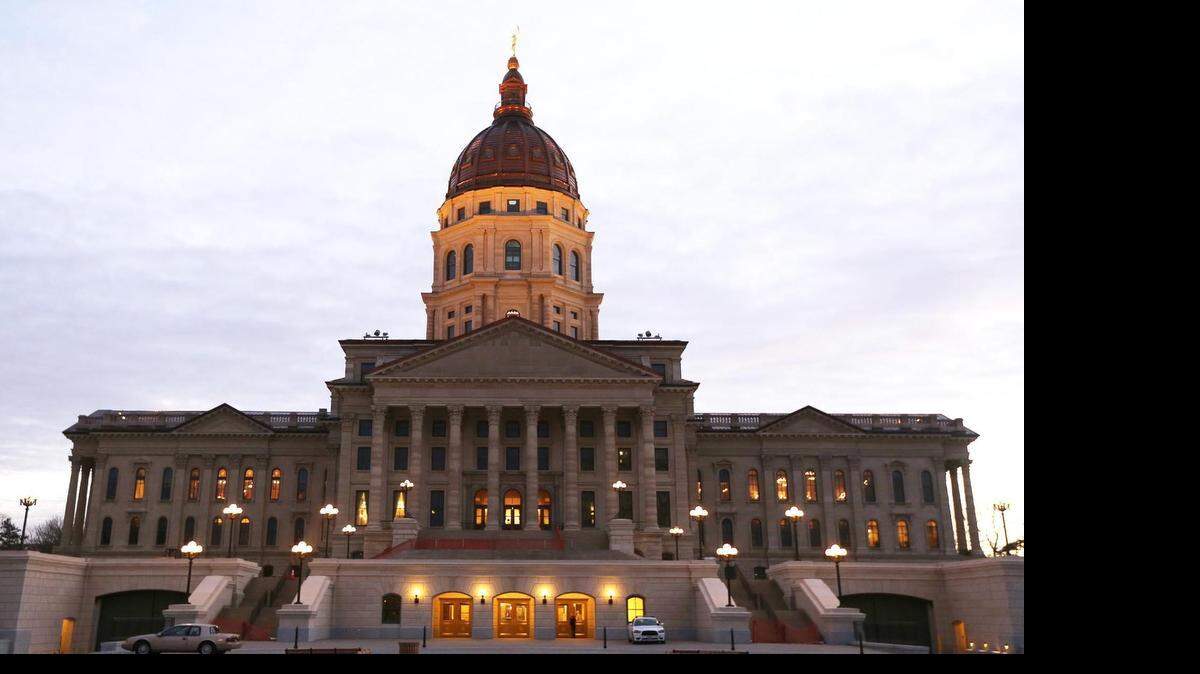
A group that represents more than 4,000 Kansas businesses launched a radio ad campaign Wednesday, urging lawmakers to vote against any changes to an income tax exemption for business owners as the Legislature tries to fill a budget shortfall for next year.
“Here’s a question. Did you know that 44 percent of Kansans work for businesses with fewer than 50 employees?” the ads, paid for by the National Federation of Independent Businesses, begin. “And now unbelievably the Kansas Legislature is planning massive tax hikes on local Kansas-based small businesses?”
The ads, which will air in Wichita and other markets across the state, urge listeners to call lawmakers and tell them not to support a tax increase on small businesses.
The radio campaign is a pre-emptive effort to discourage lawmakers from making tweaks to a tax exemption that enables some business owners to pay no income tax.
More than 330,000 Kansas business owners and farmers are benefiting from the tax exemption for owners of certain types of businesses. That is significantly more than estimated in 2012 when the policy was championed and signed into law by Gov. Sam Brownback.
Sen. Jim Denning, R-Overland Park, floated an idea in a February interview with The Eagle that some of these business owners’ income could be tax-free, but some should be taxable. Denning offered a plan in which business owners would pay tax on their first $118,000 of income and no taxes on the next $150,000. Business owners would have to pay tax on their income after that point.
“If we’re trying to get small businesses a head start and give them seed money, so we don’t tax their working capital, I think letting $100,000 to $150,000 pass through tax-free is plenty,” Denning said at the time.
Denning said Wednesday that he is not surprised by NFIB’s opposition. However, he said the proposal restores lawmakers’ intent with the 2012 tax bill. Lawmakers thought the bill passed in 2012 would allow business income to be tax-free while still requiring business owners to pay taxes on their wages, Denning said, but that’s not what happened.
“There’s a way to take your wage income and classify it as business income and let the whole thing pass through tax free. That wasn’t the legislative intent,” Denning said Wednesday. That means a business owner can pay no tax on any of his or her earnings, while employees still must pay taxes on theirs.
“There’s a fairness issue here and I think it’s a loophole that needs to be addressed,” Denning said.
Denning’s proposal has not yet received a hearing – it hasn’t even been formally introduced at this point – but NFIB’s state director, Dan Murray, said his organization had become aware that the idea was gaining traction.
“Of late we’ve been hearing hall talk, if you will, that some serious consideration is (being) given to rolling back portions or some of the income tax piece, and so what we wanted to do as we head into the final stretch of the session is to make it known where we stand and do so in a public way,” Murray said.
Murray said it would be a mistake to alter the exemption. Proponents of keeping the exemption contend that it gives business owners capital to reinvest in their businesses and hire more workers.
“A lot of our members are just now realizing the positive impact as they’ve entered into the second year of the new tax paradigm,” Murray said. “To roll back or reverse course only a handful of years – less than a handful of years – into it sends the wrong signals.
“This is an important segment of the economy that you’re monkeying with. Like I said, small business isn’t small,” he added. “We employ the majority of the private sector jobs and have really been the source of the net new jobs that have been produced in the last decade.”
‘Don’t tax me’
Lawmakers must fill a budget shortfall for next year of more than $400 million, according to the state’s nonpartisan Kansas Legislative Research Department.
Sen. Les Donovan, R-Wichita, who chairs the Senate Tax Committee, noted that one of the challenges lawmakers face in closing the budget hole is that any tax increase is going to rankle some constituency group.
“Everybody says, ‘Don’t tax me, tax that other fellow.’ That has never changed,” Donovan said. “That’s been around since this has been a country and that’s not going to change.”
Proposals the governor has offered, such as tax increases on alcohol and tobacco, have proven unpopular among some lawmakers. Donovan said all the proposals – the governor’s, Denning’s and plenty of others – will have to be considered as lawmakers try to craft a solution to the state’s revenue shortfall.
Resistance from Brownback?
Even if the tweaks to the business exemption gain traction in the Legislature, they’ll likely face resistance from Brownback. His office praised NFIB’s campaign in a statement Wednesday.
“The Governor appreciates NFIB’s support for maintaining a pro-growth tax policy for small businesses in Kansas,” the governor’s spokeswoman, Eileen Hawley, said in an e-mail. “The policy has contributed to thousands of new private sector jobs, record employment, rising wages, and one of the lowest unemployment rates in the nation. He looks forward to working with legislators during the veto session to balance the budget and continue our transition from taxes on productivity to consumption-based taxes.”
NFIB’s small-business credentials have been questioned at the national level in the past. CNN reported that the group’s biggest donor during the 2012 election year was the Koch-linked group Freedom Partners. The Center for Media and Democracy, which runs the website sourcewatch.org, has also said the group has links to Koch Industries and other large businesses.
Murray said that Koch may have worked with the national organization on issues in the past, but he said the Kansas chapter wasn’t taking its orders from the Wichita-based company on this issue.
“One of the things that makes NFIB unique is that we’re a member-driven organization, where we base our positions on our member ballot … it’s a very good tool to make sure that one member has one vote,” he said.
Reach Bryan Lowry at 785-296-3006 or blowry@wichitaeagle.com. Follow him on Twitter: @BryanLowry3.
This story was originally published April 22, 2015 at 7:01 PM with the headline "Ads urge Kansas lawmakers to keep tax exemption for businesses."