
Kansas lawmakers approve budget to end lengthy session
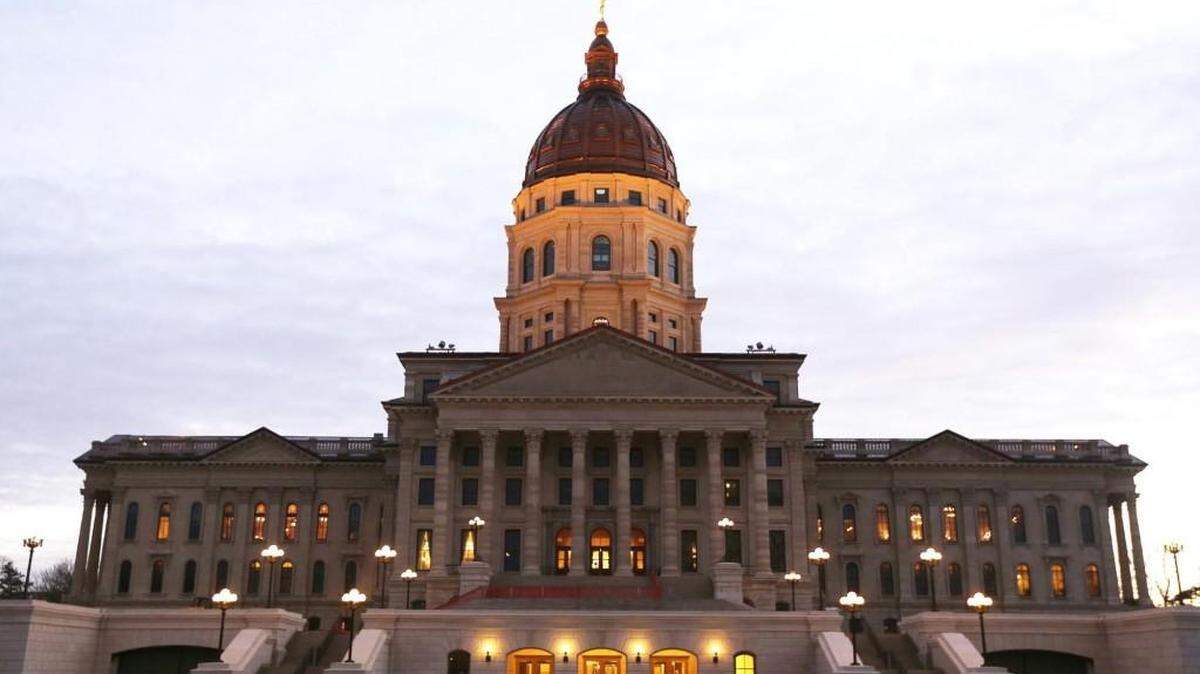
Lawmakers approved a budget on Saturday to end a legislative session that included bruising fights over school funding, guns and Medicaid, and culminated earlier this week with the Legislature forcing into law a rollback of Gov. Sam Brownback’s signature tax cuts.
The 113-day session – 114 if counting a typically ceremonial final day later this month – was the result of a sea change in Kansas politics last fall, when the Legislature’s conservative Republican majorities were reduced by moderate Republicans and Democrats.
In the end, the new Legislature had a mixed record.
The new moderate and Democratic coalition significantly altered the 2012 tax policy, which many had promised to do in their campaigns. But they were unable to enact Medicaid expansion after a veto by Brownback. Nor were they able to keep in place prohibitions against concealed weapons on college campuses.
Along a largely party-line vote, the Legislature passed a new school finance formula with increased funding, though Brownback has yet to take action on the legislation.
Conservative lawmakers, holding fewer seats than last year, were unsuccessful in pushing through any significant budget reductions, though some had called for cuts to spending.
Rep. Jene Vickrey, R-Louisburg, in the wake of the tax cuts being rolled back, described this year’s work as “a very difficult session.”
“I believe that this will help rally support back through the grassroots that it’s time to take back this Kansas House to a conservative Legislature who reflects who the state really is,” Vickrey said.
Sen. John Doll, R-Garden City, said he’d grade the session somewhere between a C and a C+.
He was still troubled that lawmakers weren’t able to force Medicaid expansion into law but took solace in the Legislature’s decision to override the governor’s veto on the tax increase.
“There’s a lot of things we could have done better,” Doll said. “It hasn’t been a total disaster.” The Legislature passed its last major bill – the budget – on Saturday afternoon.
The budget
The Legislature debated the budget bill late Saturday afternoon. The Senate passed the bill 27-11; the House approved it 88-27.
Under the budget bill, total spending, including that financed with federal funds and other sources such as college tuition, would continue to hover around $16 billion. The budget is projected to leave the state with an ending balance of about $157 million next year, or 2.5 percent, and $209 million the year after, or 3.3 percent.
Perhaps the biggest highlight in the budget is pay increases for most state workers, who have not received a statutory raise in nearly a decade.
Workers with less than five years of service will receive a 2.5 percent raise; those with more than five years will receive a 5 percent boost. The adjustments are expected to cost more than $26 million.
“It’s something we used to do fairly routinely back in the ’90s,” said Senate Minority Leader Anthony Hensley, D-Topeka.
The bill also authorizes $4.7 million for additional patient beds at Osawatomie State Hospital.
Some conservative lawmakers expressed opposition to the budget, arguing that the Legislature had made no serious attempt at cutting spending.
“This is a fake budget. It does not pay our bills. Indeed, it’s a reflection on those who like to spend other people’s money,” Sen. Mary Pilcher-Cook, R-Shawnee, said.
In the House, Democrats objected to a decision by budget negotiators to remove a payment of a little more than $17,000 to a Topeka woman who is seeking compensation after she had cash seized during a police stop decades ago. She was never charged with a crime.
Rep. Troy Waymaster, R-Bunker Hill, and the lead House budget negotiator, said lawmakers wanted more information about the situation.
Major legislative action in 2017
Taxes
Lawmakers approved tax increases to raise $1.2 billion over two years. The Legislature placed the bill into law over Brownback’s objections.
The new law raises personal income tax rates and repeals an exemption for certain kinds of business income. Income taxes will rise across the board, but most tax rates will remain lower than they were before the 2012 tax cuts.
Passage of the measure represents a rollback of Brownback’s signature 2012 tax policy. It also means the end of the “march to zero” income tax policy Brownback had advocated.
Schools
Lawmakers approved a new school finance formula that awaits action from Brownback. The bill would give schools overall about $195 million more in the next budget year and about $290 million more in the year after that.
The school finance formula comes in response to a Kansas Supreme Court order in March that gave lawmakers until June 30 to implement a new funding system. If Brownback approves the bill, the court will review it. The governor does not typically say whether he will sign or veto a bill in advance.
The formula is designed to better target funding for at-risk students than current law does. The Supreme Court cited underperformance by a quarter of Kansas students in their ruling.
The bill funds all-day kindergarten. It also would expand to individuals a program that provides a tax credit to corporations that donate to tuition scholarships for private school students.
Medicaid expansion
Legislation to increase eligibility in the federal program that’s administered by Kansas passed for the first time since Medicaid was expanded. But passage came amid uncertainty over the federal health care law as Congress and President Donald Trump pushed for repeal.
Some 150,000 Kansans could join Medicaid under expansion, supported by the Kansas Hospital Association and several local chambers of commerce across the state. The federal government currently pays for 90 percent of the expansion costs for states that extend Medicaid coverage to people who earn up to 133 percent of the federal poverty line.
Brownback quickly vetoed the bill, and the Legislature was unable to override it.
Guns
Lawmakers held hearings on bills that would keep in place the current prohibition against concealed weapons on public college and university campuses. The prohibitions will expire on July 1.
Bills to block campus carry did not advance, but the Legislature did approve a measure intended to allow public hospitals and the state’s mental health hospitals to continue prohibiting weapons.
Brownback has not yet acted on that bill.
Abortion
The Legislature passed, and Brownback signed, a bill requiring women who are considering an abortion to receive more information than they currently do.
The new law requires that women seeking an abortion receive information about when physicians received their medical degrees, when they started working at a clinic, whether they have malpractice insurance, whether they have faced disciplinary action, whether they have clinical privileges in a nearby hospital and whether they live in Kansas.
The law specifies that the information is to be printed in black ink in 12-point, Times New Roman font on white paper.
Alcohol
A new law will allow grocery and convenience stores to sell beer with an alcoholic content of 6 percent by volume starting in April 2019. Those stores now can sell beer with an alcoholic content of only 3.2 percent by weight.
Liquor stores will be able to sell other products such as cigarettes, lottery tickets, mixers and ice. Non-alcohol items other than tobacco and lottery tickets would be limited to 20 percent of a store’s gross sales.
A separate new law authorizes cities and counties to establish “common consumption areas” where people can move around freely with alcoholic beverages.
Current state law allows temporary permits for the consumption of alcohol for special events. But common consumption areas would be in place long term. Cities and counties could set the times and dates when alcohol is allowed.
Contributing: Daniel Salazar of The Eagle, Hunter Woodall of the Kansas City Star and the Associated Press
Jonathan Shorman: 785-296-3006, @jonshorman
This story was originally published June 10, 2017 at 7:18 PM with the headline "Kansas lawmakers approve budget to end lengthy session."