
Bill lowers property taxes on automobiles, would boost school coffers but drain county funds
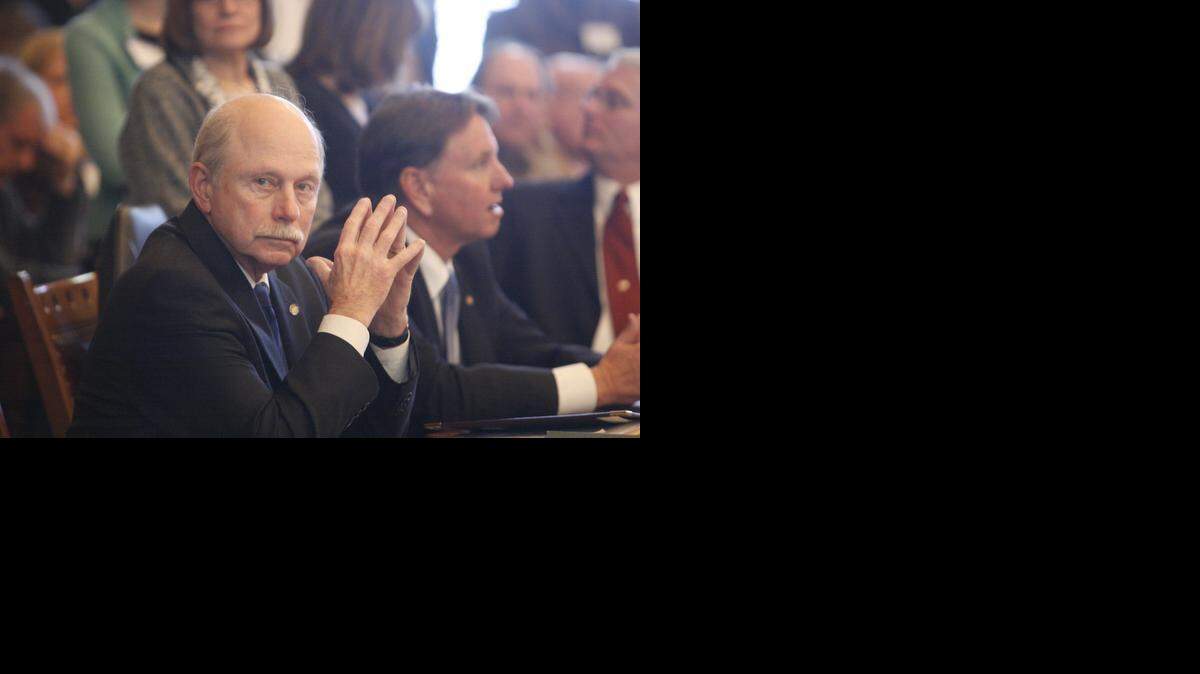
A bill to overhaul the way automobiles are taxed could pit the interests of school districts against municipal governments.
Senate Bill 259 would lower the assessment rate on vehicles from 20 percent to 12 percent over a five-year period, lowering overall property taxes on automobiles when people go to register them. The bill also makes automobiles subject to a statewide mill levy on property – from which they are currently exempt –that goes to school districts’ coffers.
In 2017, this would result in $13.8 million additional dollars for the state’s school districts, but a loss of $80.3 million overall for local governments, according to analysis by the Kansas Division of Budget. In 2020, when the policy is fully implemented, schools would receive $43.2 million more than they receive now, while local governments would lose a collective $174.4 million.
Randall Allen, executive director of the Kansas Association of Counties, expressed frustration with the legislation at a Wednesday hearing of the Senate Tax Committee. He said that the Legislature often fails to look at the total picture when discussing tax policy and said the bill would force counties to raise property taxes on real estate.
“When you lose a revenue source in one place, such as motor vehicle taxes, it only adds pressure to something else,” Allen said.
“Our position is not in opposition to public education, it’s simply in the way that it hurts counties by taking a very significant amount over the next few years,” Allen said.
The Kansas Association of School Boards has not taken a position on the legislation.
Sen. Les Donovan, R-Wichita, the bill’s primary proponent, argued that the Budget Division’s analysis overstated the impact to municipal governments.
“Nobody can look at our convoluted system and really put an exact number on what’s going to happen,” Donovan said. He said lowering the rate would help convince some people to trade in their automobile and get a newer one, which would result in increased sales tax revenue, noting that the majority of the state’s counties have a sales tax.
“That sales tax increase is invisible,” Donovan said about the Budget Division’s analysis.
The fiscal note from the Budget Division said it could not provide a precise figure on the impact from additional automobile sales, but called the increase negligible.
Donovan, however, argued that the bill would encourage people to buy new cars by reducing the cost of ownership.
Don McNeely, the president of the Kansas Automobile Dealers Association, began his testimony in support of the bill by saying “Ditto.”
Donovan owns a car dealership in Wichita, but he denied that he had a conflict of interest in pushing the legislation because car dealers do not pay property tax on the vehicles on their lots.
“It’s a problem for our customers, for the people of Kansas, not for the dealers,” Donovan said.
“They complain about the sales tax, they complain about the price of the cars, they complain about a lot of things, but they really complain about the property tax,” Donovan said. “We have young people that are obviously not carrying a lot of cash with them and they find out that their sales tax is going to be $1,800 and their property tax is going to be $900, they say, ‘We don’t have $2,700.’”
But when asked if dealers would benefit from increased auto sales the bill could spur, Donovan replied, “That’s not the reason for this bill.”
Donovan pushed similar legislation in 2013, which passed the Senate but failed to gain traction in the House.
Reach Bryan Lowry at 785-296-3006 or blowry@wichitaeagle.com. Follow him on Twitter: @BryanLowry3.
This story was originally published March 18, 2015 at 12:28 PM with the headline "Bill lowers property taxes on automobiles, would boost school coffers but drain county funds."