
Lawmakers split over whether to pass one tax bill or two
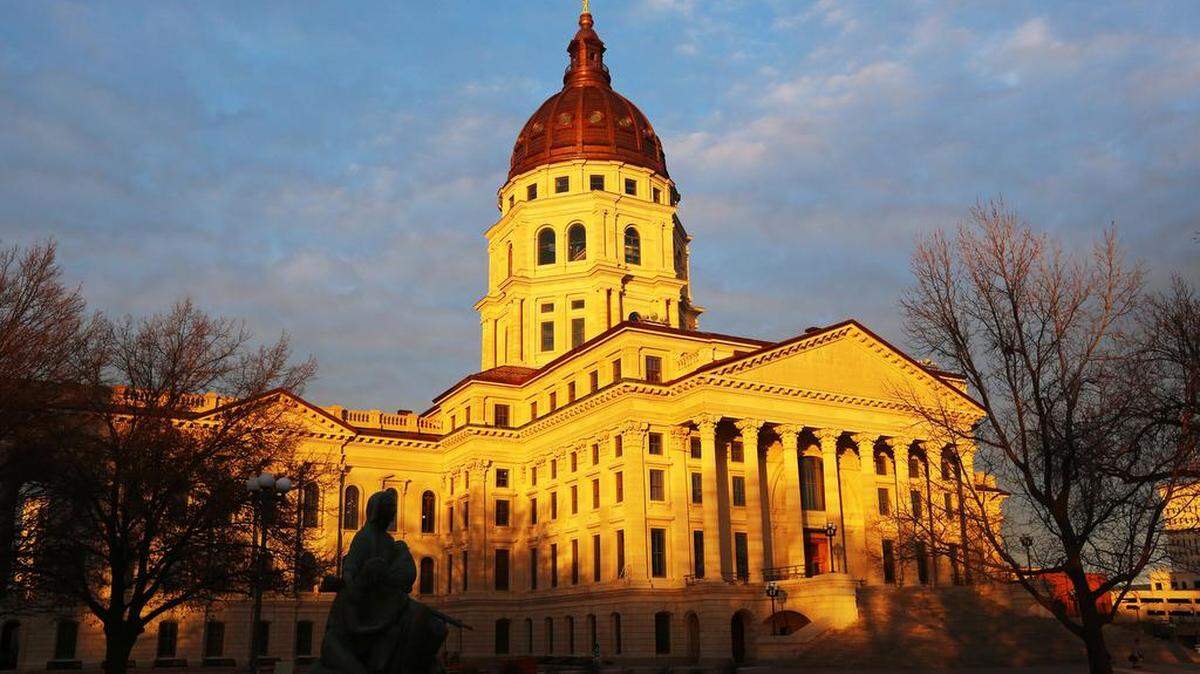
Lawmakers are growing increasingly divided over whether they should pursue one or two bills that would raise taxes as the second week of their wrap-up session ended with little forward progress.
Some lawmakers are now raising the possibility of making budget cuts if the division continues to frustrate attempts to pass a tax plan and enact a new school funding formula.
“If we don’t solve those, my committee will be going back to work and we’ll start the cutting process,” said Sen. Carolyn McGinn, R-Sedgwick, who chairs the Senate’s budget committee.
McGinn said she has started thinking of areas for potential cuts, though she didn’t name them. They are not items that either the House or the Senate will like, she said, “but if you don’t have the money, you don’t have the money.”
Those who favor a two-bill approach say lawmakers should pass a tax plan as soon as possible that would close the state’s budget shortfall, which is projected at about $900 million over the next two years. Then, they say, the Legislature should craft a second package that would pay for anticipated increases in education spending.
Opponents of the idea argue that passing two tax increases in one session may prove politically impossible. They also warn that lawmakers are working on a running clock – facing a court-imposed deadline of June 30 to enact a new school funding formula and show that Kansas can pay for it.
Second bill for schools
The Kansas Supreme Court in March ruled funding for schools inadequate, citing academic underperformance by 25 percent of students. The justices did not provide a specific funding level.
A school finance plan in the House would ramp up spending on education by $750 million over five years. A tax plan the Senate rejected Wednesday would have raised about $1 billion over the next two years – not enough to cover the budget shortfall and pay for the education spending increases called for in the House proposal.
The most prominent supporter of a two-bill approach, Senate Majority Leader Jim Denning, R-Overland Park, said the Legislature needs to work separately on raising revenue for the overall budget and on raising revenue to increase funding for schools. The coalition of lawmakers needed to make progress on each issue is different, he argued.
“There’s going to be folks who are going to vote for the budget,” Denning said. “There will be another set of folks that will vote for a reasonably calculated school finance formula. The governor may look at those two entirely differently. So we need to break it down into pieces we can manage.”
If lawmakers pursue two tax bills, the first would likely be the largest, and would probably raise personal income tax rates and repeal tax exemptions on certain kinds of business income.
What a second bill would contain is less clear, but ideas floated so far center on surcharges.
Denning has proposed a surcharge on utility bills as a way to raise additional funds for education. His plan would charge residential customers an extra $3 a month each on electric, gas and water for an increase of $9 a month. He estimated that would help raise $150 million a year.
Commercial customers would pay an additional $10 a month on each bill.
In the House, the tax committee chairman, Rep. Steven Johnson, R-Assaria, introduced a bill Thursday that would impose a surcharge on income tax payments. He has described the charge as operating as a “tax on a tax” that would also be used to raise money for education.
However, Johnson’s legislation maintains a one-bill approach. In addition to the surcharge, the bill includes the same income tax increases found in House Bill 2178.
That bill, which would have raised about $1 billion over two years, passed the Legislature earlier this year but was vetoed by Gov. Sam Brownback. Lawmakers came close to overriding the veto but fell three votes short in the Senate.
Two bills ‘may be easier’
Rep. Tom Sawyer, D-Wichita, said lawmakers may be more supportive now of tax bills than they were earlier this year.
“I think, now, the reality is it may be easier to pass two separate bills. I don’t know, we’ll see how it works out,” Sawyer said.
“He’s trying to do one big bill still,” Sawyer said of Johnson. “We’ll see. At the end we’ve got to balance the budget, fund schools. So whatever it takes to do that.”
At the end of the day, the Legislature will only pass one tax plan, predicted Rep. Steve Huebert, R-Valley Center. What passes will depend on what the Senate does, he said, adding that the House is waiting for the Senate to formulate a position.
The House hasn’t debated a tax plan since lawmakers returned from break two weeks ago. The House voted to override Brownback’s veto of HB 2178 earlier in the session, while the Senate did not, leaving the sense among many representatives that the House should not vote again on taxes until the Senate passes a bill.
“Moving forward, the Senate needs to decide,” Huebert said.
Sen. Barbara Bollier, a moderate Republican from Mission Hills, voted in favor of the tax plan that failed in the Senate on Wednesday. The plan would have added a third personal income tax bracket and raised the rates of the current two brackets. It would also have reinstated taxes on certain kinds of business income.
She expressed an openness to passing two tax bills.
“If I was in charge, we would have one package. I’m not in charge. I have to work with what I’ve got,” Bollier said.
Denning said the failure of the three-bracket plan makes it more likely the next plan the Senate takes up will have two brackets. The Senate should begin moving toward a two-bracket plan with the aim of getting 21 votes – the number of senators needed to pass legislation – instead of 27 votes, which is the number needed to override a veto, he argued.
Brownback is more likely to support a two-bracket plan, he said.
“He says if we can bring a two-tier, he will let that become law,” Denning said.
The governor has not publicly said he would allow a two-bracket plan to become law. The only legislative plan he has openly endorsed was a flat tax plan that received only three votes in the Senate.
A two-bracket plan would raise less than a three-bracket plan, however. That in turn makes it more likely that lawmakers would need an additional tax bill to raise revenue for schools.
Senate Minority Leader Anthony Hensley, D-Topeka, said he would be surprised if a two-bracket plan passed the Senate, and he predicted it would face a rough reception in the House because it wouldn’t raise enough revenue.
“A two-tier tax plan is just going in the opposite direction of where we need to go,” Hensley said.
Jonathan Shorman: 785-296-3006, @jonshorman
This story was originally published May 12, 2017 at 3:11 PM with the headline "Lawmakers split over whether to pass one tax bill or two."