
Invasive pythons hide a parasite that has spread to Florida’s native snakes, lab says
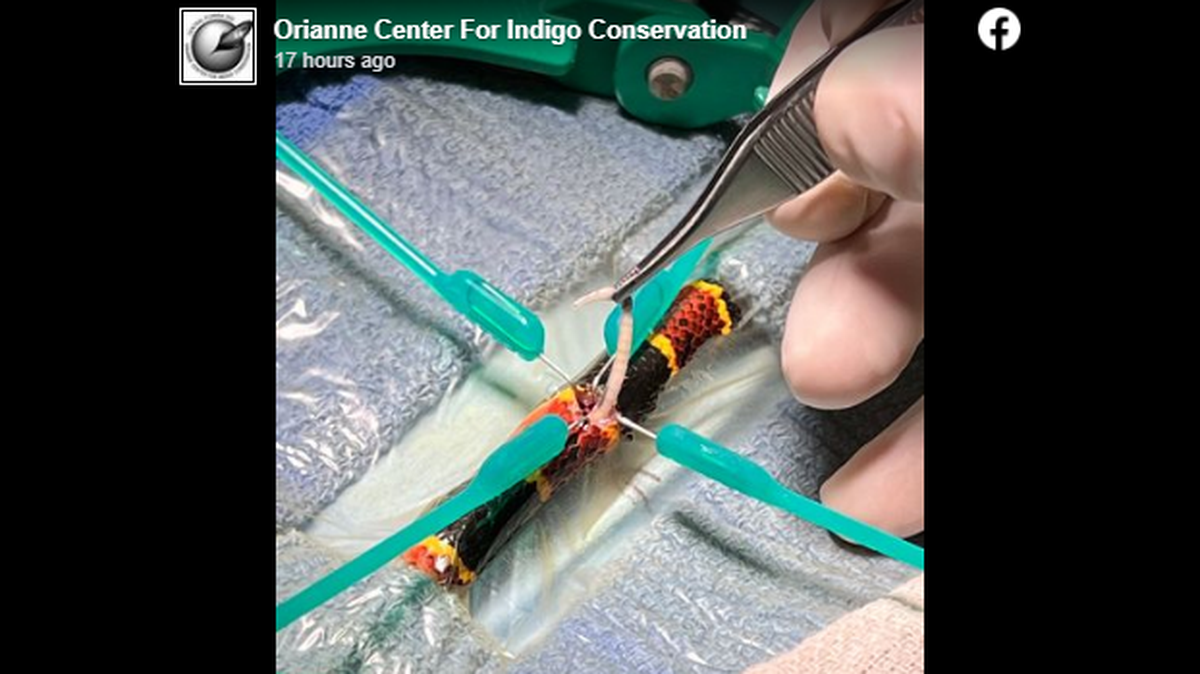
A highly venomous coral snake was sliced open by a Florida surgeon, and what he found has stark ramifications for Florida’s vast snake population.
The snake had three large parasitic worms in its tiny lungs — worms that are not native to North America, according to the Orianne Center for Indigo Conservation at the Central Florida Zoo & Botanical Gardens.
So how did it become infected?
“The parasite ended up being the pentastome that is associated with the invasive Burmese python, which has become a concern for Florida snakes,” the center wrote on Facebook.
“This is a great example of the effects invasive species can have on native Florida wildlife!”
Photos shared by the center show the creamy white worms were durable enough to be plucked out intact.
The one-ounce coral snake survived “with no complications and will live its life safe and healthy at the OCIC,” the center reported.
It’s not known how the coral snake became infected, but researchers have found the same parasites in Florida’s banded water snakes, according to a study published in 2022.
The worms are native to southeastern Asia and Australia, and “believed to have been introduced into southern Florida ... along with Burmese pythons (Python bivittatus) in the 1990s,” the report states.
Though preferred weather conditions have restricted pythons to South Florida, the worms are spreading north among native snakes, the study concluded.
“While (the parasite) is of limited clinical significance to the Burmese python, these invasive pentastomes are likely contributing to morbidity and mortality in native snake species,” the report states.
“As North American snakes species have not coevolved with (the parasites), the pathogenic effects may be more severe.”
Burmese pythons are large, nonvenomous constrictors that became established in southern Florida when pet snakes escaped or were released, experts say. They grow to 18 feet in Florida and are creating havoc in the environment by preying on native species, including endangered animals, according to the Florida Fish & Wildlife Conservation Commission.
This story was originally published January 10, 2023 at 8:16 AM with the headline "Invasive pythons hide a parasite that has spread to Florida’s native snakes, lab says."