This puzzle sat unsolved for 2,500 years — until one student had a ‘eureka moment’
%20held%20by%20Cambridge%20University%20Library_Image%20credit_Cambridge%20University%20Library%20(CC%20BY-NC%203.0).jpg "The new discovery will allow experts better insight into Indian history, the student said.")
An ancient grammar problem has left experts stumped for 2,500 years. Now the code has been cracked by a Ph.D student.
Rishi Rajpopat was conducting research for his University of Cambridge thesis, which was published Dec. 15, when he solved a centuries-old puzzle surrounding a rule taught by Pāṇini, known as the father of linguistics, according to a news release from the university.
The discovery has been called “revolutionary” and will allow any Sanskrit word to be derived using Paṇini’s “language machine,” the university said. It could also mean that for the first time, Paṇini’s grammar can be programmed and taught to computers.
Sanskrit is an ancient language deriving from South-Asia and is the “sacred language of Hinduism,” according to the university. It has also been used in some of India’s scientific, philosophical and secular literature.
Student’s theory is key for solving ‘rule-conflicts’
While Pāṇini’s rules have provided scholars the means to understand Sanskrit, some rules are can be applied in the same circumstances, causing confusion among experts.
Known as “rule-conflicts,” these situations are applicable to millions of words, the university said. To combat the conflict, scholars have attempted to apply a metarule that helps determine how to solve a “rule-conflict.” This rule has been misunderstood and misapplied, though.
Rajpopat’s solution argues that when faced with a “rule-conflict,” you should apply the rule that fits the right side of the word. Testing proved that Rajpopat’s theory “produced grammatically correct words with almost no exceptions,” the university said.
Student was ‘almost ready to quit’ before cracking ancient code
The 27-year-old said he struggled to find a solution to the algorithm and came close to quitting.
“I was almost ready to quit, I was getting nowhere. So I closed the books for a month and just enjoyed the summer, swimming, cycling, cooking, praying and meditating,” he said, according to the news release. “Six months later, I had a eureka moment.”
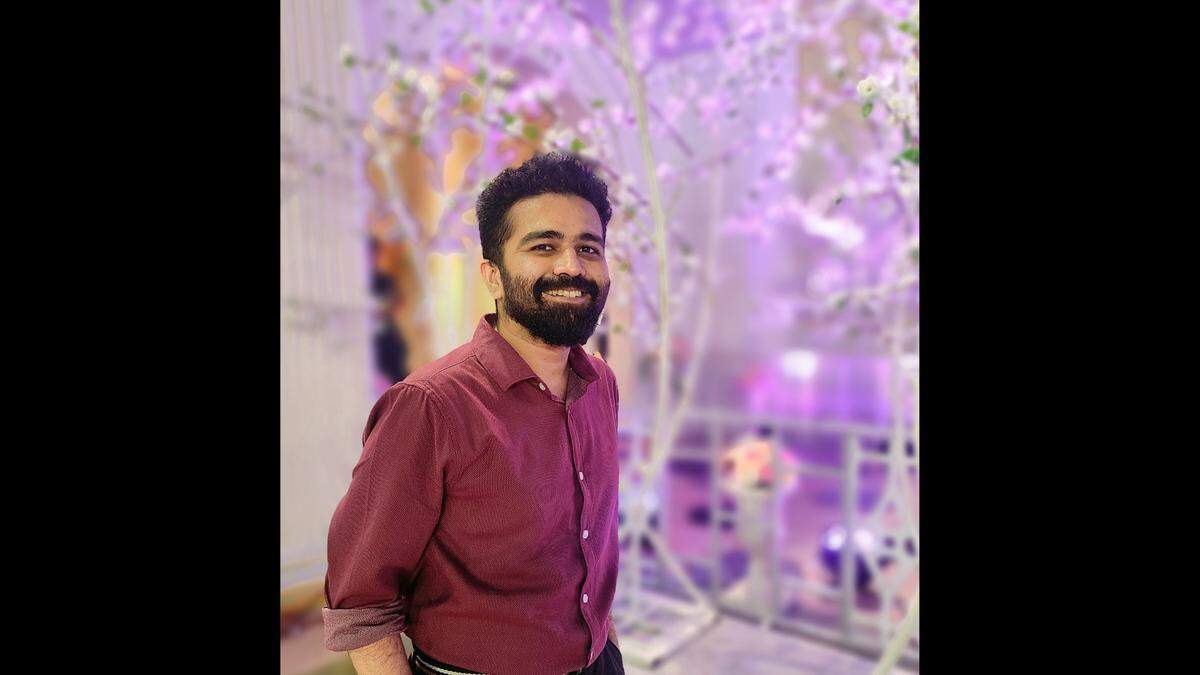
“Begrudgingly I went back to work, and, within minutes, as I turned the pages, these patterns starting emerging, and it all started to make sense,” Rajpopat said. “For over two millennia, the key to Pāṇini’s grammar was right before everyone’s eyes but hidden from everyone’s minds!”
For the next two and a half years, Rajpopat continued his work, solving more and more of the puzzle until he had a full understanding.
“Over the next few weeks I was so excited, I couldn’t sleep and would spend hours in the library including in the middle of the night to check what I’d found and solve related problems. That work took another two and half years,” he said.
Discovery will lead to better understanding of Sanskrit
The new understanding marks a “major milestone” and will “revolutionize” scholars’ ability to understand Sanskrit.
Rajpopat, who was born in Mumbai, said he is hopeful his discovery will promote a greater understanding of Indian history and will encourage other Indian students to pursue their academic ambitions.
“Some of the most ancient wisdom of India has been produced in Sanskrit and we still don’t fully understand what our ancestors achieved.” he said. “I hope this discovery will infuse students in India with confidence, pride, and hope that they too can achieve great things.”
This story was originally published December 16, 2022 at 1:09 PM with the headline "This puzzle sat unsolved for 2,500 years — until one student had a ‘eureka moment’."