
‘Horrific smell’ leads to discovery of large alligator skeleton in Florida swamp
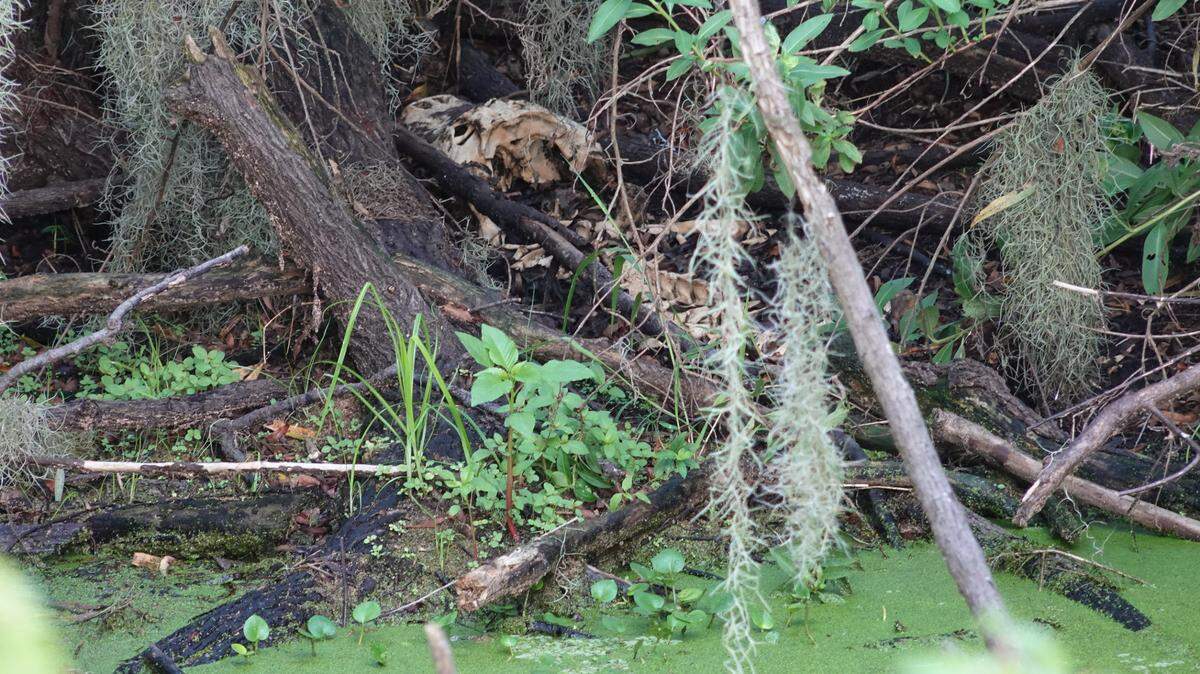
A hiker intrigued by a “horrific smell” stumbled onto something rarely seen in Florida’s swamps: The skeleton of an alligator that mysteriously avoided being eaten postmortem.
Jamie Murdoch made the discovery Aug. 7, when water levels had fallen by several feet in Polk County’s 1,267-acre Circle B Bar Reserve.
Murdoch, a photography hobbyist, posted a solemn photo of the skeleton on the Alligators of Florida Facebook page, where it has gotten hundreds of reactions and comments.
“It looked to me like most if not all of the skeleton was there,” Murdoch told McClatchy News.
“I have never seen an intact skeleton before, and it was in such good shape. It also was pretty well bleached out. Normally, the skeletons fall apart because the skull is so fragile.”
Her photo shows the alligator appeared to have died while resting on the lake’s bank, with its body half in the murky green water.
Florida’s alligators are also notorious cannibals, known for eating their own — dead and alive. That process involves a lot of ripping and seldom ends with skeletons staying together.
Murdoch says ”a horrific smell” was first noticed by Circle B visitors in July, near a dock on Lake Hancock. It was clear “something very large was dead,” she said.
A month had passed when Murdoch returned to the area and saw something she mistook for an alligator nest.
“I stopped when I saw something white and was thinking it was gator eggs. I looked closely, and it was a gator skeleton!” she said.
“I was shocked. It was a large gator, at least a 9-footer. It was a little sad, and I had so many questions.”
Chief among those questions was how it died, but the skeleton was in a spot that forbid closer inspection, she said.
Three days later, she returned to find water levels had risen and covered the skeleton.
“As mysteriously as it appeared, it disappeared,” she said.
“The gator skeleton was really neat in the fact that you never see anything like it. When you do, it is a reminder that even these apex predators are mortal. Even in death, they are very impressive.”
It is estimated Florida is home to 1.3 million alligators and they can be found in all 67 counties, according to the Florida Fish and Wildlife Conservation Commission. The record length is 14 feet, 3.5 inches, state officials say.
This story was originally published August 25, 2022 at 6:19 AM with the headline "‘Horrific smell’ leads to discovery of large alligator skeleton in Florida swamp."