
What is this thing? Photo captures bizarre scene in murky North Carolina pond
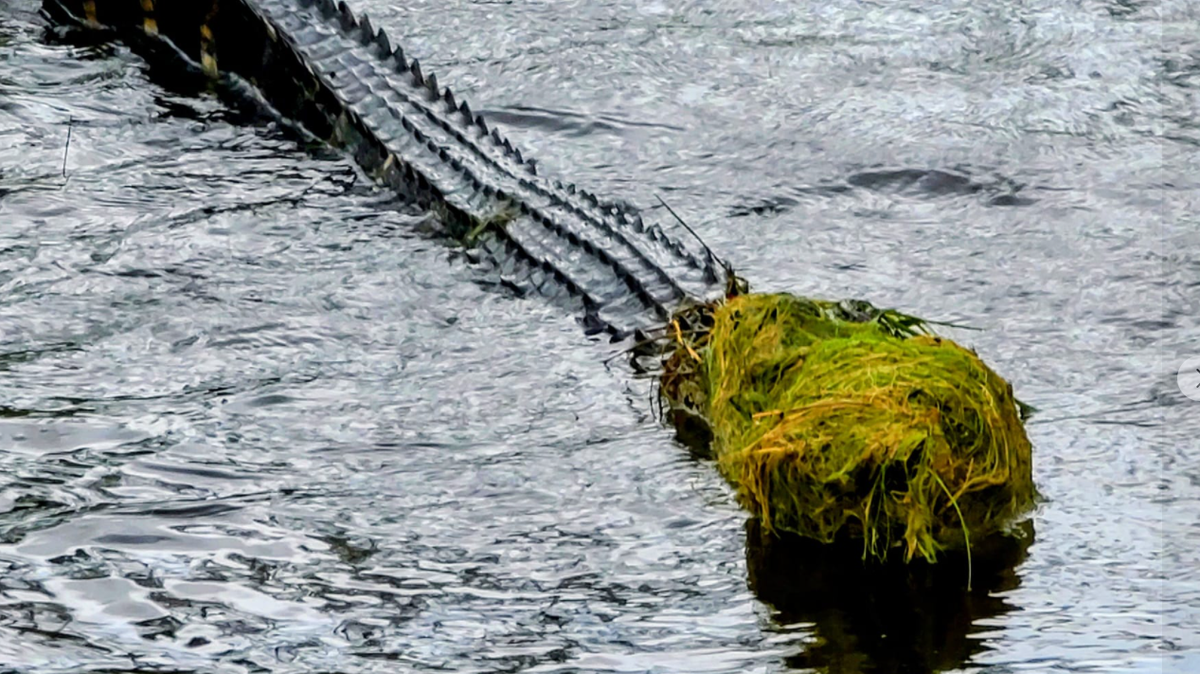
A photo taken in the murky waters of eastern North Carolina could easily provide proof of monsters for tabloids.
The image shows a large creature with the body of an alligator with the mutant head of a sea monster.
No eyes, nose or mouth can be seen.
The photo was taken in the Brunswick County town Boiling Spring Lakes and shared on Facebook this week by photographer Kathy Sykes, who jokingly called it the Loch Moss Monster.
It is actually a very angry alligator — one that became unrecognizable after getting its head stuck in a blob of the moss and sea grass.
The 6-foot female gator was being reeled in by researchers at the moment and became recognizable only after she opened her gaping mouth, parting the moss.
“My heart went out for her, as this magnificent creature appeared helpless,” Sykes told McClatchy News.
“That feeling passed quickly as her stone cold marble eyes were revealed for what she is — a modern day dinosaur fueled by raw emotionless instinct. ... To say my girl was not happy about being captured was an understatement.”
Alligators are the closest thing North Carolina has to real monsters, growing to 13 feet and nearly 500 pounds, according to the N.C. Wildlife Resources Commission.
They are also one of the first things that come to mind when mysterious shapes are photographed in North Carolina’s lakes and rivers. The species has an uncanny ability to blend in on land and in water, earning it a reputation for being mysterious and dangerous.
Skyes’ photo was taken Oct. 5 at a pond not far from her home. The alligator was captured by SAFEwater-NC researchers, who are collecting fish and alligator data for a water toxicity study. The project aims to measure the impact of industrial chemicals (poly and perfluoroalkyl alkyl substances, commonly known as PFAS) on wildlife, according to N.C. State University.
All alligators included in the study are released unharmed within about 15 minutes, officials say.
Sykes says the moss-covered gator is known in her neighborhood for being a survivor, having lived for a time with a fish hook deeply embedded in her lower left eyelid. The hook was removed last spring by wildlife experts, and it is believed the reptile has recovered vision in that eye, Sykes says.
However, neighbors in the area continue to refer to the alligator as “Little Cyclops,” she says.
This story was originally published October 14, 2021 at 10:11 AM with the headline "What is this thing? Photo captures bizarre scene in murky North Carolina pond."