
Large jars hint at an ‘undiscovered shipwreck’ sitting close to shore off Outer Banks
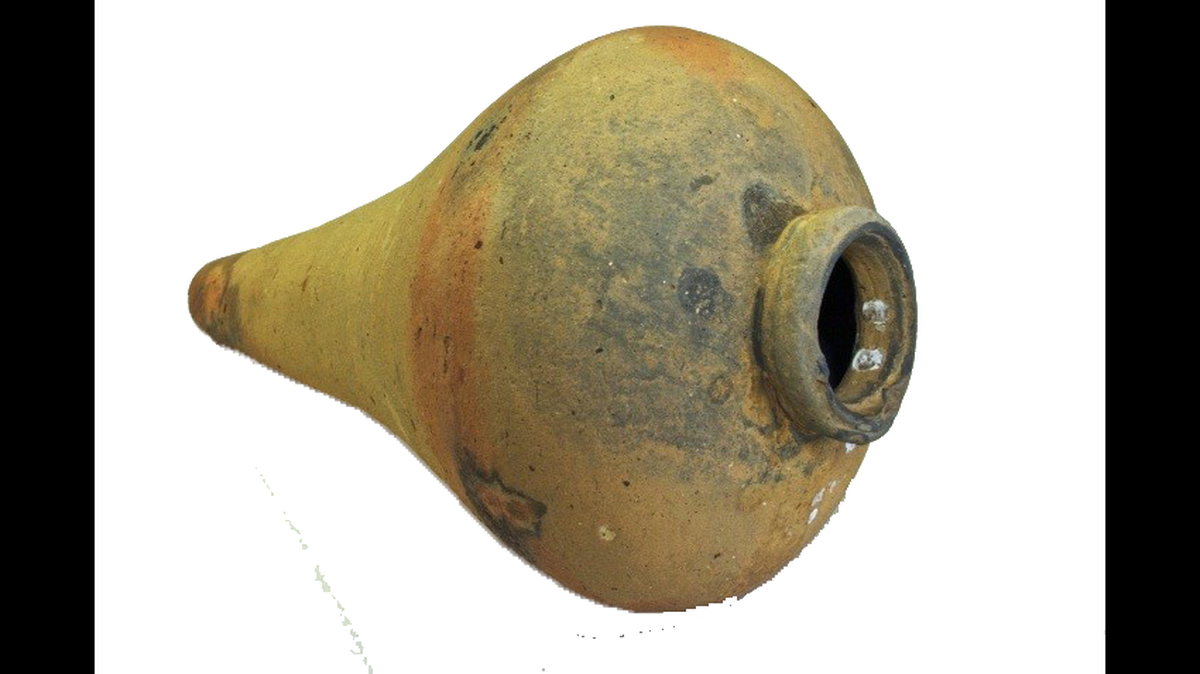
Mysterious Spanish jars dating back to the 1780s — some still corked — have been found sporadically along Cape Lookout in North Carolina’s Outer Banks, leading experts to conclude a historic shipwreck is hiding just off shore.
However, the prized artifacts have yet to provide enough clues to find the suspected vessel, according to Cape Lookout National Seashore.
Details of the finds were shared on Facebook earlier this month, including a photo of one jar spotted in 2008 on the South Core Banks.
The jar appeared to be in mint condition, suggesting it didn’t have to tumble far to end up on a beach. The jars are typically 16 inches long and 10 inches wide, officials said, and occasionally show up still corked.
“Five Spanish Olive Jars of this type have been found along the beaches of Cape Lookout National Seashore,” the park wrote.
“Some were corked and contained seeds that have been identified as Olea europaea, the European olive,” the park wrote. “The fact that intact corked olive jars and fragments of others were found relatively close together suggests that there could be an undiscovered shipwreck site not far offshore.”
The five jars appeared between 2001 and 2008, and are among several artifacts the park believes came from the same shipwreck, officials told McClatchy News. Other discoveries include a ship’s “deadeye” (part of the rigging) and “a small, earthenware pitcher that showed on the tip of the cape.”
Storm currents may have “excavated” the artifacts, allowing them to be carried to shore by “stronger storm waves,” park officials said.
The park’s Facebook post has gotten hundreds of reactions and comments, including questions from people wanting to know where to start looking. A few giddy treasure hunters even declared: “If I find one of these bad boys it’s finders keepers.”
However, that’s not the case on federal land. The intent of the Facebook post was to point out such discoveries inside a national park are government property under the Antiquities Act passed in 1906, the park said.
“Should you be lucky enough to discover a jar on the beach, please let park staff know,” officials said.
“Once it’s out of the ocean and begins to dry, the salt from the ocean water can damage the jar. It will need some special care by our museum staff to preserve it. And as a historic, cultural artifact, this is not something you will be able to take home with you.”
Park officials say the jars remain “rare finds” that are typically separated by years and show up on the ocean side of Cape Lookout.
“There is no one area that they have been found more often than other areas. Although, generally they are not found near the ferry arrival areas, but are in more remote locations,” the park said.
Such earthenware vessels were often filled with “oils, dyes, tobacco, wax, and seeds,” then corked for shipping over land and sea, experts say.
They were typically made by Spanish potters from 1780 to 1850, suggesting the shipwreck could be Spanish. However, it’s also possible the ship is a non-Spanish vessel that had recently done trade with the Spanish, experts say.
Spanish colonial ships are among the oldest of the thousands of vessels in the Graveyard of the Atlantic, a treacherous area off the Outer Banks where north and south bound currents collide. Shoals constantly shift locations and cyclones are credited with sinking most of the vessels in the region, experts say.
This story was originally published October 11, 2021 at 6:37 AM with the headline "Large jars hint at an ‘undiscovered shipwreck’ sitting close to shore off Outer Banks."