
Tree snakes master ‘bizarre’ new technique for climbing: Tying their body into lassos
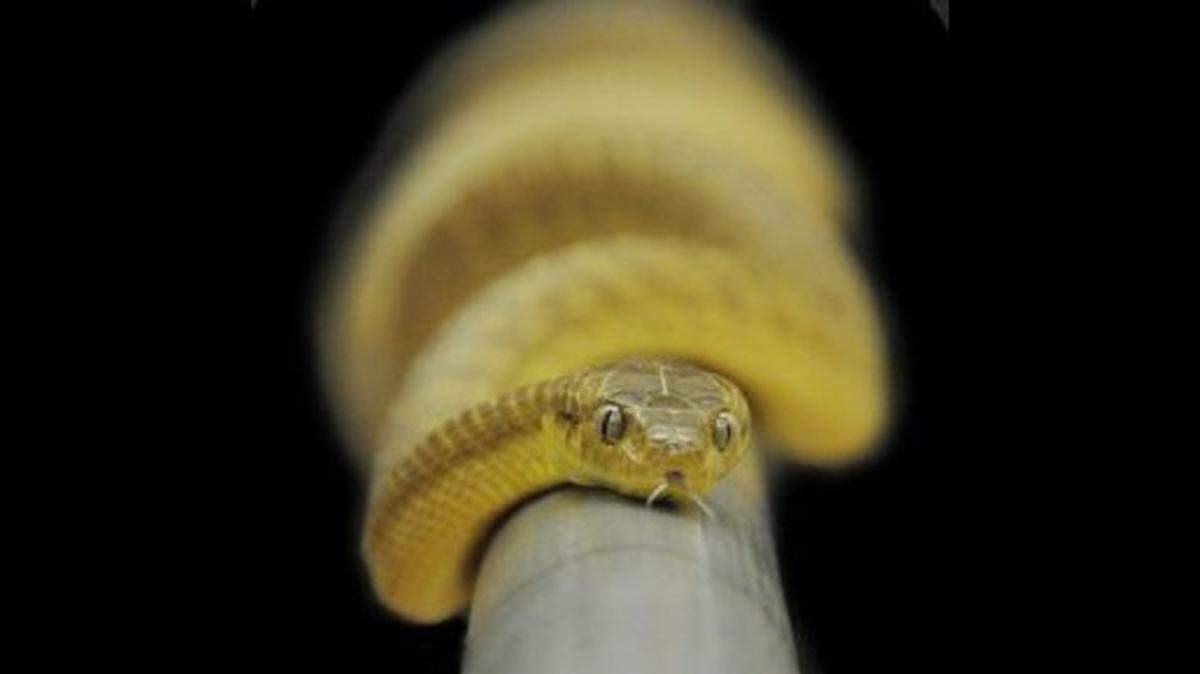
A “bizarre” discovery involving tree snakes is proving they’re smarter, more adaptable and perhaps more intimidating than we suspected.
Invasive brown tree snakes on the U.S. island of Guam have learned to tie themselves into lassos, so they can crawl up thicker trees and smoother poles to feast on unsuspecting birds.
That’s the conclusion of a study published Monday in Current Biology, by a team of researchers from Colorado State University and the University of Cincinnati.
The movement is called “lasso locomotion” and researchers say it has enabled brown tree snakes to do what seems impossible, according to a release from CSU’s Warner College of Natural Resources.
“It allows these animals to access potential prey that might otherwise be unobtainable and may also explain how this species could climb power poles, leading to electrical outages,” the release said.
Study co-author Tom Seibert reports the team made the discovery while researching obstacles to keep brown tree snakes from reaching nests in elevated bird boxes. However, video showed the snakes eventually figured out how to get around the obstacles, the release said.
“We had watched about four hours of video and then all of a sudden, we saw this snake form what looked like a lasso around the cylinder and wiggle its body up,” Seibert said in a release. “We watched that part of the video about 15 times. It was a shocker. Nothing I’d ever seen compares to it.”
Brown tree snakes are native to Australia, Indonesia and Papua New Guinea in the Pacific region, and were likely brought to Guam by accident on cargo ships “in the 1950s,” the U.S. Department of Agriculture reports. They feed on birds and lizards, and cause “frequent power outages by climbing on electrical wires,” the USDA says.
“Since the treesnake has no natural predators or other controls on Guam, it multiplied rapidly and has virtually wiped out Guam’s native forest birds,” the U.S. Geological Survey says.
“Brown treesnakes are mildly venomous. While the snakes are not considered dangerous to an adult human and no known deaths have occurred, young children can have reactions to tree snake bites.”
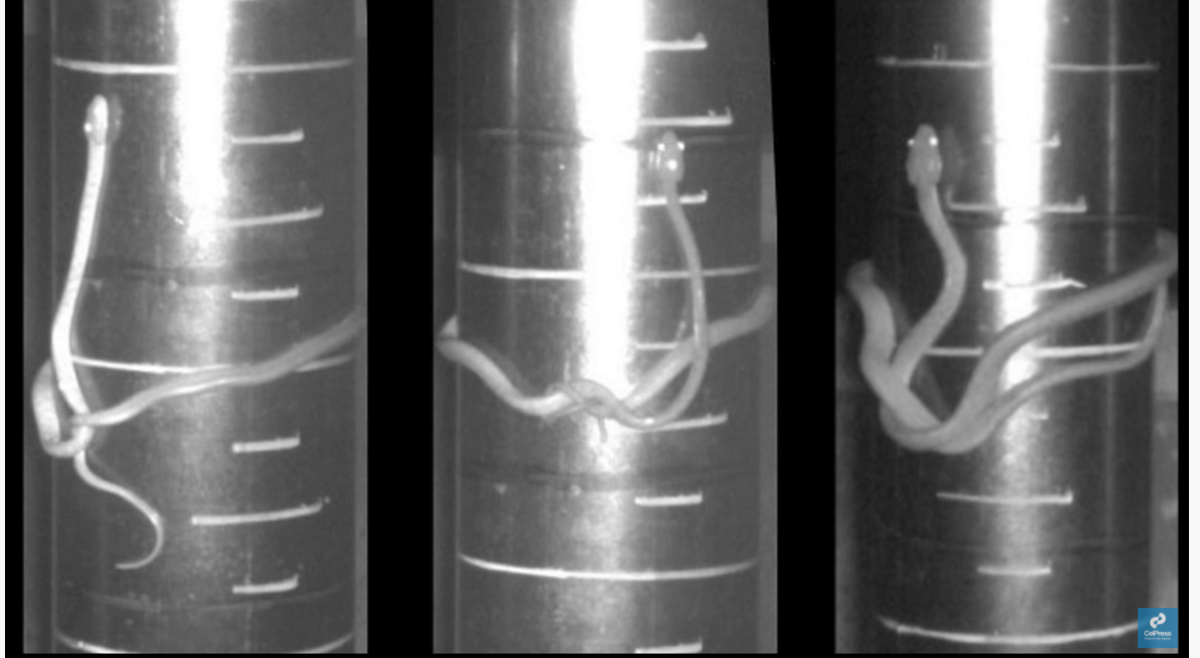
The new lasso-climbing technique was confirmed with the help of Bruce Jayne, a professor at the University of Cincinnati and expert in snake muscle function and movement, officials said. He determined the brown tree snake had taught itself to loop “its body around to form a single gripping region,” the release said.
It’s a trick that is apparently taxing on the snakes, which exhibited “slow speeds, slipping, frequent pausing and heavy breathing,” the study noted.
“I’ve been working on snake locomotion for 40 years and here, we’ve found a completely new way of moving,” Jayne said in the release. “Odds are, there is more out there to discover.”