
Are sharks eating each other off East Coast? More proof of shark-on-shark bites found
Shark researchers working in the North Atlantic have found yet another example of bite marks on a shark, suggesting the apex predators are attacking each other for reasons that remain unclear.
The latest example was discovered eight miles off Saco, in southern Maine.
James Sulikowski of the Sulikowski Shark and Fish Conservation Lab posted photos on Facebook showing teeth marks across a porbeagle shark, as if it had been squeezed between the jaws of a larger predator.
“Ouch! Sharks are carnivores and opportunistic feeders. They often eat each other, too!” Sulikowski posted.
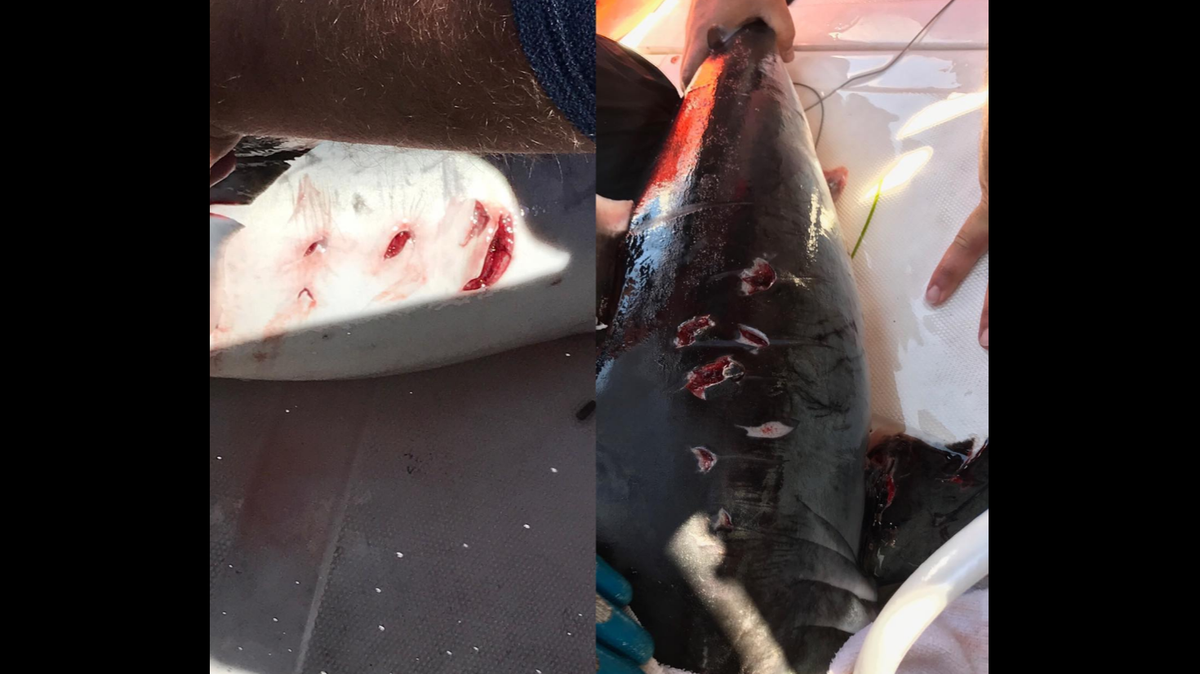
“This little porbeagle was captured with all sorts of bite marks. ... We never saw or captured what bit her. The mystery remains!”
Porbeagle sharks grow to 6 and a half feet in length and weigh on average 300 pounds, according to Oceana.org.
“Because of their size, porbeagle sharks do not have any known natural predators,” the site said.
Sulikowski’s find marks the third time in seven months researchers in the North Atlantic have reported a shark with evidence of bite marks from a bigger animal.
In October, OCEARCH found a 12-foot-9-inch great white shark with teeth marks indicating something “had just grabbed his entire head,” McClatchy News reported.
And earlier this month, the Atlantic White Shark Conservancy said it was tracking a 12-foot great white shark with multiple bite marks, including a chunk missing from its tail, according to McClatchy News.
The Sulikowski lab — based out of the School of Mathematical and Natural Sciences at Arizona State University — collected data from the bitten 3-foot, 6-inch foot porbeagle, tagged it and then released it.
Sulikowski speculated the bite “looks almost like near misses.” He also said the gashes appear too far apart to suggest it was bitten by another porbeagle shark.
It’s possible, he said, that the bite was from a great white shark, which grow up to 20 feet in length, according to the Smithsonian National Museum of Natural History.
OCEARCH, which studies great white sharks, has speculated the predators bite each other during mating season. This can include males fighting over a female or females warding off the advances of an unwanted male, OCEARCH told McClatchy News last year.
National Geographic says great white sharks eating each other “is not outside the realm of possibility” after evidence found in 2014 indicated a 9-foot great white shark tagged off Australia had been eaten by something much bigger.
This story was originally published May 27, 2020 at 7:15 AM with the headline "Are sharks eating each other off East Coast? More proof of shark-on-shark bites found."