
Thousands of creepy, crawly itsy-bitsy spiders invade Arkansas highway, photos show
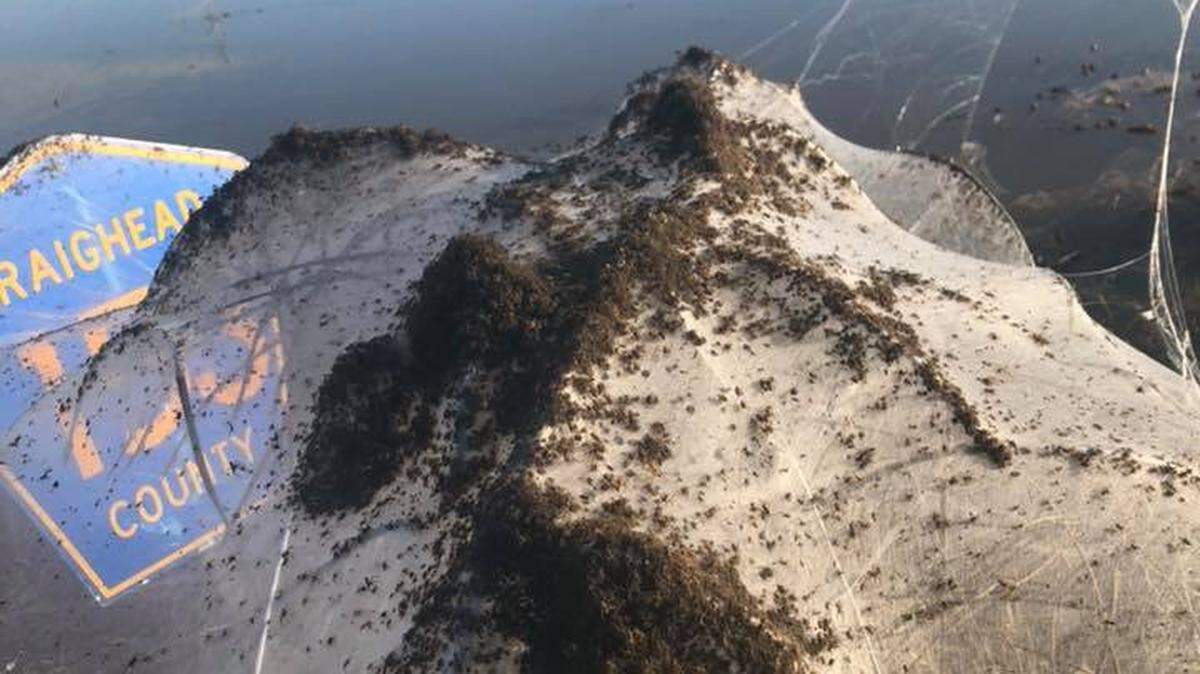
They’re creepy, they’re crawly and they were caught invading an Arkansas highway last week.
Zach Riggs posted photos and video evidence of these itsy-bitsy spiders and their thick webs to Facebook on Nov. 6.
He told McClatchy that he thinks there were “at least thousands of them” crawling on the side of Highway 230 just outside of Bono, Arkansas. That’s in Craighead County.
In the photos, spiders can be seen covering street signs and bushes along the side of the highway.
Fortunately for Riggs, he doesn’t have arachnophobia — the fear of spiders.
“This was my first time ever seeing something like that,” he told McClatchy in a Facebook message. “And I absolutely love spiders so I thought it was one of the coolest things that I have ever seen.”
While taking in the rare sight, the spiders even started crawling on Riggs’ legs and his car.
“There was several in my car because I forgot to close the door,” he wrote.
That could be why Riggs had just one question when he posted the photos: “Anybody need some spiders?”
Riggs said he wasn’t sure what kind of spiders he had a close-up encounter with, but FOX News reports that they may be Tetragnatha spiders.
Those eight-legged critters “live all over the world near watery habitats and are prolific web builders,” LiveScience reported in September . In Riggs’ photos, the spiders could be seen near water. He said the road had been closed due to flooding the day before.
Earlier this year, in Greece, Tetragnatha spiders blanketed a Greek beach with their webs just like in Arkansas, USA Today reported.
“They mate, they reproduce and provide a whole new generation” in humid conditions, Maria Chatzaki, a biology professor at Greece’s Democritus University of Thrace, told Newsit, according to a BBC translation. The spiders mate in the large nests, BBC reported.
“The spiders will have their party and will soon die,” Chatzaki said, according to the BBC. She also said the spiders do not put humans in danger.
AccuWeather reported that Craighead County had recent storms, which provided a “moist environment” for the spiders on Nov. 6, the day Riggs posted the photos.