
‘No one like him’: Wichita mourns man who expanded homeless housing, helped in Haiti
The Rev. Samuel “Sam” Muyskens was many things to many people.
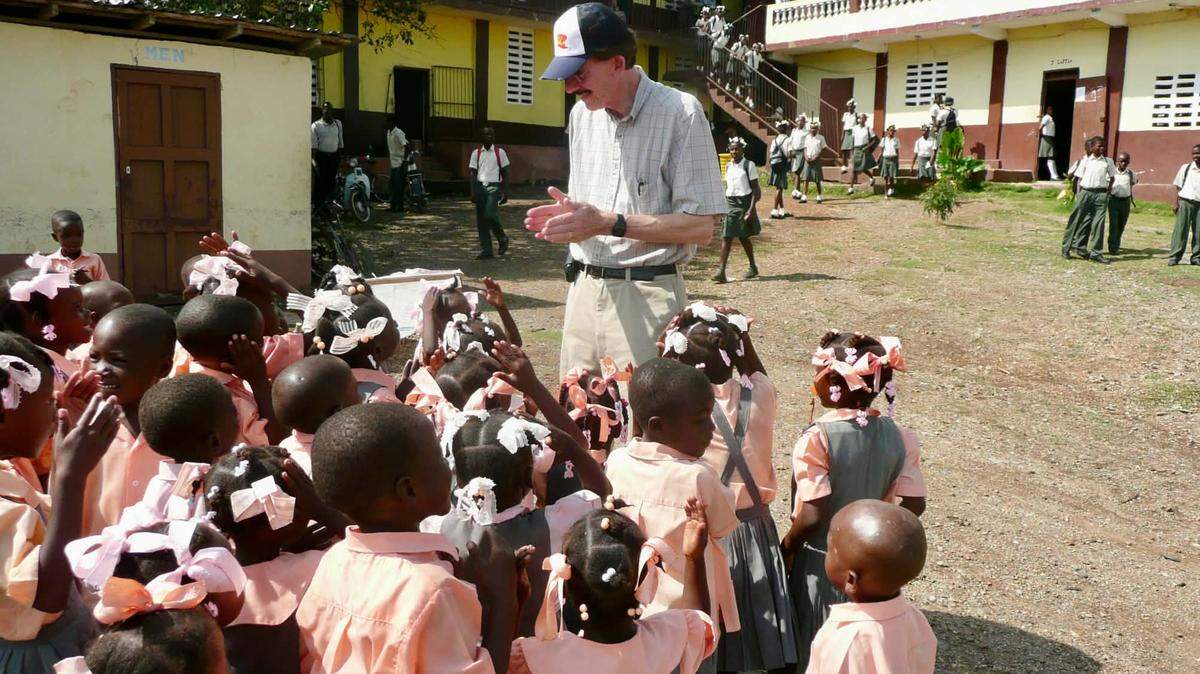
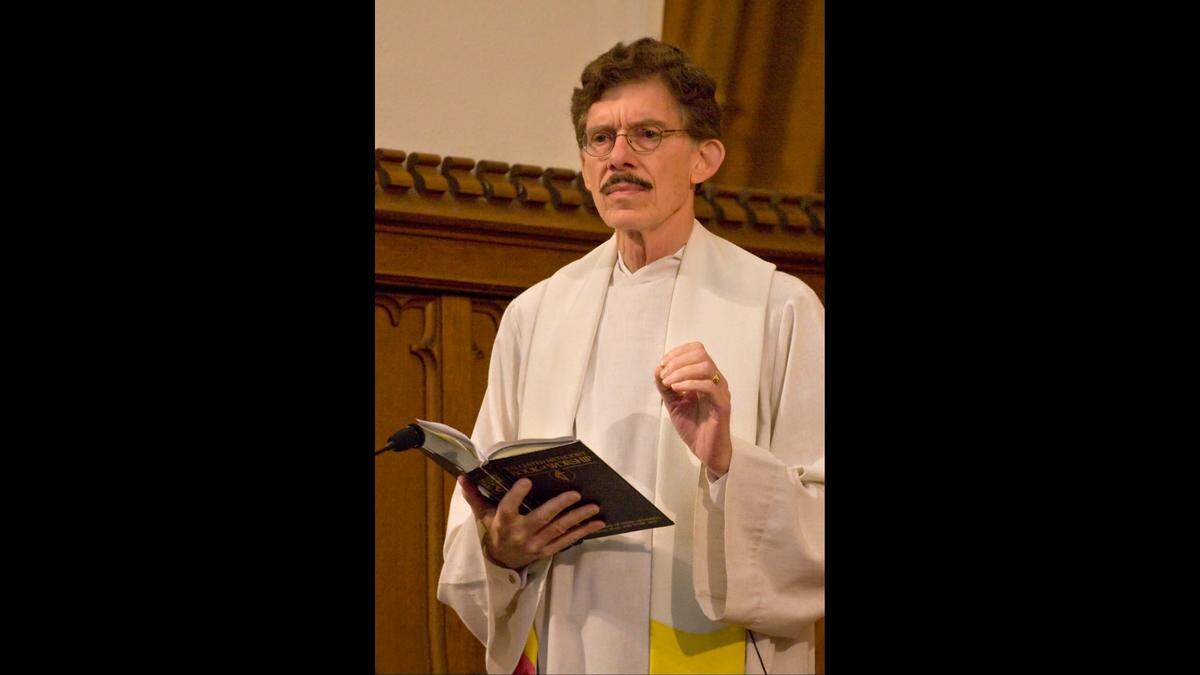
To a town in Haiti he became a missionary, ensuring their school ran strong for decades. To unhoused people around Wichita, he helped expand available housing when he led Inter-Faith Ministries (now HumanKind Ministries). And to his family and many others, he was known as a preacher, world traveler, someone inclusive of all faiths and a talented musician.
To just about everyone, he was also incredibly tall.
“And I think that he embraced being this 6-foot-7 Dutch man,” said his daughter, Joellan Chang, who recalled kids lining up after her dad preached from around 1979 until 1992 at West Heights United Methodist Church. “Every kid wanted to take a ride up on pastor Sam.”
She added: “He was always just a very happy, thankful, friendly person.”
At the helm of Inter-Faith Ministries, he expanded housing for the homeless, including buying the nonprofit’s first building at 320 E. Central from Jim Garvey, who gave the organization the deed after they leased it for $1 each year for seven years.
“I really admired him,” Garvey said. “A lot of energy, very enthusiastic, positive guy. He was a delight to get to know.”
Muyskens was also a mentor to the Rev. Dr. Kevass J. Harding, who pastors Dellrose United Methodist Church.
“He was a major voice for our community, particularly when it came from the underserved. He was about connecting all faiths,” Harding said. “He was a connector of people … It wasn’t about making someone a Methodist … but it’s like, ‘How do we take what you’re doing and what I’m doing for the common good of our community?’”
“He was that voice,” Kevass said.
Muyskens died Jan. 9. He was 85.
A celebration of life will be held at 1 p.m. March 7 at West Heights United Methodist Church, 745 N. Westlink. There will be a time of fellowship and refreshments after the service.
The family will also hold its own service during the Muyskens family reunion later this summer — an every-other-year tradition started by Sam and his five siblings in 1970 after their father died and now kept going by the next generation.
Brother Jim Muyskens said one of his favorite topics brought up during the family reunion is when he and his parents and siblings traveled the country over two summers, performing as the Muyskens Family Band.
Upbringing
Growing up in a home with a father as a preacher and aunt and uncle as missionaries played a huge role in shaping the lives of Sam Muyskens and his siblings.
The family lived in a few states in the Midwest as their father led different churches.
“In those little towns, you had free rein,” said Jim Muyskens, who is 15 months younger than Sam Muyskens. “Sam and I were inseparable for the early share of our life.”
Invariably, no matter where they lived, there was the tradition of making their family’s Dutch crumb cake the same way and often on Sundays. And then eating it in the nuanced Muyskens way.
Everyone in the family cuts their slice horizontally, flips it with the crust plate-down and spreads butter along the top before eating it.
“We inherited that. We just accepted that is the way to do it,” Jim Muyskens said. It “became something of a lore in our family.”
Jim Muyskens, a retired university president who also was a dean at the University of Kansas, said the faith of their family members also had a lasting impact on the children.
He remembers their father, the Rev. George “Bernie” Muyskens, fighting for better living conditions and wages for migrants who came to harvest sugar beets when they lived in Roseland, Minnesota.
Some migrants slept in cleaned-out chicken coops, Jim Muyskens said.
“And so both Sam and I were young, but we got very interested in how that would happen, and my dad got a lot of pushback for taking that position,” he said. “That’s something that, over the years, Sam and I talked about, is how impressed we were with our dad’s work, even though he was having to really struggle to try to make those changes.”
In addition to having a preacher as a father, they had missionaries visit their home, including their aunt and uncle who were in Mexico and India, respectively.
That’s when the “travel bug kind of bit” Sam Muyskens, Jim Muyskens said.
He traveled all over the world as an adult. When he was a child, the family also traveled the U.S. over two summers while performing as the Muyskens Family Band to finance the trip.
Those summers are some of Jim Muyskens’ most vivid memories of childhood.
One summer they went to the East Coast; the West Coast another.
“We went to almost all 50 states and saw national parks,” he said, “and did the kind of traveling they wanted the family to do.”
Their mother, Jannetta Muyskens, was a chalk drawer and would draw imagery of what was being performed — often hymns or religious music.
Their father played the singing saw, which was a folk instrument.
Sam Muyskens played trumpet and sang bass.
“I used to say he was my favorite bass,” said his wife, Ellan Musykens, who met Sam while he was in grad school in Dallas and director of music at a church where she was subbing in as organist.
One story, Jim Muyskens said his sisters like to retell, involves Sam Muyskens performing a song called “Asleep In The Deep,” composed in 1897 and about sailors aboard a ship during a storm, when a bug kept flying around his face.
“He finished perfectly,” Jim Muyskens said, but when he got offstage, a sister asked what he did about the fly.
‘I just swallowed it,’” Sam Muyskens said.
Growing family
Ellan and Sam Muyskens married in the summer of 1970 and then promptly left for a missionary trip to the Soviet Union, Czechoslovakia and East Germany “before the wall came down,” she said.
He then took an assignment as a pastor in South Dakota; she took a job teaching music at the local middle school as well as private piano lessons.
They tried to grow their family, but were unsuccessful, at first.
They filled out the paperwork to adopt.
In 1979, he took a job as pastor of West Heights United Methodist Church. The week before they left, they got a notice of a baby girl coming up for adoption.
“Whether it was a God moment, or something or other, it just happened that way,” she said. “She was just a week old.”
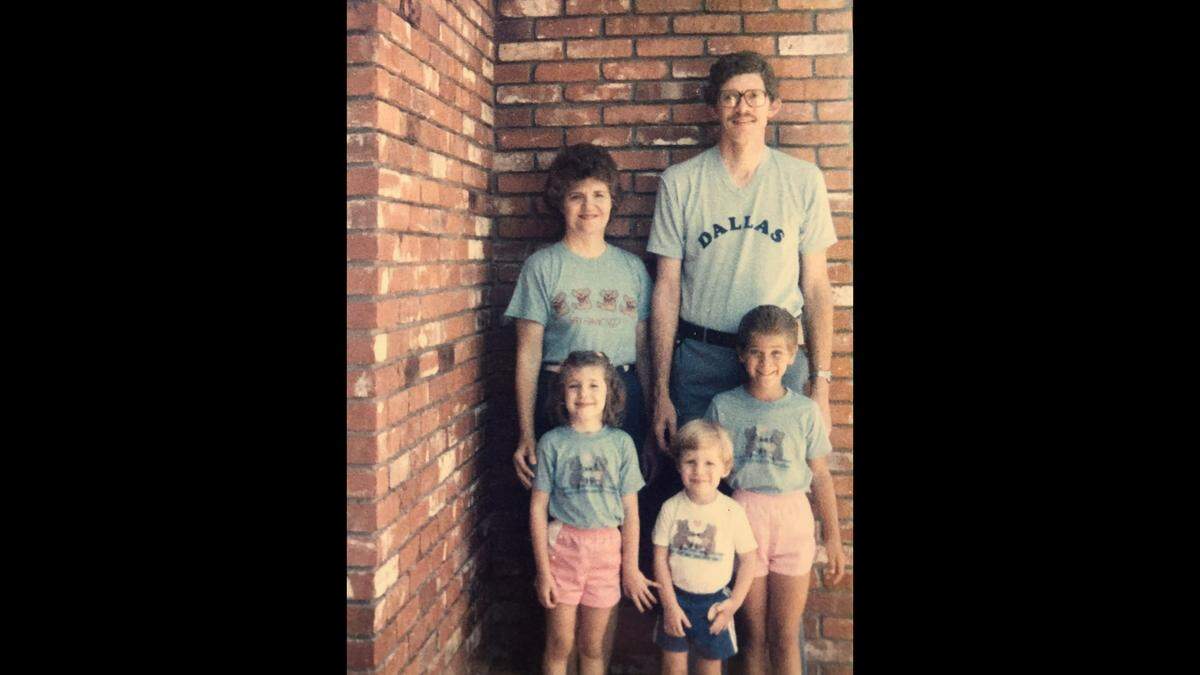
Janna, now Bogle, became a Muysken the day before they drove to Kansas. The first Sunday he preached was Father’s Day.
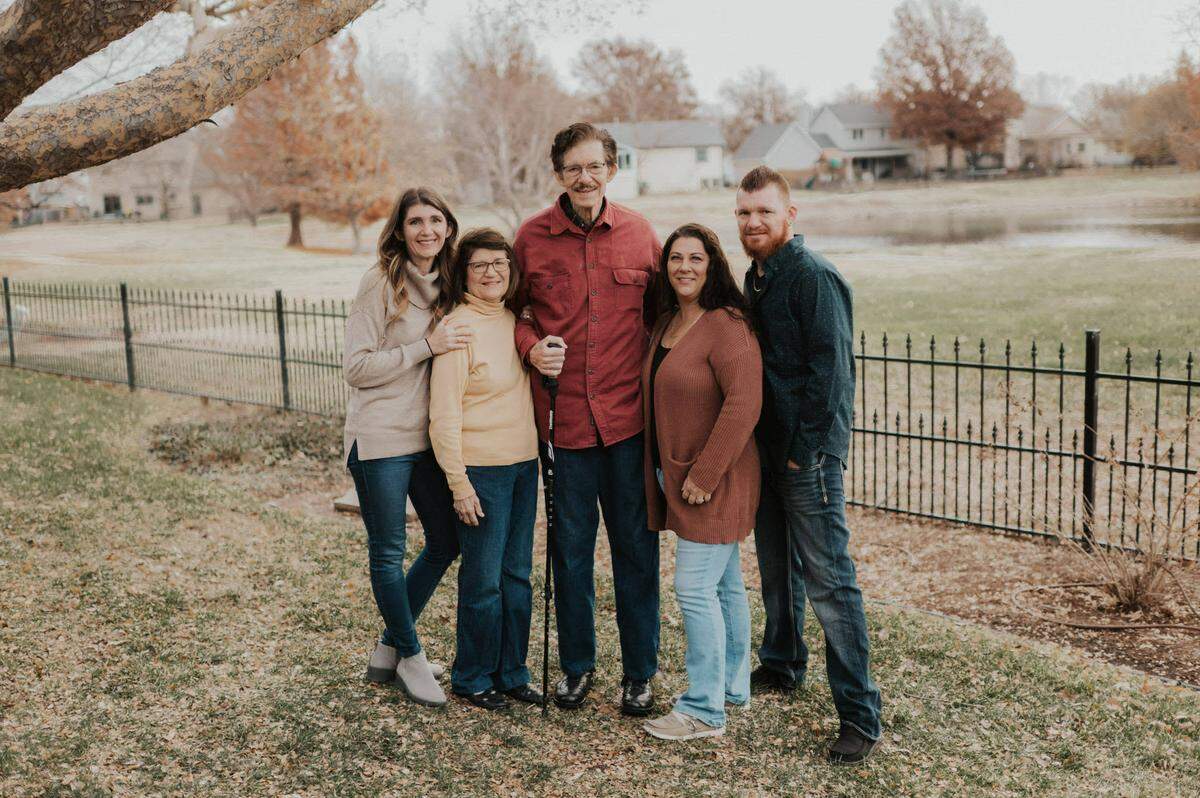
Joellan was born to them a couple years after that, then David came three years after that.
Inter-Faith Ministries
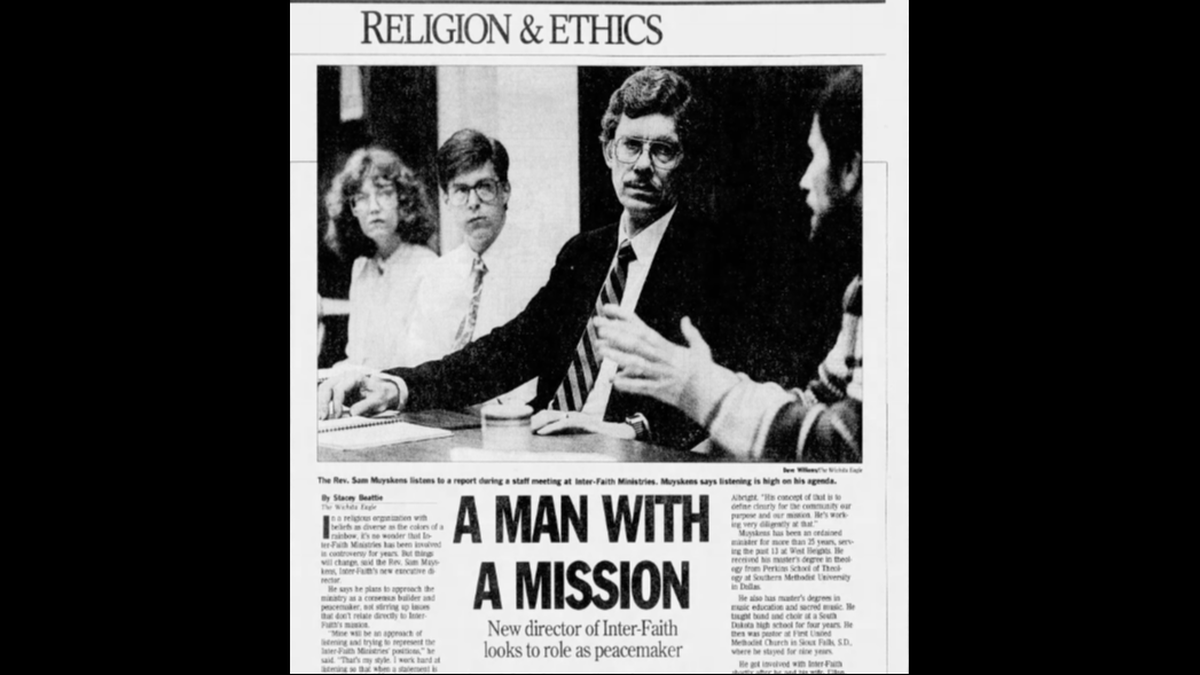
Sam Muyskens stepped in to take over Inter-Faith Ministries in 1992.
An April 4, 1992, story in The Wichita Eagle, titled “A MAN WITH A MISSION,” started by saying the organization “had been involved in controversy for years” because of a former executive director’s “controversial stands on racism and censorship,” but that was about to change with Muyskens at the helm.
“His style of administration is a little more of a team approach,” the interim director told The Eagle. “His concept of that is to define clearly for the community our purpose and our mission. He’s working very diligently at that.”
Muyskens told a reporter this: “One of the greatest reasons in our world why we do not have peace is because of religious differences and misunderstandings. I’m not attempting to make us all the same. Religious and faith communities need to be able to understand each other and work together.”
In the article, Musykens talked about a trip he took five years before that to India, Pakistan and Nepal, visiting Muslim mosques, Hindu temples and places where Sikhs worshipped.
In a Hindu temple, he sat at a fire with a man practicing poverty for religious reasons.
“As we began to share, we began to realize that we are both religious people set aside to be of service for our particular perspective,” he said. “What he was doing and what I was doing suddenly became so common.”
In his spare time, the article said, Muyskens liked to rebuild pump reed organs and old cars. He had just finished working on a 1969 Volkswagen convertible and had been working on several organs.
“I’ve always got a reed project waiting for me,” he said.
Inter-Faith Ministries began to rapidly expand under Muyskens.
Sandy Swank was the director of the Inter-Faith Inn homeless shelter, starting about 18 months before Muyskens took over. She said the organization was in “terrible shape” before he stepped in, but Muyskens quickly got things going in the right direction.
“He had vision. The man was constantly thinking about how to make things better for other people,” she said, adding: “If it sounded reasonable, he’d say, let’s just go for it.”
They purchased their second building at 829 N. Market, which is now HumanKind headquarters. Then came more buildings for housing low-income people, including the Villas, she said.
But Muyskens’ heart wasn’t only for low-income people in Wichita.
Mission Haiti
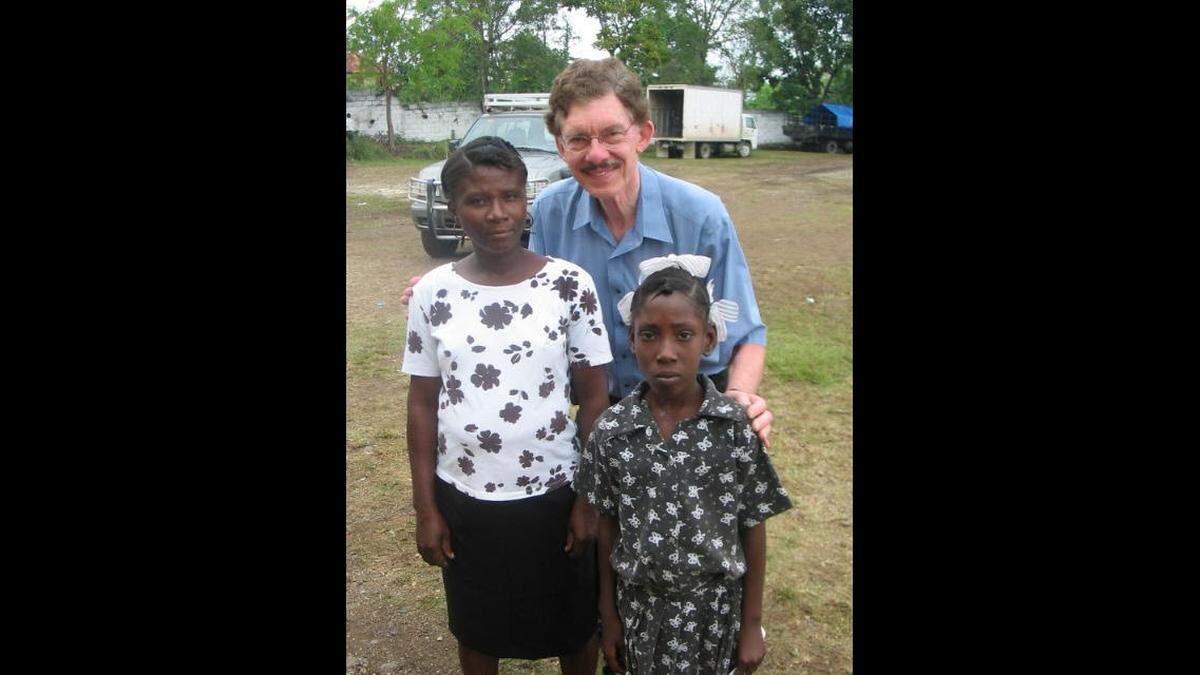
In 1993, a year after taking over Inter-Faith, Muyskens met with someone with connection to a struggling school in Haiti.
The school was in danger of closing because of a scarcity of resources, including chalk for the teachers to write on the board.
Muyskens visited the town of Lambert in Haiti for the first time in 1993.
“He fell in love with that school and the people in the community … his heart brought him back there every year to bring people to help out and bring resources,” said David Glover, who took over the nonprofit that Muyskens started to support the school.
He took at least an annual trip for 30 years, family said.
Funds have strengthened the school and a nearby clinic, ensuring hundreds of students have had a place to learn, create a better future and eat a warm meal each day.
The school went from near closure to being “established and running smoothly,” Glover said. Through the charitable donations of people supporting Haiti Hope Foundation, the organization now also helps sustain another school near the one in Borde, which is near Lambert.
Muyskens was honored on June 1, 2025, with a plaque and reception for his 32 years of serving the school and the community of Lambert.
He took a step back from overseeing the Haiti mission a couple of years ago as it became harder for him to keep up with everything.
‘A major loss’
Muyskens died shortly after going to a hospital for hospice care following a visit from family.
Michael Davis, a retired rabbi from Congregation Emanu-El, who served on the board of Inter-Faith when Muyskens ran it, said Muyskens’ death is a huge loss for the world.
“It’s a major loss for us. There is no one like him,” Davis said. “Sam was my hero. To be able to do all he does with such passion and yet with such calm … what a kind, committed, strong individual.”
“He really was Mr. Interfaith.”