
Father, son who died within a day of each other leave lasting legacy in the Flint Hills
Jim and Josh Hoy spent decades celebrating and protecting the Flint Hills. The father and son died within a day of each other last month, but their legacy is expected to linger.
“As generations can continue to enjoy the Flint Hills, the work of my father and brother will still be alive,” Farrell Hoy Jenab said.
A “celebration of cowboy lives well lived” for the two men is planned for 1-4 p.m. Saturday, March 8, at the William Lindsay White Civic Auditorium, 111 East 6th Avenue, Emporia.
Many credit Jim Hoy, 95, as popularizing the Flint Hills among Kansans and the world.
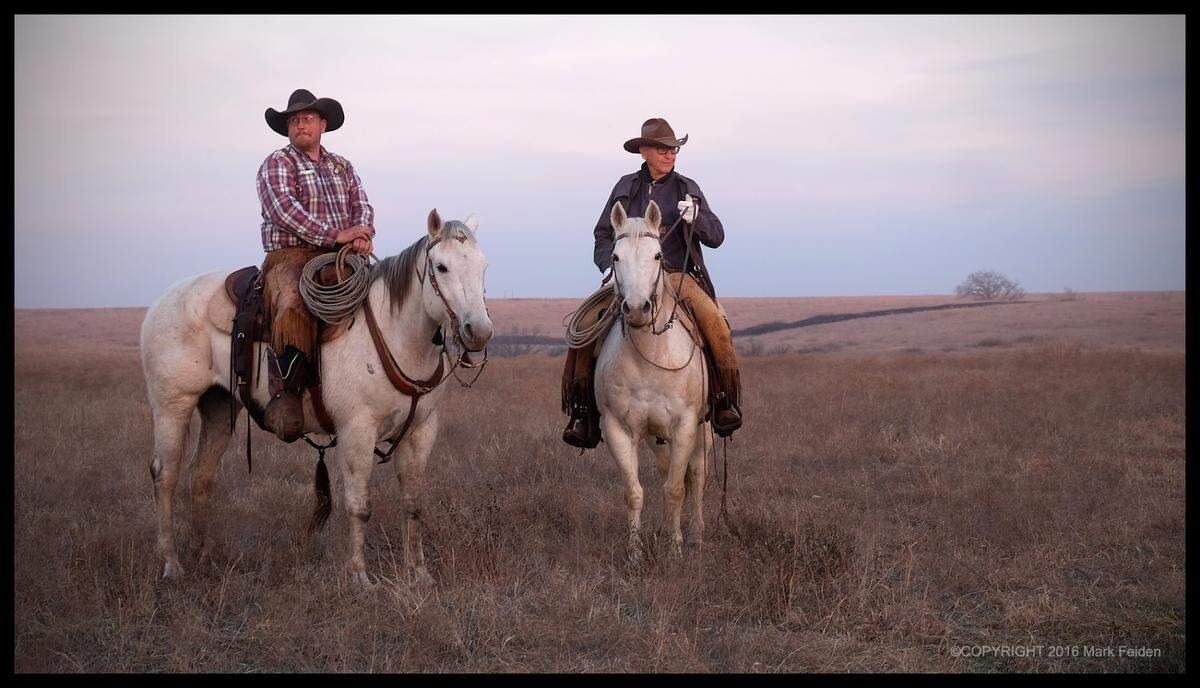
“I always kind of referred to (Jim) as Mr. Flint Hills,” said Annie Wilson, who was given the title of the Flint Hills Balladeer by former Kansas Gov. Kathleen Sebelius.
In a story about his death, Rex Buchanan, a writer and former director of the Kansas Geological Survey, said “Jim Hoy was probably the best friend the Kansas Flint Hills ever had.”
Jim was named 2015 Kansan of the Year by the Native Sons and Daughters of Kansas. In a video attached to the award, he said: “I like to say, the Flint Hills don’t take your breath away, the Flint Hills give you a chance to catch your breath.”
That phrase is one people who know Jim are well-familiar with.
And, if you ask around, one popular story you will hear about Jim is how he defended his dissertation and won a roping contest at a rodeo on the same day.
Tom Isern, who wrote the “Plains Folk” column with Jim for decades, said Jim’s crossover between his scholarly work and books to ranching in the Flint Hills gave him a special dynamic that appealed to a lot of people.
Jim would also play the guitar and sing old Western songs during the hundreds of Great Plains folklore talks he gave.
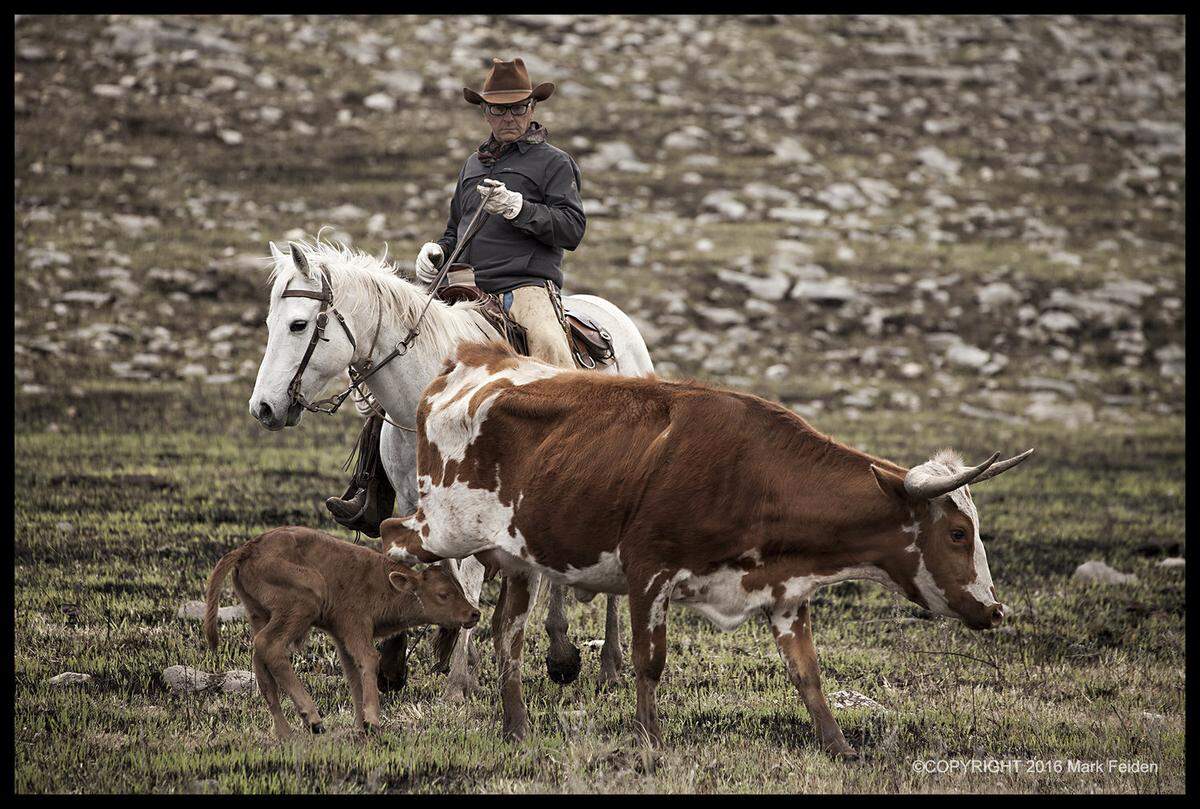
Josh, Jim’s only son, took the popularity his father brought to the Flint Hills a step further, getting his family and others to put several thousand acres of the Flint Hills into an easement that should preserve it as tallgrass prairie. His ranching methods were innovative, Isern said.
“He was regarded as something of a guru,” Isern said of Josh.
Josh was also known for his humor and cooking, and even got onto “Master Chef,” one of Gordon Ramsay’s TV cooking competitions. He was well known for a brisket that would make your mouth water.
Joshua “Josh” Thompson Hoy died of a suspected heart attack on Feb. 22 while in Texas with his wife, Gwen, and their daughter, Josie. The family traveled there to see an old Western art exhibit.
He was 54.
Jenab was visiting with her father when they got the news about her brother. She found her father had died when she checked on him the next morning.
“Certainly heartbreak” contributed, she said. “Our family loved each other so much. It’s really hard that they’re gone. It was the most difficult moment of my life.”
James “Jim” Franklin Hoy was 85. He was preceded in death by his parents and his wife, Catherine June Hoy.
Defending a dissertation, winning a rodeo contest
Jim and his sister, Rita Todd, who survives him, grew up working on their small family ranch, the Flying H, near the small town of Cassoday.
Education was important to his parents, Kenneth and Marteil Hoy, especially to his mother. After graduating from Kansas State University in 1961, he started teaching middle school.
He met his future wife on a blind date, saying in his head right then that this was the girl he was going to marry, Jenab recalls her father telling her.
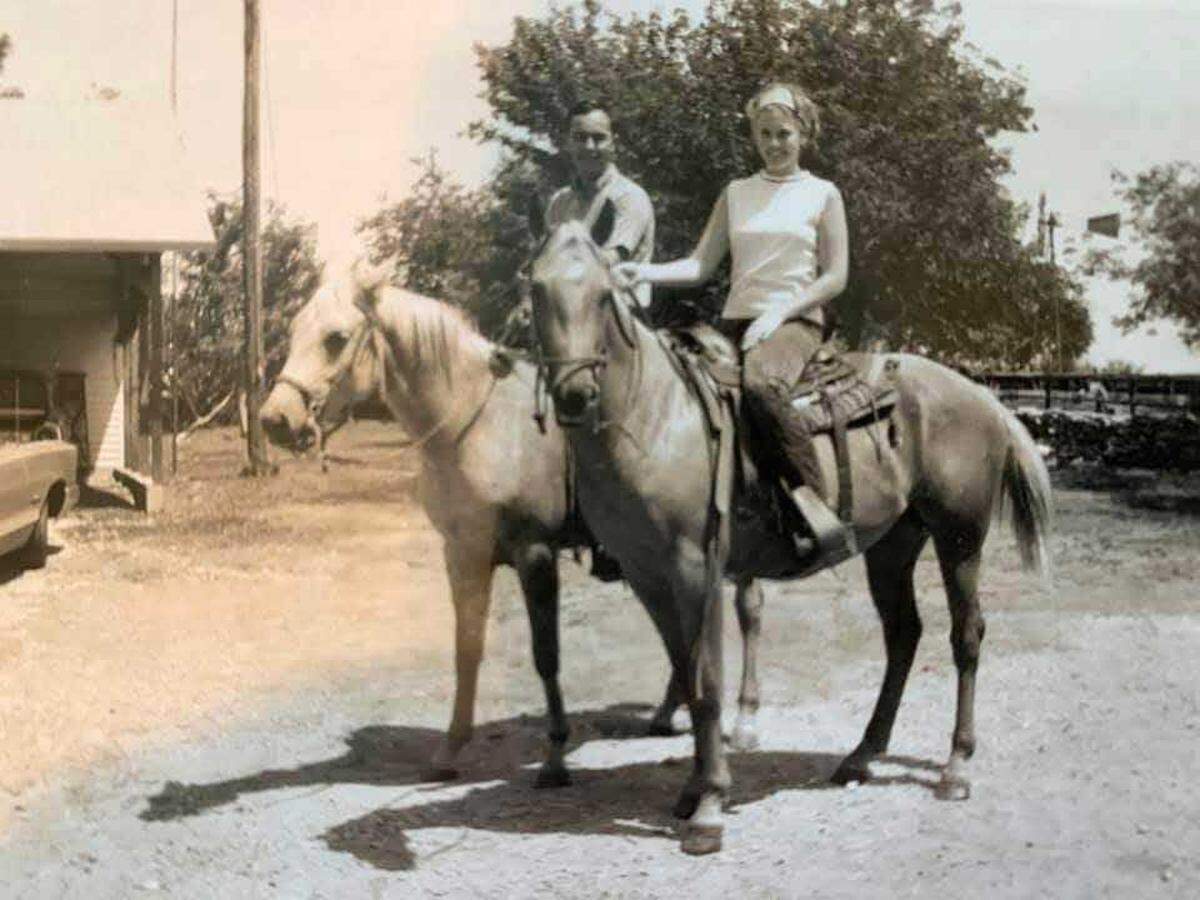
Jim continued his education, getting a master’s degree in English literature in 1965 at Kansas State Teachers College, later named Emporia State University, where he was mentored by Dr. Charles Walton, a professor.
He then went to the University of Missouri, which was Walton’s alma mater, Jenab said. He earned a doctorate in 1970 for medieval and renaissance English literature.
“He didn’t often use ‘Dr.’,” Jenab said. “He thought it was pretentious.”
Isern said Jim told him how he defended his dissertation the same day he won a rodeo roping contest. Jim could tell folklore, at times, but Isern said he knew that wasn’t folklore, but a true story.
During his earlier life, Jim had competed in rodeo, including roping and bull riding. Jenab said he told her he once earned enough money bull riding to pay the rent.
He would always go back and help on the family ranch when he could as well.
The Hoys started raising their family on 40 acres in rural Emporia.
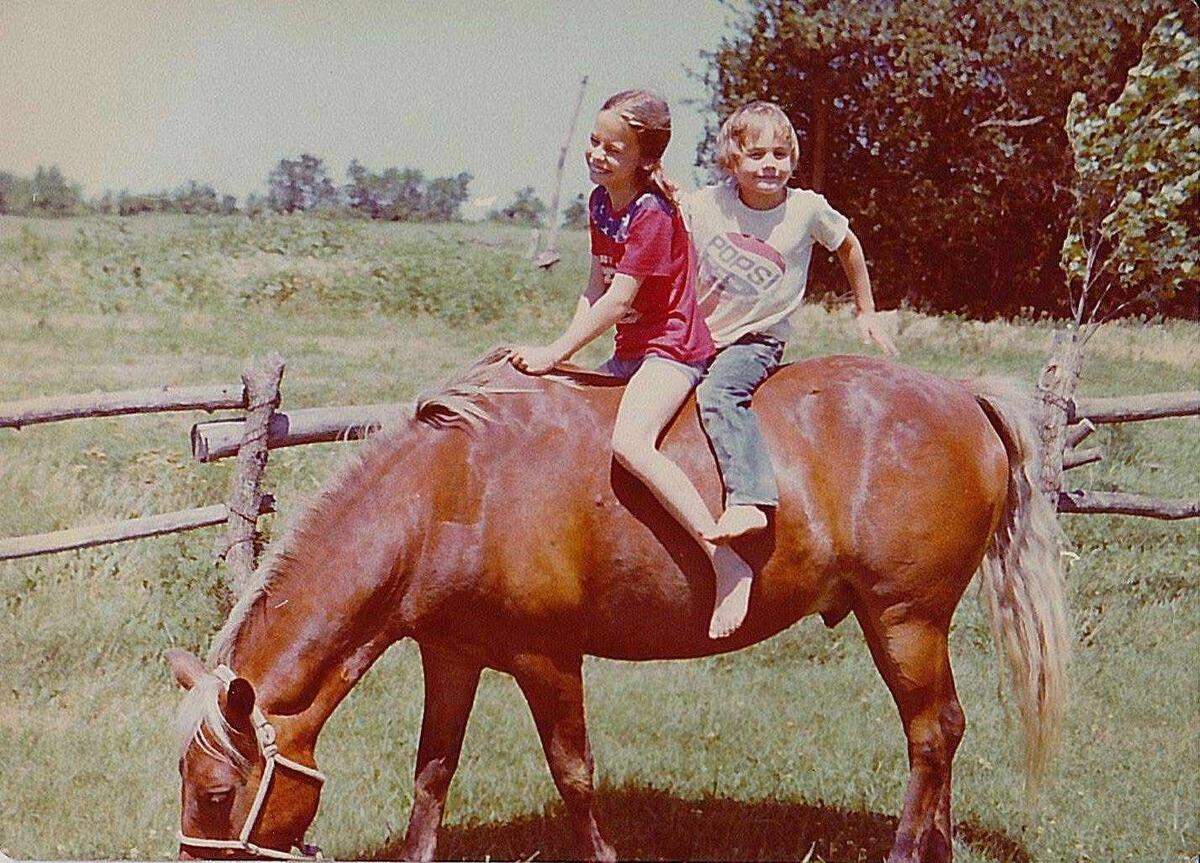
It had a pond they would swim in during the summer. They also had a dog and kittens and plenty of room to ride their horses.
“An ideal childhood, really,” Jenab said.
Her dad made the nighttime routine very memorable.
“He would retell us stories from his medieval studies, like ‘The Canterbury Tales by Chaucer’,” she said. “Also he would sing us to sleep a lot at night with playing the cowboy songs. Kind of a mixture of both of his interests.”
Jim and Isern, both ESU professors, traveled all over the state, talking about Kansas history and playing old Western songs.
Isern said they probably did 20 to 30 of those a year for nearly a decade.
Jim took his family whenever he could, but some trips required the men to talk and sing and then drive through the night to get back just in time to teach a class the next morning.
“Neither one of us claims to be a musician,” Isern said. “I still don’t. I just played. I played a lot more gigs than most people would call themselves professional musicians, but we’re scholars, you know, we studied ballads and folklore, and then we would present that and sing and crack a few jokes, but also talk about what they mean.”
One Kansas Day they were invited to perform and talk in Arkansas City. They were shuffled around to different schools, the library and other locations to give their talk.
“I am certain we sang “Home On The Range” seven times that day,” Isern said.
Then they drove home on the Kansas Turnpike.
“And we discovered that each of us was thinking about launching a newspaper column and … then we swapped weeks on it for all these years,” Isern said.
“Plain Folks” started in 1983.
Isern plans to write the last column next week while driving back from the funeral to North Dakota, where he is a distinguished professor at North Dakota State University.
Jim took his family to England for six weeks around the early 1980s so he could research what he believed was the oldest cattleguard in Cornwall, England, Jenab said.
He used that research for his first book, “The Cattle Guard: Its History and Lore.”
He went on to write at least eight more books. He also wrote scholarly papers.
Jim taught at ESU for 44 years, from 1970 until his retirement in 2014.
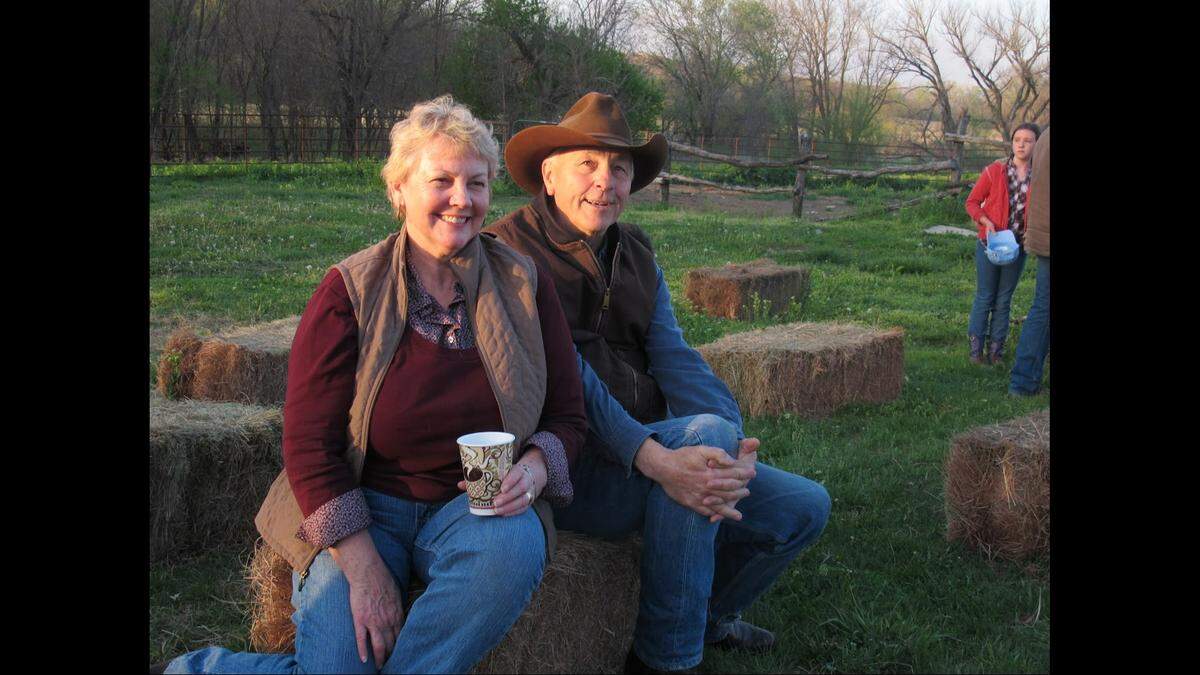
Along the way and after, he helped found, sit on the board of or helped further several other organizations related to his passion, including the role he and his wife took as prime movers who helped popularize the Symphony in the Flint Hills, a popular musical event during the summer that has a regional and global draw.
This is the 20th year, also billed as the last.
He was the director of the Center for Great Plains Studies at ESU. The organization offered a program that taught educators about the Great Plains.
He also left an impression on his students in the classroom.
Sherman Smith, who has been a Kansas journalist for two decades and a founder of the Kansas Reflector news site, was a freshman at ESU when he was in Jim’s class.
He said Jim taught him how to evaluate literature, including poems.
He remembers Jim saying things like it’s ‘just too nice of a day for us to be stuck inside’ and the class instead taking place at a park on campus.
“He had made such a positive impact on me, and I appreciated what he had done for me, and that he had helped get me on the path that put me where I am as a news editor,” Smith said.
The last he heard from Jim was an email from Dec. 23, where Jim, who donated to the Kansas Reflector, told him to tell Smith’s mother Merry Christmas. The two had worked together at the historical Pioneer Bluffs, which Jim helped found.
He was also a professor for Annie Wilson, the Flint Hills Balladeer.
“He’s just an incredible mentor, role model, hero,” she said.
Years later they would collaborate on efforts to stop wind farms from coming to the Flint Hills and on trying to market grass-fed beef before she says it was as popular as it is today.
She said they and other families ultimately couldn’t make it profitable, but she thinks they were the first to try based on a conversation with someone at the United States Department of Agriculture.
“When I called up to get the label, they said, ‘What’s that?’” she said. “It was an experience. And we all got pretty close because we went through a lot together.”
She said Jim also encouraged her to write songs and poetry and helped her land many gigs.
Story of resilience
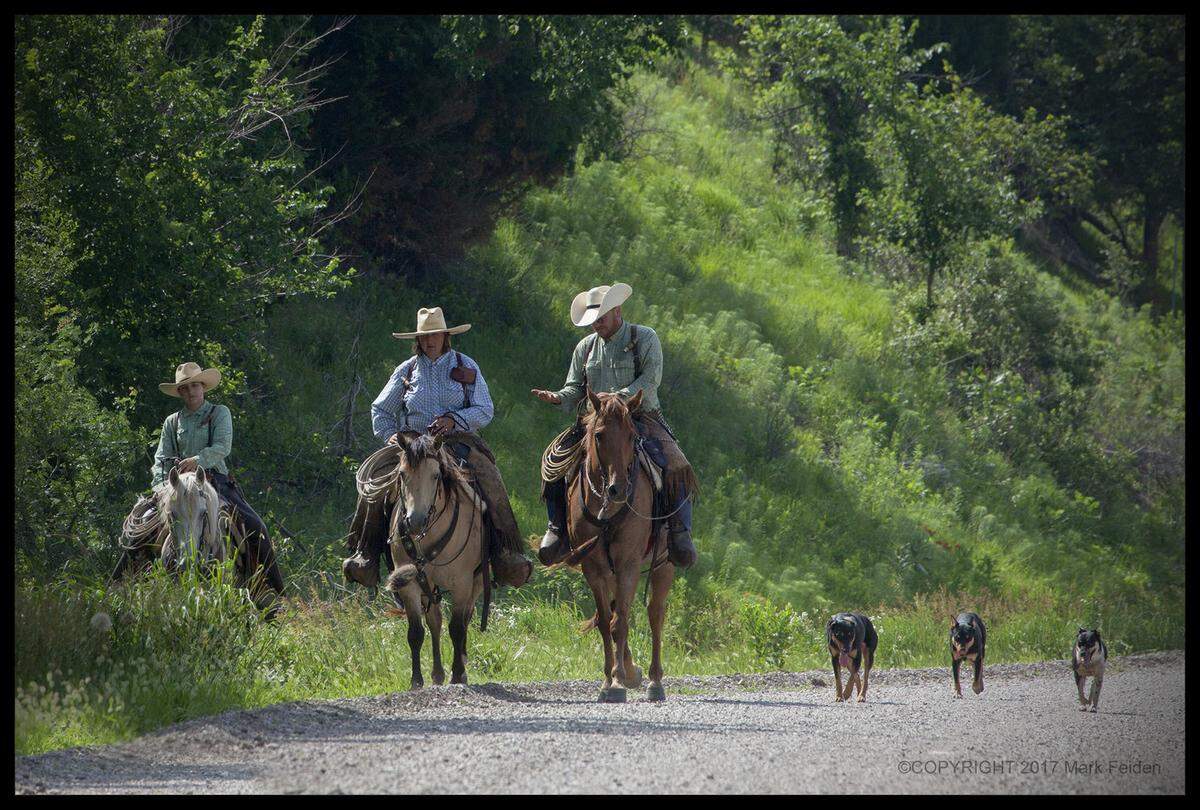
Josh Hoy’s journey to conservation includes having a house burn down, losing his cousin who was a business partner in a plane crash and then shutting down their dude ranch amid COVID.
“One of the things that has helped us the most over the years survive and thrive is resilience,” Josh Hoy said in a video about he and his wife and their ranch, the Flying W, winning the 2020 Kansas Leopold Conservation Award. “And that goes right along with our ranching philosophy of finding what nature provides and working from there. Because the prairie is so resilient. I guess what drives us to keep adapting and changing and trying. It’s worth it. It’s really worth it to be here and be stewards of this land.”
Josh found a love for cooking and conservation at a young age.
Jenab remembers her younger brother making a spaghetti sauce from scratch when he was a teen. Also as a teen, he started reading Edward Abbey books about environmental issues, Jenab said, recalling her father talking about Josh’s intelligence despite not having a doctorate like Jim, his wife and Jenab.
‘Three doctorates in the family and Josh is the smartest of the bunch,”’ Jenab remembers her father saying.
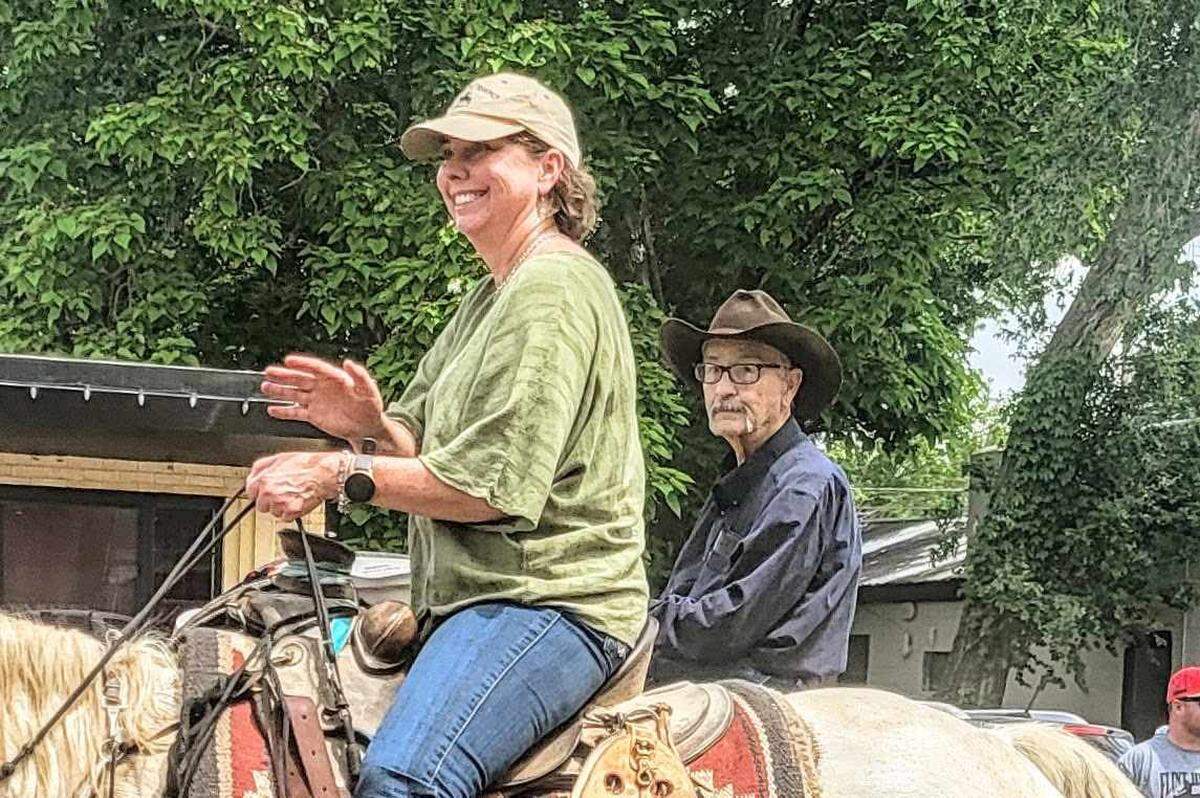
Josh, like the rest of his family, was known as an avid reader.
He worked at ranches across the country before settling back home in the Flint Hills.
“When I decided to settle down and become a rancher I came home because it’s the best place I ever found to do it,” he said in the video.
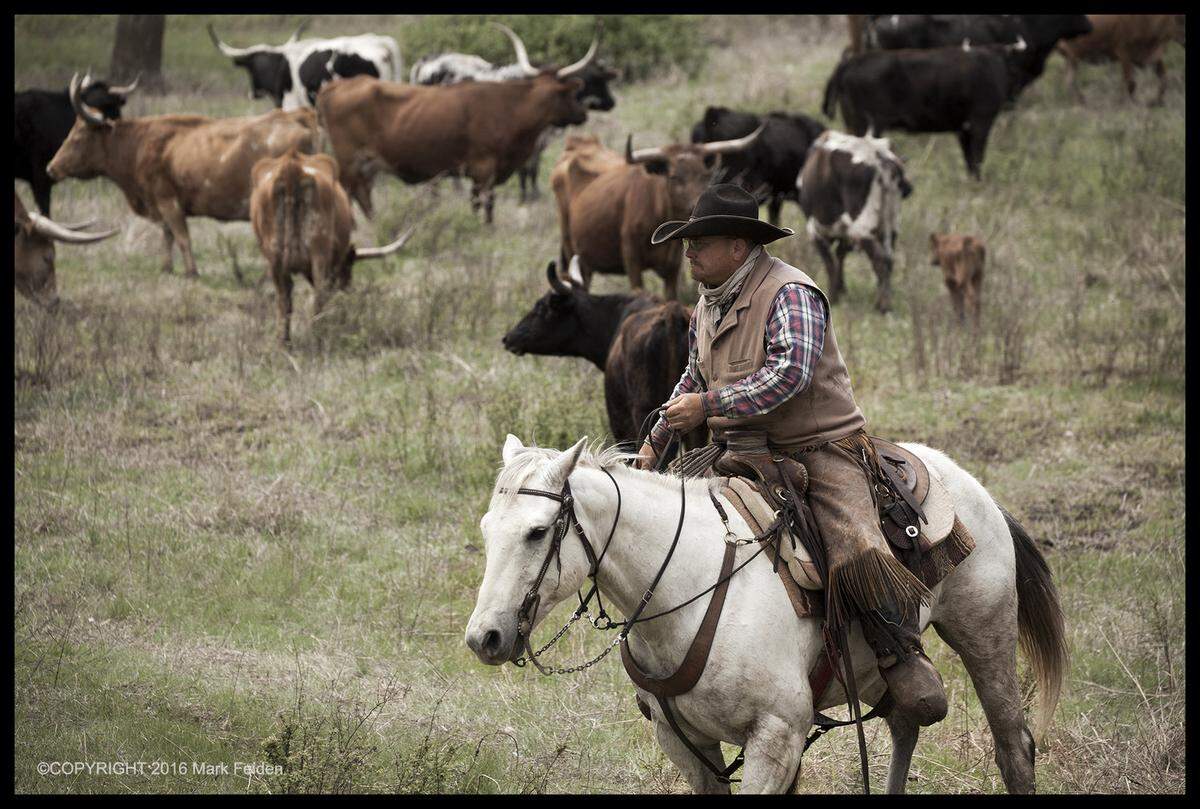
He attended a couple boot camps at the Culinary Institute of America in New York. He also got invited to be on the first season of “Master Chef,” a cooking competition that involved Gordon Ramsay, after submitting his food at an open call in Overland Park, Jenab said.
In 1996, he and his cousin, Warren Kruse, went into business together to start the Flying W ranch in Cedar Point in Chase County. The property is in the Flint Hills.
Kruse and his mother, Carolyn Kruse, both of California died in July 2004 when the small plane they were flying crashed into a glacier, according to an article from the time in the San Luis Obispo Tribune. The pilot died as well.
Josh, in the video about the conservation award they received, said he and Gwen had the discussion about what to do, which included selling the property, borrowing money or getting “town jobs” to support the ranch.
Instead, they decided to open a dude ranch. They hosted about 2,000 people a year, according to an article in The Emporia Gazette.
“Through that, we also discovered what a wonderful opportunity that was to educate the public,” Josh said in the video.
They hosted people from all over the world, teaching them about the history of the Flint Hills and giving them a taste of ranching.
So many things complemented the effort: Josie, their daughter, was a gifted baker and a good rancher, Gwen could do everything and anything on the ranch, same with Josh who also had a love for cooking, which boded well for their guests, and Jim could come tell stories by the campfire, which he did every chance he got.
They had a commercial kitchen on the property.
“Our headquarters is the old ‘Deuhn place,’ that my mother’s family, the Pattons, homesteaded in the 1800s. The home and barn were from a Sears & Roebuck catalog, and constructed in 1900,” Gwen said in the 2013 article in The Emporia Gazette.
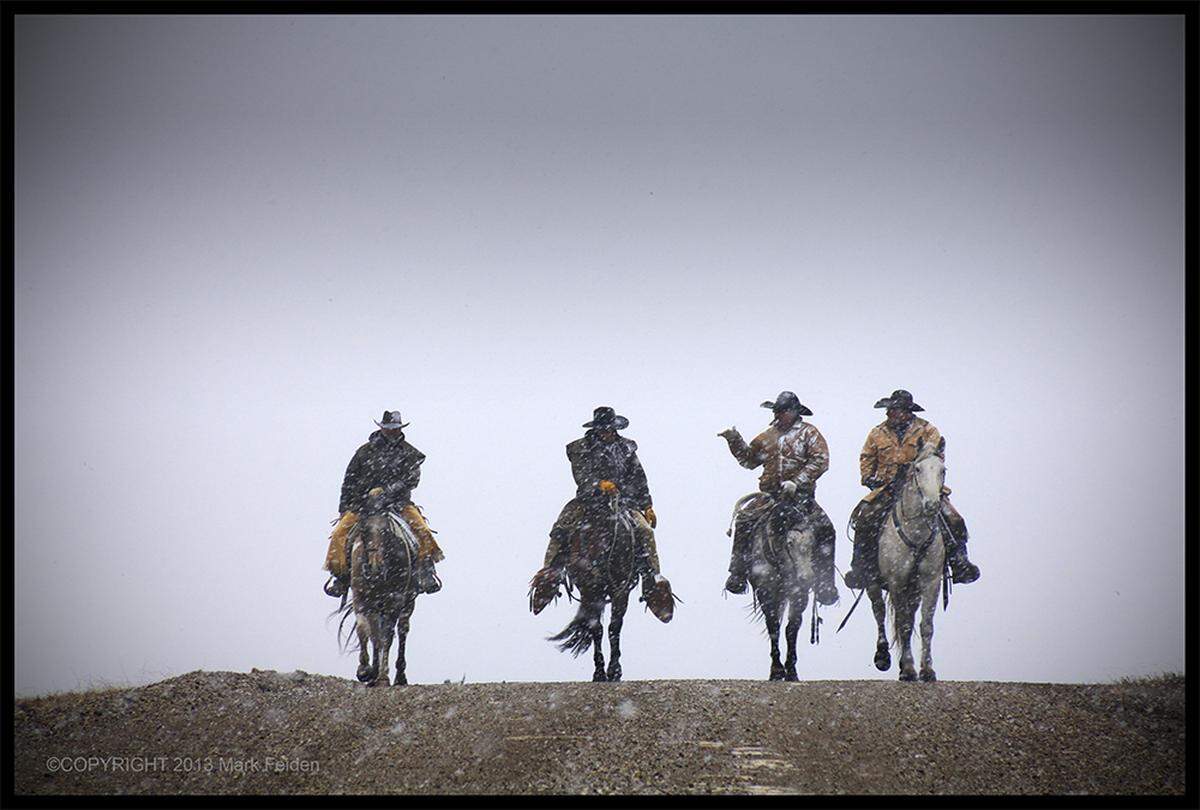
They also started a catering business that used an old chuck wagon.
“I’m related to Charlie Goodnight, inventor of the chuck wagon and plainsman, through my great uncle Frank Goodnight, who was a great nephew to Charlie,” Josh said in the article. “I’m continuing family tradition of ranching and chuck wagon cooking.”
But the hustle and bustle of ranching and hosting people on the weekends was also a big stress on the family, Jenab said.
Other things out of their control made the dude ranch harder to keep going: Josh’s mother dying in 2019 and their home burning down that same year, then COVID hitting the next year.
Josh and Gwen decided to close the dude ranch and focus on their first love, ranching in the Flint Hills. It also allowed Josh more time to travel and learn more about conservation and ranching.
In 2017, Jim and Josh went to Kyrgyzstan in central Asia to learn more about the horse and cattle culture. A preview inviting people to the discussion the Hoys led about their experience says “the Hoys toured the country extensively, riding hundreds of miles of mountains with nomadic herdsmen, traveling with a warlord through his vast holdings, and hunting with eagles.” They had done a similar trip to Argentina in the early 2000s.
Without the added stress of the dude ranch, Josh could take trips without falling too far behind on the ranch.
In August 2023, Josh and Gwen went with Kristin Cloud, a friend who was also a longtime hired hand on the Flying W, for a ranching adventure in Australia.
Cloud had found a Facebook post about cowboys for hire in Australia. The three of them hopped on a plane for Sydney. When they landed, she found an email saying they had plane tickets purchased for them to go to Adelaide, Australia.
“We didn’t even know if we were being catfished until we got to Sydney,” she said. “If they’re willing to spend money on tickets, they’re not going to kill us, right?”
They went to a hotel in Adelaide. Their contact said someone would be there to get them the next day, but that person only came after Cloud reached out to them on Facebook and let them know what was happening.
There was no cell service on the millions of acres on Clifton Hills ranch, which they called stations. Their contact could only email and send correspondence when he came back to camp.
Josh and Gwen spent eight hours on a dirt bike the first day. The ranch was too big to cover on horseback. They worked 10-hour days.
One day, the three of them got in a helicopter to help corral cattle. The pilot would swoop in low and swing the tail around, making a loud noise that the pilot called “slapping ‘em.”
The noise would send the cattle running in the opposite direction.
Josh got “violently motion sick” but powered through it until the pilot had to go back to get fuel. The three of them stayed in a travel trailer with rooms the size of a closet, but they all had a blast.
“It was a crazy adventure,” she said, adding the terms they use for ranching here are all different there.
It was all much different than how they do things in Kansas on horseback. But Josh did many things differently.
Josh’s ranching style involved trying to find nature’s system, keep it intact and alter it as little as possible, he said in the video.
He also eliminated fences and tried to get his herd to do instinctive migratory grazing, which involves “rebooting the herd instinct allowing ranchers to follow holistic and regenerative grazing plans with less infrastructure and labor while allowing for more flexibility,” according to an article on migratorygrazing.com.
The herd instinct includes getting cows to ruminate and drink water at the same time, which Josh encouraged with putting minerals in certain areas. He also used “rough, tough and thrifty” cows that need less human intervention, he said in the video.
He also burned the thousands of acres owned or leased by the Flying W once every three years, which would have occurred naturally before men ever stepped foot in the Flint Hills.
One thing that never changed was bringing in the calves each spring for vaccination and branding.
Usually the cowboys worked on horseback with a huge distance between each other. But they considered this a social event.
Family and friends came and enjoyed food while they watched a show.
There was a hierarchy to the events: The less-experienced people did the grunt work. The best had the most prestigious job of roping.
“It is all just based on respect,” Cloud said.
Even in the spring 2024 calving, the Hoy men had their places. Josh made burritos that stayed warm while being wrapped in a cooler, which Cloud’s children would rave about for the rest of the day. Then he helped with the roping.
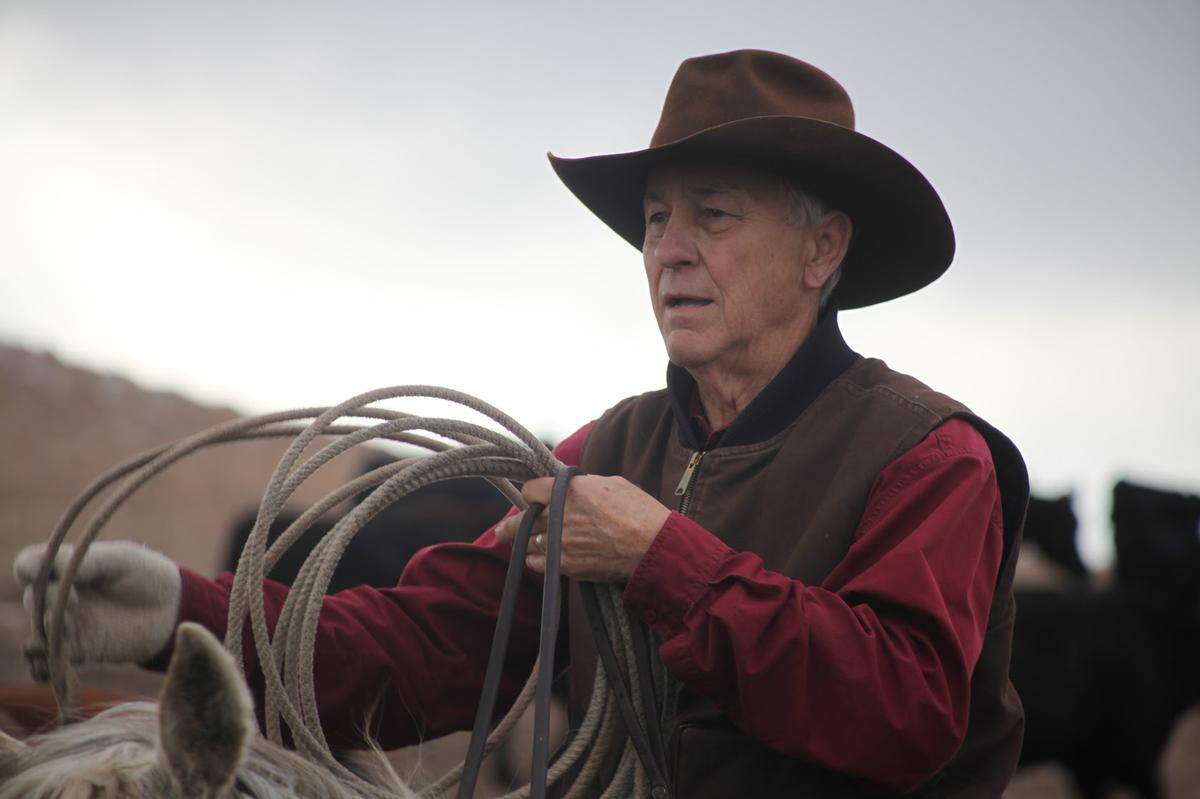
Jim Hoy, even in his 80s, was also on his horse, roping calves.
“He was happiest when he was on a horse,” Cloud said. “Don’t think anyone could have stopped him.”
Gwen plans to keep the ranch going. Josie, 21, will be a helpful hand.
Josie is currently living with Jenab while going to college. She recently told her aunt:
“If we are going to go through trauma, we are going to do it well,’” Jenab recalls her niece saying.
The ashes of the Hoy men will be spread across the Flint Hills.
This story was originally published March 6, 2025 at 3:53 AM.