
Why the Wichita school district picked February for special election on $450M bond issue
The Wichita School Board’s decision to call a special election in February — instead of posing its bond issue question during a general or primary election — will cost the school district an additional $113,000.
And it could result in lower voter turnout.
But Superintendent Kelly Bielefeld said the district can’t afford to wait. The school board didn’t finish its facilities master plan in time to get the $450 million bond issue on the ballot for this November.
“We would really like to get construction started next summer,” Bielefeld said. “And so to wait until later in the spring, April or May, makes that not possible. Then to wait, you know, until November of ‘25, the soonest we would then have dirtwork moving would be summer of ‘26. We would lose an entire year. . . . We need this, and we need it soon.”
Bielefeld said he would have preferred to pose the question to voters this November, during the presidential election, “but the timing of the master plan, the amount of community feedback we needed — that timeline was just too short.”
The Kansas Board of Education has to approve the measure because the price tag exceeds the cap on bonded indebtedness school districts are allowed to have in Kansas. The cap is 14% of assessed value within a school district. The cap for Wichita schools is $589.2 million. The school district already has $157 million in unpaid bonded debt, and the additional $450 million would exceed the debt limit by more than $18 million. The state board is expected to take up the Wichita question at a future meeting.
February would be almost one year after the school board voted to close six schools — Hadley, Jardine, Clark, Cleaveland, Park and Payne — at the end of the 2023-2024 school year, a decision that angered parents, shifted students to other schools and forced teachers to reapply for positions across the district.
Bielefeld has said more school closing are inevitable, as enrollment is expected to decline in the state’s largest school district.
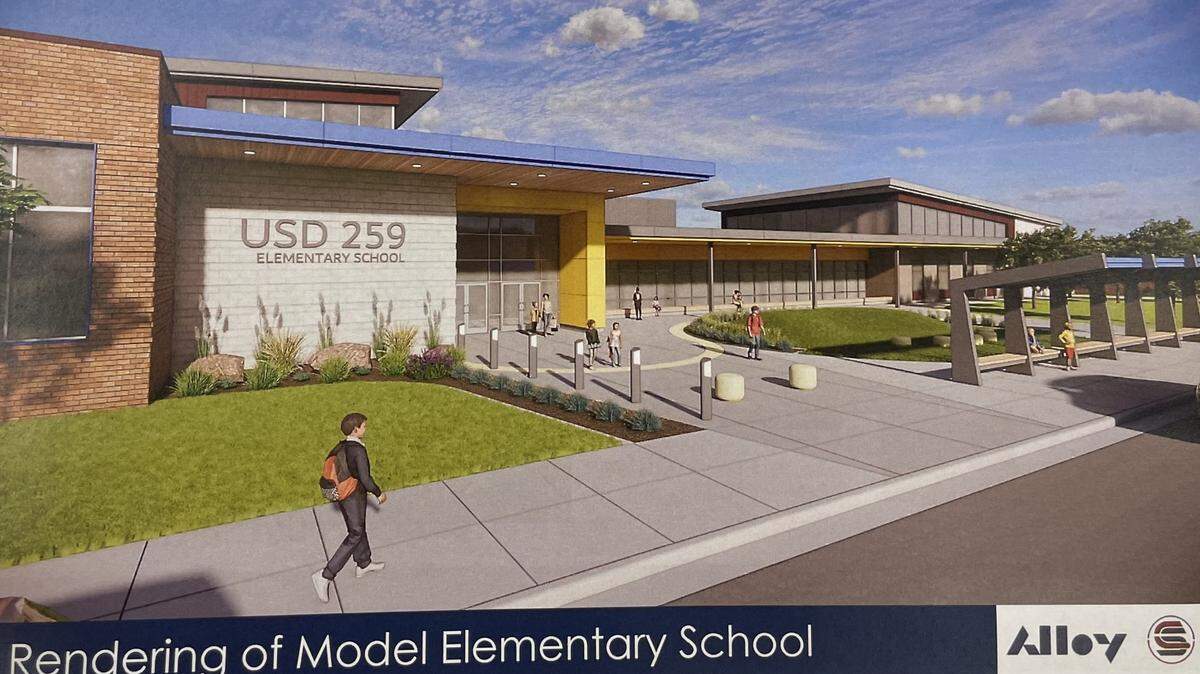
The $450 million bond issue would cover the costs of closing an additional 10 schools, tearing down and rebuilding seven others and converting two elementary schools to K-8 buildings. It also would build a new early childhood center, a new Future Ready Center for construction trades and outdoor athletic fields at Northeast Magnet.
Bielefeld has said the “newer and fewer” plan is necessary because the district’s buildings have $1.2 billion in future deferred maintenance needs that it can’t afford.
Another variable at play in the timing of the bond vote is a competition between school districts for a finite amount of bonds allowed in the state each year. The complicated bond cap is set just below $591 million for projects approved this year. The first $175 million of any bond issue counts against the cap; anything above $175 million does not go against the cap. So far, $282 million in bonds subject to an election count against the cap, leaving room for one more election for bonds above $175 million to be approved this year.
“There is a state cap for bond issues,” Bielefeld said, “and that’s playing into a lot of strategy across the state this year in a way that it hasn’t before. So that’s a bit of the answer to the timing question and why we wanted this to go to the state board of education next month in October is because there are state limitations on that. And if big districts like us, several of us, all go after bond issues, that can really have an impact on if you can take it to the voters or not. So that’s another wrinkle to the timing.”
Opponents of the plan say the February election is an attempt to pass the measure with low voter turnout.
“Please do not put it on a February ballot where you as a board and the school district will have to reimburse the county for the cost of that election,” Walt Chappell, a former state board of education member, said at Monday’s school board meeting. “Instead, move it to November when you have the elections for city council and school board coming up in 2025.”
Chappell said he suspects turnout in a February election would be somewhere between 8% and 10%.
“If you wait until November, you have an opportunity to go ahead and get at least 30 percent,” he said.
Turnout in the latest city election was 24% of registered voters. Countywide turnout in the last presidential election was 70%. The Derby School District’s February special bond election in 2018, the most recent local bond election held in February, had turnout of 15%.
Chappell said the lower turnout election would undermine the will of the taxpaying public that would pay for the plan using their property taxes.
Bielefeld said those “accusations are essentially not merited on anything other than speculation.”
“We’ll have mail-in voting, we’ll have early in-person voting, absentee voting — we’re trying to get as many voters, not disenfranchise anybody,” Bielefeld said. “We want everyone to be able to have their voice heard. If we were really trying to limit voter feedback or turnout, we might have made it just a mail-in option or just one option for the election. We’re spreading it out and trying to make sure everybody can have their voice heard.”
If it passes, Bielefeld said the bond issue would extend a 7.5 mill levy for 20 years, a similar rate to what property taxpayers pay now based on a bond issue that passed narrowly in 2008 and iswas set to expire in 2029. If it fails, homeowners would see an approximately 7.5 mill reduction to their property taxes by 2029. On a $200,000 house, 7.5 mills is $172.50 in annual property taxes.
This story was originally published September 14, 2024 at 4:35 AM with the headline "Why the Wichita school district picked February for special election on $450M bond issue."