
A brief look at the history of Jessie L. Clark Elementary School and Clark herself
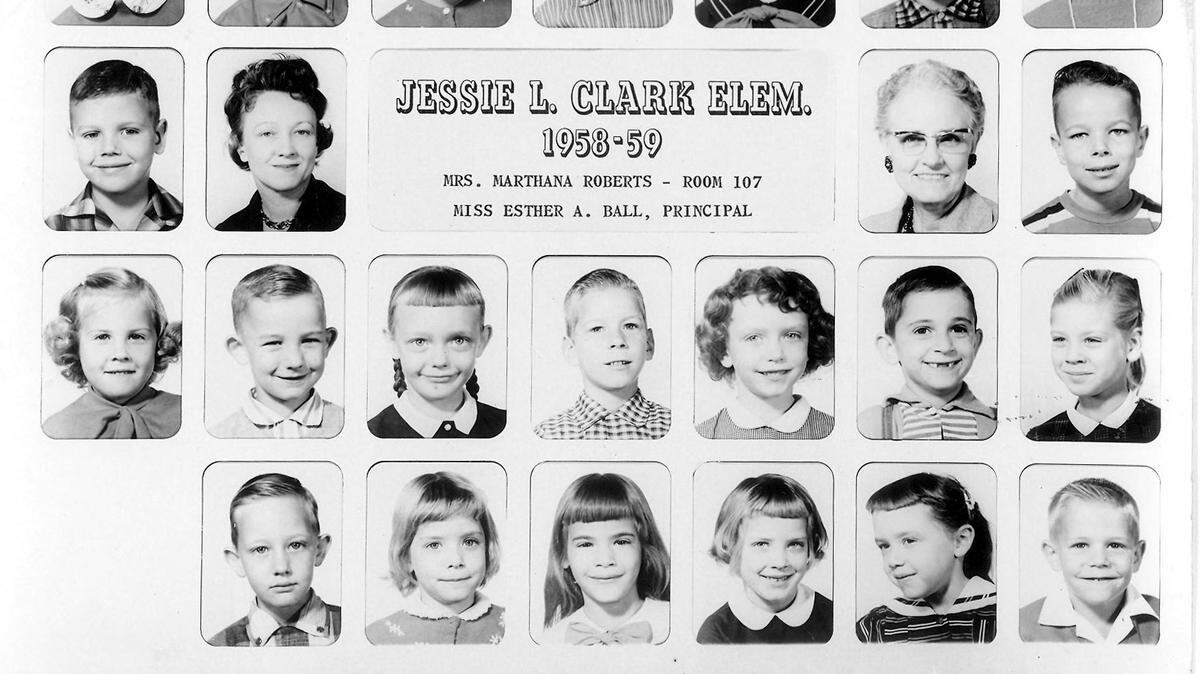
Jessie L. Clark Elementary School
Address: 650 S. Apache, just south of Kellogg between Rock and Woodlawn
Enrollment: 240 — 38% Black, 21% Hispanic, 21% white, 13% multiracial, 7% other races
Opened: 1953
Though Jessie L. Clark Elementary School opened in 1953, its name celebrates a teacher from another era.
Jessie Lillian Clark, who always signed her name Jessie L. Clark, was known as a pioneer in the burgeoning Wichita public school system in the late 1800s and early 1900s.
Clark taught music and eventually became the district’s music supervisor — its first — from 1891 until her 1923 retirement.
Between 1887 and 1891, Clark traveled the district to teach, first by streetcar and then by a phaeton pulled by a horse named Patsy.
One student was forced to apologize for using chalk to draw musical notes on the phaeton, but according to a 1925 Wichita Eagle story about a memorial to Clark, the boy said, “Pshaw, Miss Clark didn’t mind at all, but I won’t do it again.”
The story also said Clark was a “vital, vibrant soul” without whom “the musical history of Wichita cannot be written . . . .”
When Clark Elementary opened at 650 S. Apache, which is just south of Kellogg between Rock and Woodlawn, there were 212 students and six teachers.
It grew quickly — enough to need four portable units — with 615 students and 17 teachers by 1955.
When Stearman Elementary School opened the following year, it gave Clark Elementary some relief. By the late 1950s, enrollment started to decline. Eventually, Clark and Stearman shared a principal due to low enrollment at each.
A 2004 remodel and expansion of the school cost almost $1.4 million.
David Tennant, who now lives in the Atlanta, Georgia, area, was an early student at Clark. He attended there from first grade in 1958 through 1965.
The England native was asked to read in class weekly in part because of his British accent. He said he found the assignment intimidating, and fellow students always asked things like, “How come you talk funny?”
“That’s kind of what made me lose my accent on purpose.”
Still, he said, “I found it a really warm and inviting place.”
Tennant said he remembers that the walls always were decorated, and a man named Mister Martin always worked to keep things clean.
“He was an older fella,” said Tennant, who guesses that meant he probably was in his 50s.
He said the friendly Mister Martin “drove a bright red Chevrolet pickup truck.”
“Everybody always loved him.”
Information from USD 259’s “A History of Wichita Public School Buildings” contributed to this report.
This story was originally published March 4, 2024 at 4:04 AM.