College is free for kids in this tiny Kansas town. Will more people move there now?
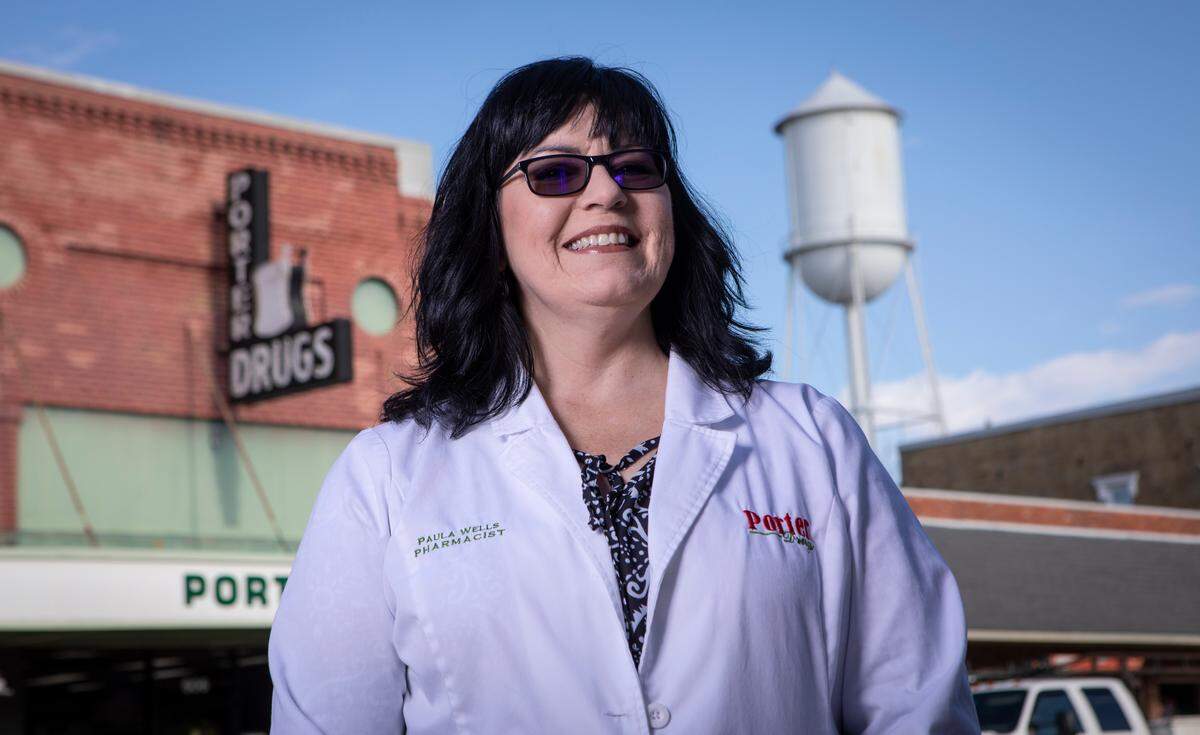
Paula Wells and her husband were just getting serious about how to fund their fifth-grader’s college tuition.
Then a wealthy businessman instantly absolved them — and their entire town — of that particular obligation.
“It’s almost like I just got an $80,000 bonus into my retirement plan,” said Wells, who also has a kindergartner. “And that’s very attractive to a lot of people.”
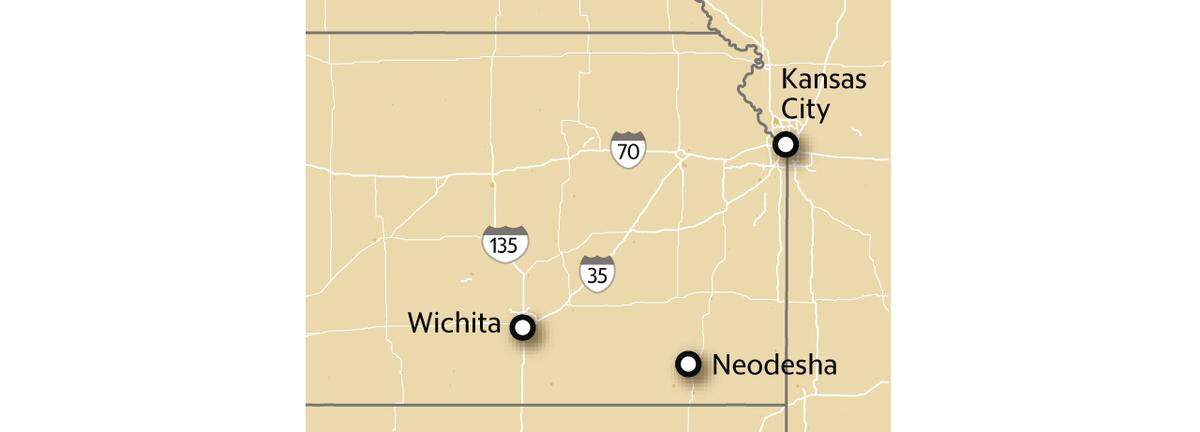
This southeast Kansas town of about 2,300 has been buzzing since a former resident in November announced the Neodesha Promise program, which offers a simple yet extraordinary pledge: Anyone who lives here and graduates from the local high school can qualify for free college tuition.
The program was designed to give Neodesha a unique and persuasive draw. And people are already taking notice.
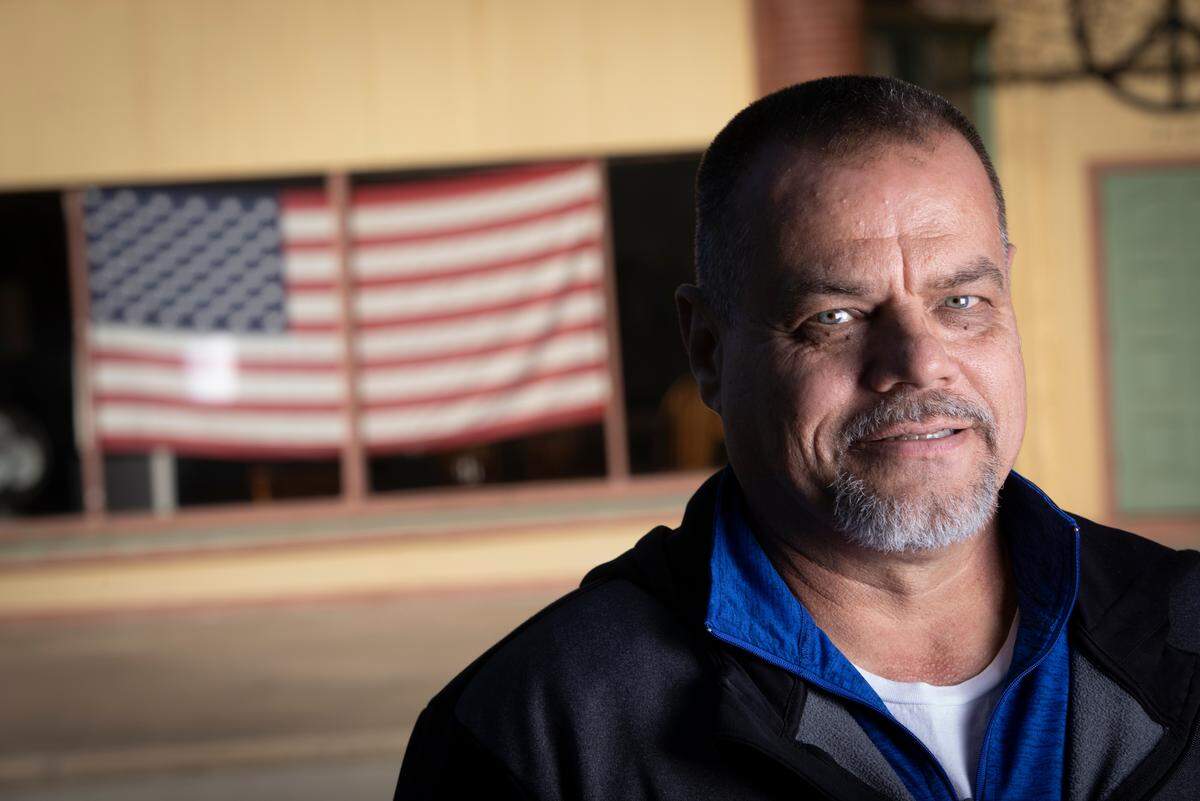
Wells is the owner and pharmacist at Porter Drugs, where she quickly recognizes customers and hands over their pills without ever asking for a name or ID. From her post at the back of the Main Street store, she’s already heard about families who plan to relocate here, lured by the program.
“That’s a big deal,” she said. “Because a month ago you wouldn’t have heard somebody say, ‘Hey, I want to move to Neodesha.’”
Wells said an influx of new families will help keep local businesses afloat and possibly encourage new ones to open. Her independent pharmacy needs the town’s sole grocery store down the street to stay in business. Because people who drive to a neighboring town to buy bread and milk at Walmart are likely to fill their prescriptions there, too.
“You don’t often hear of a program that comes along where there’s no downside,” Wells said.
While it’s the first in Kansas, Neodesha joins hundreds of other Promise scholarship and grant programs across the country. Missouri’s statewide A+ program, for example, offers two years of free community college and technical school for all high school graduates who meet modest academic requirements.
But the Neodesha program will go further. It covers a full four years of college tuition and fees — offering a financial windfall potentially worth up to $44,000 per student. With actuarial projections promising enough funding for at least 25 years, the program stands to benefit an entire generation of students and their families.
“While the gift was to the school, the idea is to stimulate the economy as a whole,” said Devin Johnson, a local bank vice president and mayor-elect of Neodesha.
How much, or whether the town will actually grow remains to be seen. But any uptick would be significant after the town lost more than 1,000 residents over the last 40 years.
Local leaders say they’re determined to capitalize on their enormous gift. The donation has accelerated fledgling efforts to revive the defunct chamber of commerce and tackle the city’s longstanding housing shortage.
Residents in the surrounding area have called the schools to learn more. Interest in housing has spiked. And families from Kansas City, 150 miles to the north, and even as far away as Pennsylvania have considered a move.
“I’m just trying to temper my expectations,” Johnson said.
A one-stoplight town
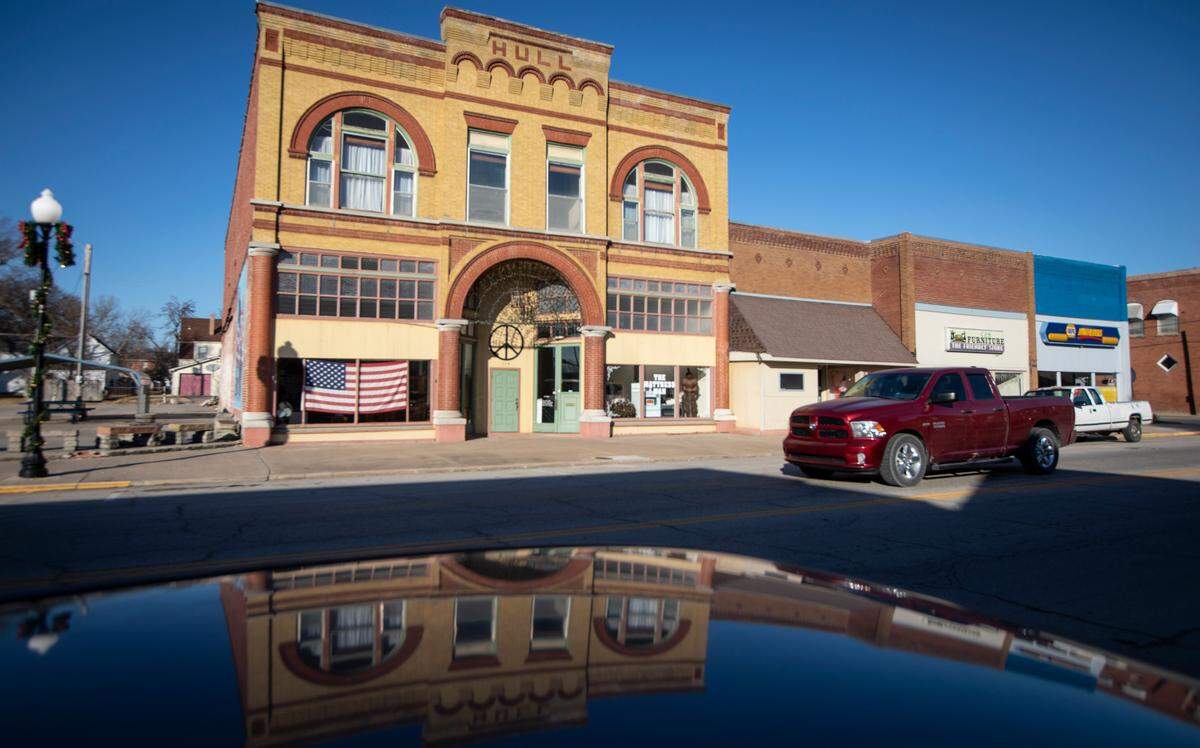
Obeying the posted 20 and 30 mph speed limits, a driver can pass through Neodesha in under three minutes on U.S. 75.
After 7 p.m., the lights go out at Beef Burger Bob’s, a 14-seat haunt promising the best (yet among the only) burgers in town. On Main Street, only the Subway, Sonic Drive-In and Pizza Hut stay open any later.
The one-stoplight town is so small that it lacks a coffee shop, bar or diner. So the group of retired men who banter over coffee early in the morning do so inside a gas station.
Neodesha (pronounced Knee-oh-duh-SHAY) is the Osage term for meeting of the waters — so named because of the Verdigris and Fall rivers that converge just south of town. But oil, rather than water, was the lifeblood of the town for years.
A successful well drilled here in 1892 sparked the wider frenzy for oil across Kansas, Oklahoma, Louisiana and Texas.
A replica of the Norman No. 1 well, the first west of the Mississippi River to produce commercial amounts of oil, still greets visitors at the city’s eastern entrance. And pump jacks still bob along the horizon in the grain fields outside of town.
But the oil boom ended decades ago, capped off by the 1970 closure of Neodesha’s refinery.
Wilson County reached its peak population in 1920, according to census figures. It’s a similar story across rural Kansas: The population of 72 of the state’s 105 counties peaked before 1960. And 68 Kansas counties peaked before the Dust Bowl, according to the University of Kansas Institute for Policy and Social Research.
“If there was ever a possibility for something to build Neodesha back up, there’s no doubt that this is the opportunity,” said Jennifer Marler, a Neodesha native. “This is absolutely it.”
She’s a nurse at an assisted living facility in town, and her significant other is the chief of the town’s eight-officer police force. Together, they have five children.
The two older kids already attending college won’t qualify for the new scholarship. But for the younger kids, the gift relieves a huge burden. One daughter, for instance, already understands she can realize her hope of becoming a veterinarian.
Marler loves the community vibe, where it really feels like the entire village partakes in raising children. But she said the town’s economic fortunes have been “on a little downhill spiral.”
The scholarship program has already boosted optimism about the town’s future, she said.
“I hope this does bring it back to thriving,” she said. “I do want it to be a place our kids can come back home to and more people can call it home.”
In a town this small, secrets rarely remain secrets.
So in the days before the program was announced, people knew something big was happening. But Maler said few appreciated the scale of the news.
“It was larger than anybody could have anticipated,” Marler said. “You just think of all the kids that literally probably wouldn’t have gone to college just because of finances, and now they can.”

‘I owe that community a lot’
When Ben Cutler grew up here in the 1950s and 1960s, Neodesha was a different place.
His mother was a church organist, and his father farmed and worked as an electrician at the refinery. Paychecks from the refinery supported a wide variety of shops and small businesses.
This year, when Cutler traveled home, he had to book a room at a Comfort Inn in nearby Independence, Kansas.
While much has changed, Cutler is forever beholden to his upbringing here, which he says provided him with an invaluable moral compass and work ethic.
“I absolutely don’t think I would be near as successful as I’ve been without that early nurturing I got in Neodesha,” said Cutler, calling from his home in Arizona. “So I feel I owe that community a lot.”
He moved away for college, graduate school and a lucrative career in health insurance. But he stayed connected to his hometown.
In 2014, Cutler retired as CEO of USHealth Group, a company that provides health care to small business owners and the self employed. This year, the company sold to health care giant UnitedHealthcare.
Cutler had long supported nongovernmental organizations that combat hunger and poverty across the globe. But his domestic interest was sparked by the success of another Promise program in Kalamazoo, Michigan.
He liked the idea for his Kansas hometown for two reasons: It might open the door for students who otherwise couldn’t afford college. And it could help rebuild his hometown.
Even before the Promise program, Neodesha’s alumni association touted a hefty scholarship fund, awarding more than $70,000 last year alone.
Cutler didn’t say how much money he committed to scholarships. But he says his financial modeling shows the town has enough to cover college costs for 25 years “and hopefully much longer than that.”
“I probably explored half a dozen different ways that I might use some of my capital resources to improve that community,” said Cutler, now 75. “The more I studied it, the more I was convinced that the best bang for the buck I could create was through the Promise program.”
The requirements
The College Promise Campaign was founded in 2015 by Civic Nation, a nonprofit dedicated to addressing some of the nation’s “most pressing challenges.”
That’s the universal theme of College Promise, though each program varies by location. Martha Kanter, executive director of the College Promise Campaign, said it’s less of a set program and more of a “movement” that continues to pick up steam across the country.
Fueling that movement is the fact that more jobs than ever require some education beyond high school. Yet the cost of higher education has continued to climb, with U.S. student loan debt now exceeding $1.5 trillion.
Kanter said the College Promise is underway in 330 towns, funded by a variety of education, government, business and nonprofit entities. Each program creates its own eligibility requirements and “promises” the recipients must make. Some require that they remain or work in the state for a certain number of years after graduation. Funding levels vary.
The University of Missouri System launched a Promise and Opportunity scholarship in 2017, budgeting $75 million over six years for need-based scholarships at the University of Missouri and the University of Missouri-Kansas City. It’s paid for by a combination of dollars from the UM System, the universities and nonprofits.
With different programs all across the country, Kanter said it’s difficult to provide overall numbers on college graduation rates that would indicate the success of the concept.
In Neodesha, the primary requirement of the Promise program is residency. Graduates must have attended local public schools since at least sixth grade to fully qualify. Yet even those who start in the ninth grade can receive up to a 75% award.
Students must also apply for federal financial aid, do community service and leave high school with a minimum ACT score of 19 and a cumulative GPA of 2.5. The program will pay for college tuition and mandatory fees at any technical school, community college or university that accepts Pell Grants.
Those schools can be anywhere in the country, though the award is capped at the highest price for in-state tuition for 120 credit hours at a state school. Currently, that’s about $44,000 for four years at the University of Kansas.
Locals expect that to be a strong enough incentive to lure more people to move to town.
“If this works like I think it’s going to, we should see at a very minimum, 15% growth in the first three years,” said Don Adams, a fourth-generation resident who owns a financial services firm on Main Street. He also served on the committee that helped put together the scholarship program.
He said the city has known for years it needs more housing, an issue exacerbated after more than 100 homes were demolished following a 2007 flood. Neodesha touts a strong base of manufacturing jobs with several factories, including Cobalt Boats, known for its luxury speedboats.
But each day, hundreds of factory workers leave the city and head home to towns across southeast Kansas. Adams and others hope a boost in housing stock — paired with the Promise program — will convince some of them to move in.
The city has already signed a contract with an Iowa developer that specializes in rural residential development. And it’s purchased a deteriorating mobile home park it hopes to transform into single family lots.
“This gives us a real reason why we need to go work our tails off,” Adams said. “The city’s already been preparing for this event. They just didn’t know it was coming.”
Promise in Arkansas
As Neodesha prepares for growth, many are looking at the success of a similar program nearly 500 miles away in southern Arkansas.
The El Dorado Promise was launched in 2007 with a $50 million gift from locally based Murphy Oil Corp. The company promised to cover tuition and fees up to the highest cost for Arkansas resident tuition at the state’s most expensive public university — which is currently $9,585 per year. It can be used at any college in the country.
Like Neodesha, people in El Dorado expected the program to attract new residents, retain current ones and revitalize a community in decline.
The city’s 2018 population of about 18,000 was down nearly 3,600 from 2010’s count, according to the U.S. Census Bureau. But the program has enlivened El Dorado in other ways, said Sylvia Thompson, executive director of El Dorado Promise.
She said the community voted for a property tax increase — the first such tax hike since Richard Nixon was president — to fund a new $52 million high school, which opened in 2011.
The high school “is fabulous,” said Thompson, whose offices are housed there. “It is state-of-the-art. We used to have a school gym, now we have an arena.”
The following year, the town raised taxes again to build a conference center and administration office at the local community college. In the last 10 years, El Dorado has seen a new art district sprout, a new 7,000-seat amphitheater, new restaurants and three new hotels.
“It reenergized the town and made us realize we could do anything,” she said.
More importantly, El Dorado became a school district that sends kids to college who are prepared for college, said Thompson, a former teacher. The high school nearly quadrupled the number of Advanced Placement courses offered and has been recognized by the College Board for its high number of minority and poor students taking those courses.
The district now starts AP preparation in fifth grade.
“The district saw that every child in every classroom now has the ability to go to college,” she said. “Money is no barrier.”
In El Dorado, 85% of graduates go to college every year. Half of them graduate from a four-year college or university with at least a bachelor’s degree.
Thompson said school enrollment had been declining for 20 years before the Promise program. Since then, families have moved in because of it. The district’s student body has actually grown and is now holding steady, she said.
“When the Promise was announced, the decline stopped,” she said.
Staying alive
Folks in Neodesha say that even before Ben Cutler announced his gift, their community was holding steady, buoyed by a grit to keep the town alive.
They can point to plenty of stories of kids who grew up, moved away and eventually returned. And plenty of others who never left in the first place.
And the town hardly sits still with entrepreneurs frequently trying out new shops and restaurants, even if they don’t last.
Walking outside of his office on the town’s quiet Main Street, Gary Larson rattles off the latest comings and goings.
The NeoDelicious Home Style Cafe is one of the most recent businesses to close. At least a dozen more storefronts sit vacant.
But it’s hardly a ghost town.
Local home decor shop The Derrick (not to be confused with the local newspaper of the same name) just expanded into a bigger building. A sporting goods store selling guns and fishing gear just opened. And the building marked only by a faded sign for Jo’s Doll Menagerie was just bought up at auction, and word is it will be repurposed into an arts space.
The downtown also shows off many of the charms of small-town life.
An artificial Christmas tree decorated by elementary school kids stands as an honor to veterans. It sits in an empty lot in front of a vivid mural depicting Old Glory, a towering oil derrick and the emblem of the local Masonic Lodge.
Across the street, the local physician’s stately yellow Victorian house looms over a perfectly manicured corner lot. Its yard connects to the doctor’s office building next door.
“That thing gets a lot of attention,” Larson said.
All in all, the town looks a lot like those that he visits in his work as a regional director for the Fellowship of Christian Athletes. All across Kansas, small towns struggle as their residents migrate to bigger cities. But none in the state have the lifeline of the scholarship program.
“Everybody’s kind of facing the same fight,” he said. “This is what makes Neodesha different now.”
BEHIND THE STORY
MOREHow did The Star hear about this story?
Star reporter Kevin Hardy is a native of Independence, Kansas, about 15 miles from Neodesha. He first heard about the Neodesha Promise from friends on his social media feed who shared the original news. But a text from a friend in Kansas City prodded him to pitch the story for The Star. Click on arrow at top right for more.
How did he report the story?
Familiar with the area and understanding the threats to rural America, Hardy wondered how the news would resonate beyond the students and families who stood to benefit from free college. From the first phone call, it became clear that locals expected the program to fundamentally change the trajectory of their town and local economy. So Hardy headed home for Thanksgiving a day early and talked to people in a town he’s mostly driven through on the way to someplace else. He enlisted The Star’s education reporter, Mará Rose Williams, to help research similar programs nationally.
This story was originally published December 29, 2019 at 5:00 AM with the headline "College is free for kids in this tiny Kansas town. Will more people move there now?."