
Wichita State student leaders react to university rape investigation
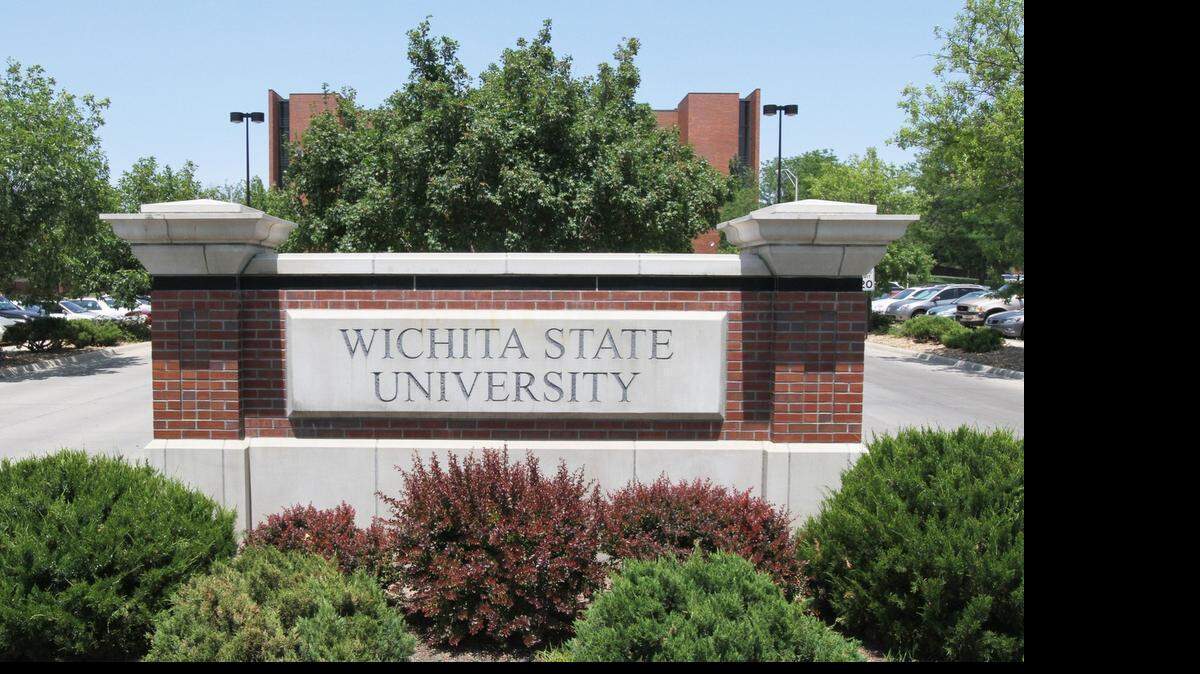
Two student leaders at Wichita State University have asked the Kansas Board of Regents to investigate how President John Bardo and other university officials handled campus notifications and internal investigations after a rape allegation surfaced involving a WSU basketball player in 2013.
Joseph Shepard, the current student body president, and Matthew Conklin, whom Shepard succeeded as student body president last month, said they both contacted the regents because Bardo, in a message to the campus on Monday, said no one in his administration did anything wrong after that 2013 encounter. Bardo was reacting to a Wichita Eagle story Sunday raising questions about the handling of the allegation.
Shepard, a senior majoring in criminal justice, said he and other students do not agree with public statements by Bardo on Monday – and reiterated by Bardo on Friday – that a federal law governing Title IX laws did not compel university leaders to immediately notify the university’s student affairs office.
Shepard and Conklin said they are speaking for themselves and on behalf of students. Shepard said a wide array of students “from diverse backgrounds” on the campus have talked with him.
They told him Bardo’s statement on Monday “upset and disappointed them, in the fact that something seems to be wrong with this process and how it was carried out,” Shepard said.
“Some of my peers have suggested that because the individual student involved was an athlete, that he was protected,” Shepard said.
On Sunday, The Wichita Eagle reported that Wade Robinson, the outgoing vice president of student affairs at WSU, has asked the Board of Regents to investigate whether Bardo, athletic director Eric Sexton and other leaders made decisions that Robinson says put student safety at risk two years ago.
In particular, Robinson told the Regents that Bardo and Sexton did not notify anyone in the student affairs office for four days that a WSU basketball player had been accused of rape after an alleged off-campus encounter on April 21, 2013. Robinson said he was informed only as Wichita police began to brief local media about the case.
Robinson stayed silent publicly after that four day delay, and after he was informed in January that his appointment would not be renewed. But after Bardo on April 22 named Sexton to succeed him as vice president for student affairs, Robinson outlined his concerns to the Regents and to The Eagle.
Bardo responded on Monday, with a statement to the WSU campus saying he had never put student safety at risk, and that concerns raised by Robinson in the newspaper story were not true. Relevant facts, Bardo wrote, included that the alleged victim was not a student, the alleged assault involved a location not on campus, and university police and the athletic department were involved with Wichita police in a timely way. No charges were brought.
Wichita police later ended their investigation of the rape allegation with no one charged, citing lack of evidence.
“There was no cover-up,” Bardo wrote Monday.
Shepard disagrees.
It was not good enough that campus police were informed immediately, Shepard said. It was not good enough that student affairs (and students) were not informed until four days later.
Calling student affairs immediately in such a situation, Shepard said, is not only mandated by WSU’s codes of conduct but a basic requirement of being responsible and transparent to WSU students, Shepard said.
“If there was a delay on the part of the administration, then that was absolutely unethical and unacceptable,” Shepard said.
“The Student Code of Conduct applies to students whether they are on or off campus, so saying the incident occurred off campus does not mean the alleged perpetrator is immune from university investigation or sanctions,” wrote Conklin, the former student body president, in a letter he sent to the Regents.
The regents plan to question Bardo about the student complaints, said Breeze Richardson, a regents spokeswoman. That questioning, she said, “will not be done in an accusatory way,” but in the interest of gathering information to establish what happened, she said.
In a statement on Friday responding to what Shepard and Conklin said, Bardo blamed “Dr. Robinson and his supporters” for creating “an inaccurate narrative about an event two years ago involving an alleged sexual assault that occurred off campus.”
“This week I sent a communication to all students, faculty and staff about a 2013 incident that alleged that student safety was threatened because we let police investigate rather than immediately getting Dr. Robinson involved. We take all concerns of student safety seriously. WSU followed all applicable state and federal laws – including Title IX and the Clery Act – and all internal university policies,” the statement said.
Shepard said he’d read Bardo’s Monday statement, and insisted that student affairs and students should have been told promptly of what happened. And Scott Lewis, a national expert on Title IX, quoted in the Eagle story Sunday, said campus police “are not the ones that make the Title IX determination as to whether there will be a pursuit of an administrative investigation.”
Lewis also said that for the purposes of launching a Title IX investigation, it matters just as much, if not more, whether the alleged perpetrator is a student as whether the victim is a student.
The federal Title IX law says, among other things, that the university must begin a “prompt” investigation of any case of harassment of a sexual nature involving students. And WSU’s own policies and procedures manual says internal investigation should be done by the student affairs office.
Lou Heldman, WSU’s vice president for strategic communications, said university leaders don’t think that to be true. “We think, and lawyers we consulted who are expert in this field think, that Title IX doesn’t say what your expert said,” Heldman said.
Shepard said the perception that Bardo’s statements created among students was more important than the administration’s efforts to defend its position legally.
“There is a common perception on the campus by WSU students,” Shepard said, “That athletes in such situations as the 2013 case are favored by WSU authorities over the non-athletes. But we don’t ever want to send that message.
“President Bardo basically said that the alleged encounter wasn’t on our campus, and that the allegation is not our problem,” Shepard said. “I disagree to the fullest extent.”
Richardson, the regents’ spokeswoman, said: “Conversations, concerns about how a university president has handled certain matters are typically treated as personnel matters and addressed accordingly.”
Reach Roy Wenzl at 316-268-6219 or rwenzl@wichitaeagle.com. Follow him on Twitter: @roywenzl.
This story was originally published May 9, 2015 at 7:10 AM with the headline "Wichita State student leaders react to university rape investigation."