
Questions remain after inmate’s death in Sedgwick County Jail
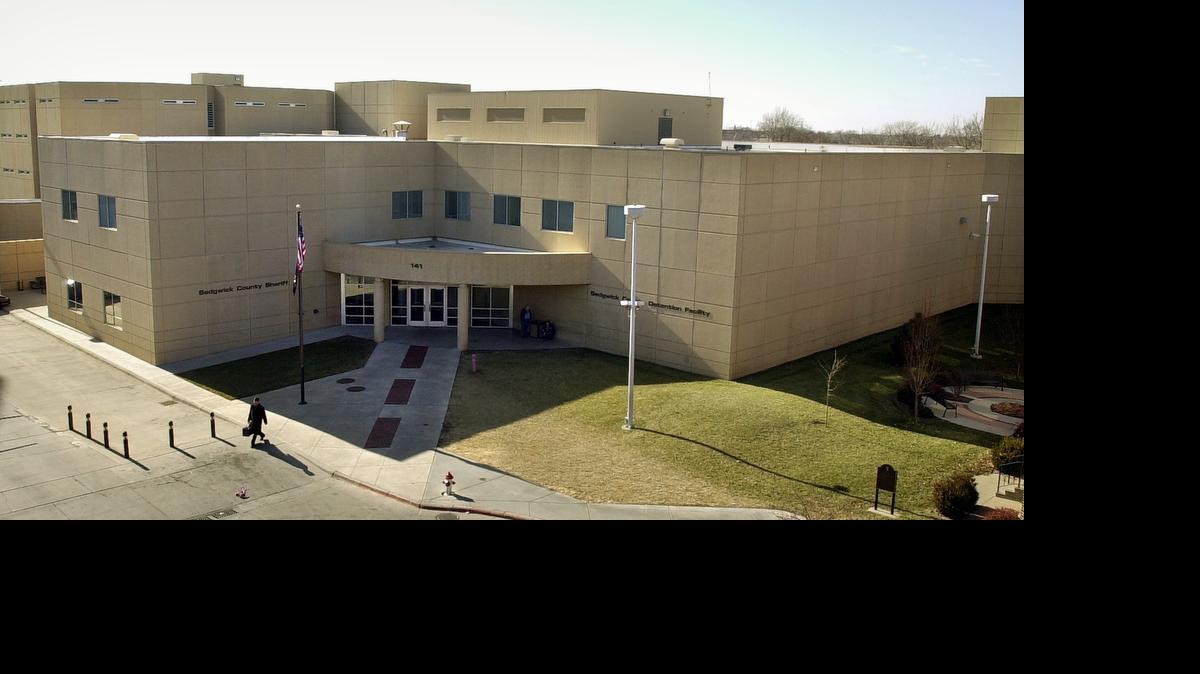
A deputy found Pradith Phousomthee’s bloody body in a Sedgwick County Jail cell about 11 p.m. Oct. 4.
Among the questions: How often did the deputy check on the 55-year-old? Should he have been found sooner? Could his death have been prevented?
Jail officials have not said how he died, other than that it was through his own actions.
Sheriff Jeff Easter said Wednesday that he can’t say when the deputy checked on Phousomthee because it is part of the pending death investigation.
Easter said that a policy adopted on June 25 dictates that in the maximum-security unit where Phousomthee was being held, checks are to be reasonably spaced – and not more than two hours apart.
To do rounds more often than that in the higher-security pods is “virtually impossible” partly because it’s difficult to get a second deputy to the pod in order that one deputy can man the control station while the other goes into the inmates’ areas to check on them, Easter said.
Another issue, he said, is each time a deputy goes to check on maximum-security inmates, the inmates have to be secured in their cells “so the deputy can do their rounds without fear of being attacked.”
In the lower-security pods, where the inmates are considered less violent or risky, and where the deputy is sitting among the inmates, it’s easier to check on the inmates. So those rounds are done more often, every 30 minutes, Easter said.
There is no national standard for checking on jail inmates, and the practice varies from state to state, said Brandon Wood, executive director of the Texas Commission on Jail Standards. In Texas, the minimum standard for general-population jail inmates is that staff have to observe them no less than once every 60 minutes, and that means they “have to lay eyeballs on them” and not rely on cameras, Wood said. Inmates who are being processed into jails and are in holding or “detox” areas, as well as inmates who are potentially suicidal or have shown problematic behavior, have to be observed no less than once every 30 minutes, Wood said. A psychologist can order more frequent checks.
Larry Wall, a Wichita lawyer who has represented families alleging mistreatment of inmates, said Wednesday that jails have an obligation to look in on inmates as often as needed to protect their health and safety. “Inmates confined to a jail are at the mercy of the guards for their protection,” he said. It’s the idea that “you have taken custody of this person’s body, and you have the duty to protect it from injury.”
Wall said he had been contacted by two families whose loved ones had died in the jail, “and they want answers.” He wouldn’t elaborate.
Doing “rounds” is more difficult and labor-intensive in a maximum security pod like the one where a deputy found Phousomthee unresponsive in his cell.
About a week before the death, Easter said the jail was “really hurting for” deputies and was trying to recruit them. On Wednesday, Easter said that staffing at the jail is down 67 people; full staffing is about 300. But 25 people are expected to graduate from an academy on Friday. Staffing has been a chronic problem at the state’s largest jail, with an average daily inmate population of 1,102, he said. It means that the the jail is having to rely more on overtime, which is at its highest level in his three years as sheriff. The staffing problem is causing the jail to consider requiring deputies to work a 12-hour shift.
On Friday, Easter, responding to questions and concerns raised by Phousomthee’s family about his death, said Phousomthee had a head wound and that there was blood on his clothing and in his cell. Video in the jail shows that no one entered Phousomthee’s cell until a deputy doing his rounds found him not breathing, Easter said. Although the Sheriff’s Office initially told the family that the death appeared that it was a suicide, the coroner’s office has classified it as an accidental death because there was no suicide note or anything to prove it was a suicide, Easter said. “There’s nothing we can show to prove that he was trying to commit suicide. However, his own actions caused his death,” he said, without elaborating.
On Wednesday a spokeswoman for the county said that the cause of death wouldn’t be disclosed until the final autopsy report is completed. It can take months for autopsy reports, which are public records, to be filed.
Although Easter said investigators have an idea how Phousomthee died and how long it took for him to die, he didn’t want to divulge it until investigators can share it with the family first.
Easter said his office contacted the family on Tuesday and that they would speak with his office next week.
Phousomthee had been arrested on Sept. 29 and booked into jail on Sept. 30 on a probation-violation warrant related to a stolen-property case, court records show.
Relatives say he was well-known in Wichita’s Laotian community.
Phousomthee was being held in Pod 6, which holds roughly 49 inmates, Easter said. Asked whether the deputy could have noticed Phousomthee sooner, Easter replied that certain injuries can cause death quickly. “We don’t conduct rounds on inmates every two minutes. But again, this is this own person’s actions, not ours,” he said.
So far, there doesn’t appear, “on the face of it,” to be any policy violations by the deputy overseeing the pod, but the final determination will be a part of the internal investigation that won’t be done until the death investigation is completed, he said.
In February 2012, The Eagle reported on a federal civil trial over an inmate death in which a former jail supervisor testified that deputies are generally supposed to do “welfare checks” on inmates once an hour.
Reach Tim Potter at 316-268-6684 or tpotter@wichitaeagle.com.
This story was originally published October 14, 2015 at 9:25 PM with the headline "Questions remain after inmate’s death in Sedgwick County Jail."