Did you get a text warning you to pay a fine or toll? What to know about this scam
State and local agencies are warning Kansans about a new wave of text-message scams that appear to come from the Kansas Division of Vehicles about unpaid traffic tickets or toll alerts.
The text alerts threaten that unless recipients pay through a website “that is a near-perfect replica of the official . . . portal,” they could face a suspended vehicle registration or driver’s license, along with “additional service fees,” according to a Sedgwick County District Attorney’s Office press release.
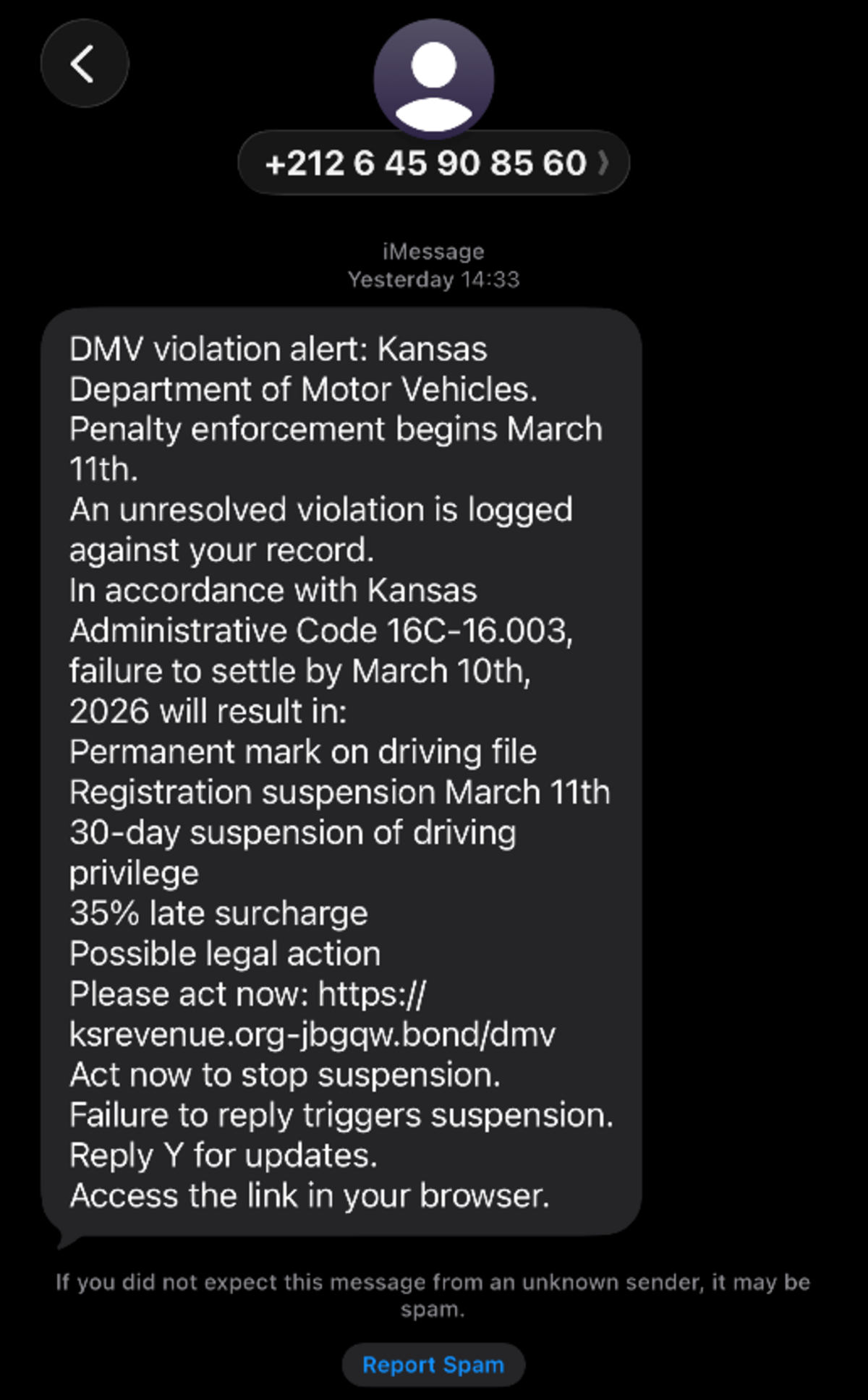
“The scam begins with an unsolicited text message claiming that the recipient’s driver’s license is at risk of suspension due to ‘unpaid traffic citations’ or ‘unresolved violations,’” the DA’s press release read. “To create a sense of panic, the message often includes a strict deadline (e.g., ‘by the end of the day’) and threatens additional 35% processing fees or legal action.”
URLs used in smishing attempts may end in “.org”, “.net”, or a string of random characters rather than the official “.gov” domain.
The text messaging scam, or smishing attempt, is part of a coordinated effort hitting multiple states, not just Kansas, the Kansas Department of Transportation said in a press release. But the motive is consistent across state lines: to steal sensitive personal and financial information.
Kansas officials emphasized that neither the Kansas Department of Revenue nor KDOT will ever text residents to demand payment or threaten license suspensions. Legitimate notices come by mail.
“If you believe you may actually owe a fine, verify the claim by contacting the relevant organization directly through official channels rather than using a link provided in a text,” the press release said.
Drivers can check the status of their driver’s license for free on the KDOR website.
If you receive a smishing text, or one similar to the example provided by the District Attorney’s Office, the agency recommends not clicking on the link or replying to the message, as responding can lead to increased attempts
They also advised using your device’s “Report Spam” feature before deleting the message to help prevent future scam attempts.
“If you have already provided financial information to a suspicious site,” the District Attorney’s Office said, “contact your bank or credit card company immediately to freeze your accounts and monitor for unauthorized charges.”
This story was originally published March 11, 2026 at 5:09 PM.