Kansas baby who suffered organ damage after birth now part of medical negligence lawsuit
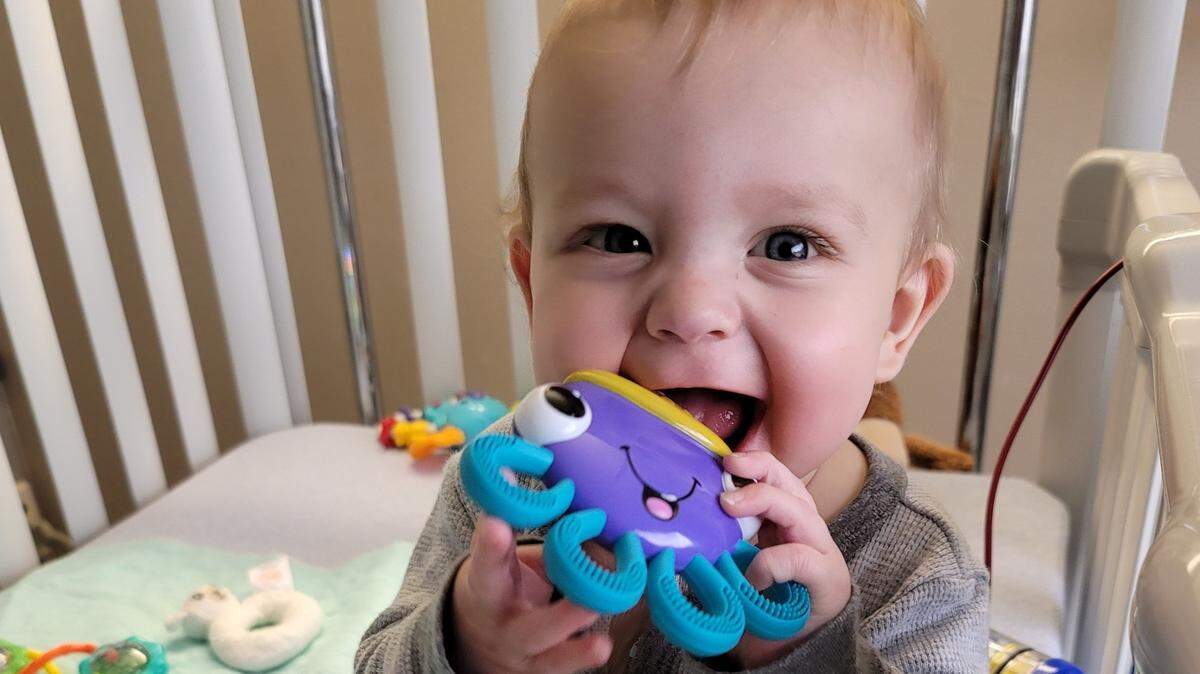
A Newton family is suing two area hospitals and three doctors, claiming medical negligence caused a crisis in which their week-old son lost most of his intestines, can’t eat normally and will likely have to be fed intravenously for life.
James and Jamie Patton filed that suit Tuesday on behalf of their son, Parker, who was born Oct. 21, 2020, at Newton Medical Center with his twin brother, Colt.
Parker had a twisted small intestine that cut off circulation to part of his lower digestive system, resulting in a complete removal of his small intestine and part of his large intestine.
The lawsuit alleges doctors and nurses should have moved more swiftly when warning signs emerged and the condition could have been surgically repaired.
The suit also claims there was more than a three-hour delay between when the case was declared an emergency and when Parker was transported to Wesley, where he underwent surgery.
“Parker’s entire small bowel and a portion of his large bowel were permanently surgically removed because this large portion of his intestines had died,” said the lawsuit, filed by lawyer Brad Prochaska.
“Unlike his healthy twin brother, Parker will never be able eat food by mouth again because he lacks sufficient bowel to digest food. Parker is now on 24 hours a day 7 days a week (intravenous) feeding . . . Parker must receive 24 hours a day IV liquid nourishment to grow and stay alive,” the suit continued.
The defendants include Newton Medical Center, Wesley Medical Center and three doctors, pediatricians Coy Matthews and Alyssa Watkins and Wesley neonatologist Curtis Dorn.
Both hospitals declined comment, as did a manager for the pediatric clinic where Watkins works. Matthews has left the practice where he worked with Watkins and could not be reached.
The suit seeks more than $75,000 in damages. However, that is a placeholder amount and actual damages sought will be “far in excess” of that, it says.
Damages will including future and permanent loss of earning capacity, lifelong intravenous feeding and “enormous” current and future medical bills, the court filing says.
“He will need a life care plan outlining his care needs for life,” the suit said. “With optimal medical and nursing care, he will have a normal life expectancy.”