
Wichita barber won’t have to stand trial in parking-lot shooting, appeals court rules
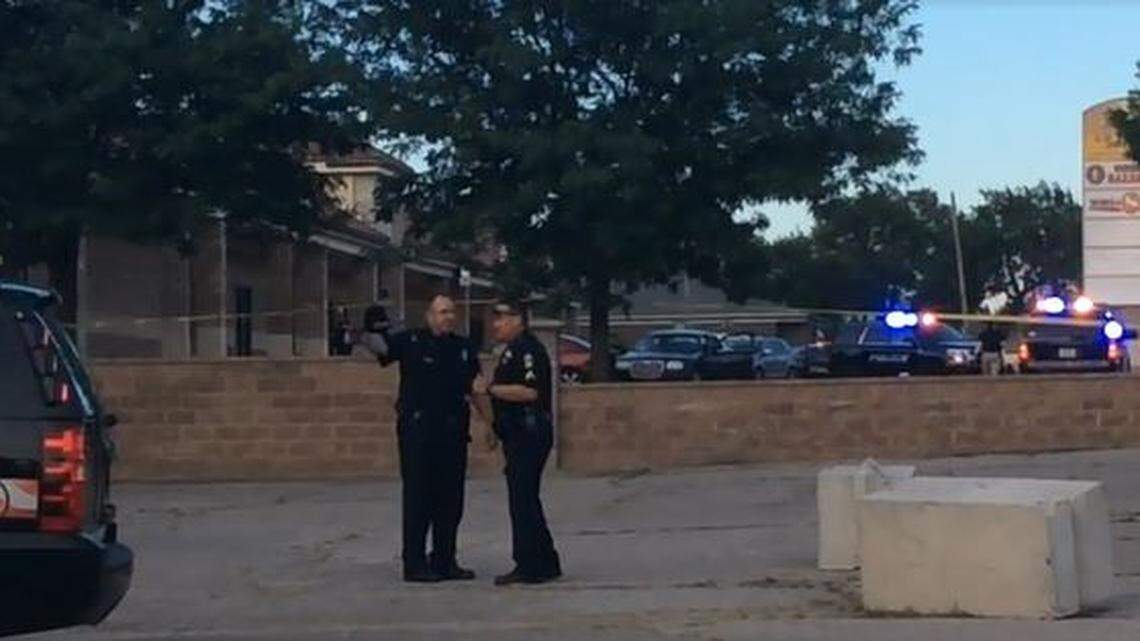
A Wichita barber won’t have to face trial for a parking-lot shooting where he killed a jealousy-enraged assailant, after the Kansas Court of Appeals ruled he legitimately feared for his and a female friend’s life.
That ruling came Friday in the case of Leon “Tony” Dukes. In 2018, Dukes shot and killed 30-year-old LaFian Berryman during a confrontation outside Dukes’ northeast Wichita barber shop.
The shooting followed a confrontation in which an enraged Berryman approached Dukes and his friend Tanisha Bryant, who were sitting in Dukes’ truck waiting for a janitor to show up to clean the barber shop, according to court documents.
At the time of the confrontation, Berryman was riding in a car with Dukes’ former girlfriend, Leatha Lawton.
Dukes had lent Lawton a small amount of money. After she paid it back, Berryman sent a series of profane and threatening Facebook messages to Dukes the day before the shooting, accusing him of rekindling his relationship with Lawton.
As Berryman approached Dukes’ truck, Dukes told him he didn’t want any trouble. When Berryman persisted, Dukes drew a handgun and pointed it at Berryman.
“When Berryman saw Dukes’ gun, he said, ’You want to play like that? Okay. I got something for you. I got something for you,’” the court ruling said.
Berryman then ran back to his own car, and Dukes fired his weapon, believing that Berryman was going to retrieve a gun of his own, the ruling said. A shot struck Berryman on his left arm or shoulder and the bullet lodged in his rib cage. He later died from the injury.
After the shooting, a loaded handgun with the serial number scratched off was found under Berryman’s body on the passenger seat of his car, the ruling said.
Dukes drove away and called 911, then returned to the parking lot to speak with police. He was arrested and later charged with voluntary manslaughter.
At a pretrial hearing, District Court Judge Deborah Hernandez Mitchell dismissed the charge, ruling that Dukes had legitimately believed he had to use deadly force to protect himself and Bryant.
Prosecutors appealed the dismissal, arguing that the judge had required a higher standard of proof than they had to give to take the case to trial.
They also argued that inconsistencies surfaced in Dukes’ statements to police and his later testimony, as to whether Berryman was armed when he first confronted him and Bryant.
That, the prosecution argued, could have indicated that Dukes was the “initial aggressor,” which would have made him ineligible to claim immunity from prosecution under the state’s use of force statute.
The appeals court rejected both the prosecution arguments.
The prosecution had failed to meet its burden, “to establish probable cause to believe that Dukes’ use of deadly force was not legally justified,” the ruling said. “The district court did not err when it found the State failed to make this showing and granted Dukes’ request for immunity.”
The appellate judges agreed that Dukes’ statements had changed. But they also agreed with Mitchell’s ruling that “it was unnecessary to resolve this conflict because Dukes’ actions were justified in light of Berryman’s subsequent conduct.”
