
Wichita State professor collecting police officers’ views on racial profiling
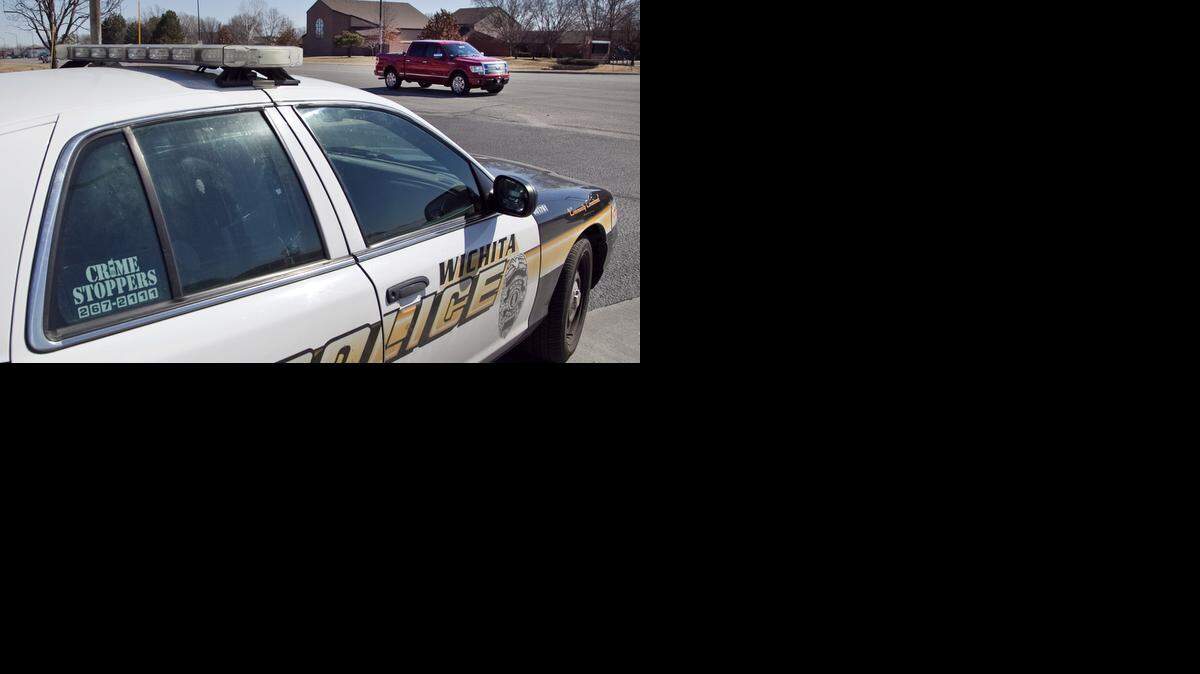
For about a year now, Michael Birzer has been interviewing law enforcement officers from around the state on why they stop motorists.
He’s looking at the issue of racial profiling.
One of the dominant responses Birzer gets goes something like, “By God, we’re not all racists. We’re just trying to do a job.”
Many of the officers say minority motorists have a built-in bias against them that stems from tensions dating back generations, said Birzer, a criminal justice professor and director of the School of Community Affairs at Wichita State University. He has interviewed about 50 officers so far, including several members of the Wichita Police Department.
He shared some of his preliminary findings at a civil rights forum hosted last month by the U.S. Attorney’s Office. Birzer also headed a WSU study, based on 2012 and 2013 data, that found that Wichita police ticketed black motorists at disproportionately higher rates than white motorists. A March report on the study emphasized that the finding doesn’t prove racial profiling exists.
In his interviews with officers, Birzer said, one of the first open-ended questions he asks to stimulate a discussion is: Why do you think so many minority citizens think police racially profile?
One common theme in their answers: That because so much tension existed between police and minorities in the past, the tension has been passed down from one generation to another.
He finds it interesting that officers recognize the “historical context with a lot of those feelings.”
In an earlier phase of his racial-profiling research, minorities told Birzer that they taught their children how to deal with police to avoid getting into trouble. Some of the advice he heard, passed down to younger people: “You do exactly as they tell you to do.” “You don’t make any sudden movements.” “If they ask you to come with them, you don’t resist. You go.”
Now, the officers tell him: Imagine what happens if you are conditioned to do certain things if you come into contact with police. It’s no wonder minorities are suspicious of police.
Another strong theme that has emerged from the questioning involves so-called pretext traffic stops. In the earlier phase of his study, many motorists told Birzer that officers stopped them for minor violations, asked questions and often let them go without writing a ticket.
When Birzer asked the officers about it, they said they are looking for behavior that causes them to be suspicious. They tell him that “they’re trained to be suspicious, to be proactive. I’ve heard that term a thousand times,” he said. Police tell him they use a pretext stop to determine whether a more serious crime has been committed. It especially comes into play in higher-crime areas, which often tend to have higher minority concentrations, he said. Courts have upheld pretext stops, he noted.
To officers, he said, the stop is “based on behavior, not race.”
When Birzer asks officers how can they help remove the perception that they target minorities, one suggestion is to bring citizens into the police academies when officers are learning about profiling issues and taking diversity training. It would let officers explain their actions, they say.
One issue that arises in traffic stops is that if an officer doesn’t make clear to a motorist why they were stopped, it can feed the perception that the officer has a racial bias, he said.
He spoke with a sheriff’s deputy who works in southern Kansas. While working an overnight shift, the deputy clocked a car going 70 mph in a 55-mph zone.
When the deputy walked up to the vehicle, the driver asked, “Are you stopping me just because I’m black?”
“No, sir,” the deputy replied.
Birzer asked the deputy how he handled having race injected into the stop. The deputy said he took extra time to show the man his radar finding and explain that in the dim light, he couldn’t see the color of the man’s skin until he walked up to the car.
He’s learned that some officers feel that drivers cite race to try to avoid a ticket. That can make some officers more suspicious, thinking that someone might be trying to deceive them – by mentioning race as a way to get the officer to leave before seeing something suspicious in the car.
“It troubles us to be accused of racial profiling,” some officers have told them. They find it insulting, demeaning to their integrity.
One officer said: “They try to intimidate us into thinking that we are going to get a racial profiling complaint against us.”
Birzer hopes to have the study finished by November and reported to the Kansas Department of Transportation, which commissioned the study.
Reach Tim Potter at 316-268-6684 or tpotter@wichitaeagle.com.
This story was originally published September 22, 2014 at 6:44 PM with the headline "Wichita State professor collecting police officers’ views on racial profiling."