
Wichita man burned himself to death; lawsuit blames Comcare and psychiatrist
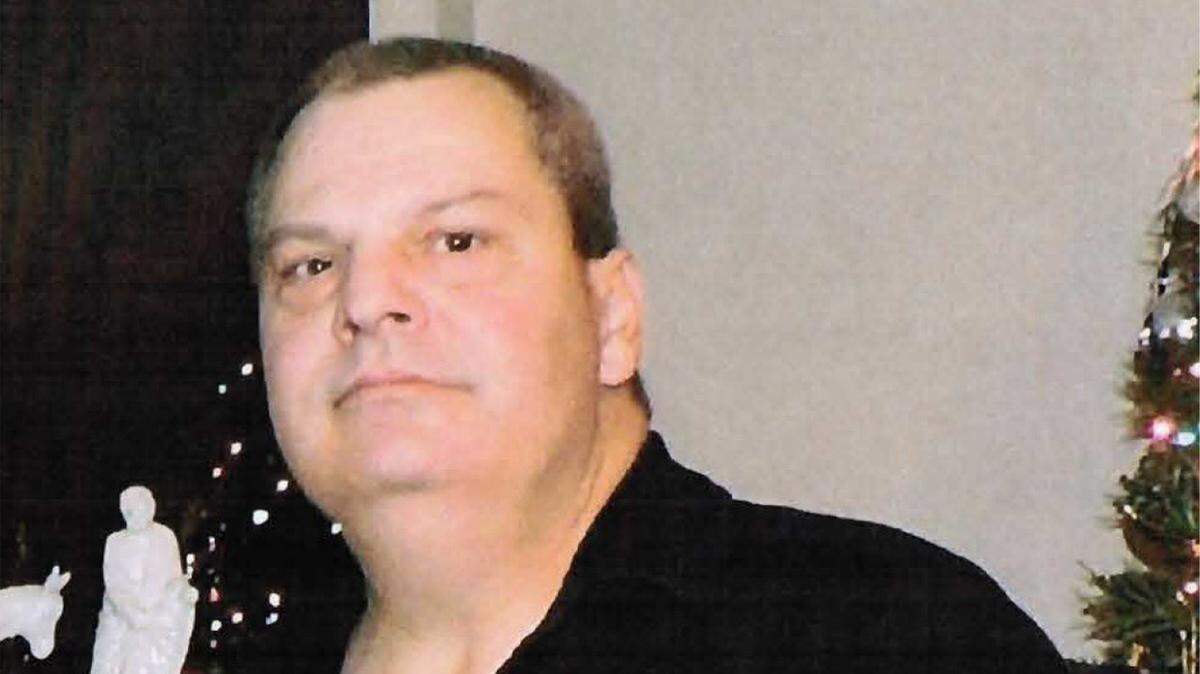
For most of the last 15 years of his life, Allen Rouse took strong medication for severe schizophrenia and paranoia.
Without the right medicine, Rouse thought that his TV talked to him, that the government put listening devices in his guests’ heads and that he had to tell President Obama that what the military really needed was baby oil.
On April 23, 2015, the 55-year-old Wichita man got into a used Ford Taurus his siblings had recently bought for him. He drove to the National Weather Center at the University of Oklahoma campus in Norman, Okla.
And there, in front of a number of people, Rouse “rammed his car through the security gate; doused himself in lighter fluid; and burned alive” in a loading dock area, says a lawsuit bound for trial in Sedgwick County District Court this coming Monday, Aug. 27.
The lawsuit contends that Rouse died so horrifically because Sedgwick County’s community mental health program and his psychiatrist failed him.
The wrongful death and medical malpractice petition filed by his sister names Comcare, the board of county commissioners and his Comcare psychiatrist — Lin Xu. It seeks damages of more than $75,000.
In court documents, the defendants’ lawyers deny that their clients were negligent. In answer to the lawsuit petition, attorneys for Comcare and the county board said Rouse died “from his own acts or omissions, and not as a result of negligence or breaches of standards.” They also say the psychiatrist took reasonable steps in cooperation with Rouse to treat him.
At the center of the lawsuit is the anti-psychotic, anti-suicidal drug Clozapine.
For 14 years, according to the lawsuit, Clozapine helped Rouse avoid hallucinations. It helped him have a life with his siblings and others. He never married and had no children.
The lawsuit notes that schizophrenia is a serious brain disorder that causes delusions and often suicidal thoughts. The disorder requires psychiatric monitoring.
The lawsuit gives this account:
On Christmas Eve 2014, “Comcare sent Rouse an auto-generated letter terminating his care” and medication management. Comcare ended his treatment and didn’t renew his Clozapine prescription because he had missed an appointment, according to the lawsuit petition. Comcare’s decision was based on “repeated missed appointments .... Dr. Xu was not involved in the discharge decision,” according to a court document defending the psychiatrist.
A bout 12 days after getting the termination letter, Rouse followed the letter’s directions. He went to the Comcare crisis center for treatment — after he had been without Clozapine for several days, the lawsuit says. Clozapine works by altering brain chemicals. Stopping the drug “cold turkey” can have bad side effects, according to the lawsuit petition.
He didn’t get to see a psychiatrist. Instead, he received an appointment with a nurse practitioner 27 days later. After years of being a patient, he would have to go through the new-patient process.
“From this point on,” the lawsuit says, “Rouse never received appropriate care from Comcare or Dr. Xu,” his Comcare psychiatrist for 15 years.
In the last four months of his life, Rouse “was never returned to an effective dose of Clozapine,” it says.
In January 2015, Xu resumed the Clozapine medication for Rouse but didn’t adjust the dosage correctly and should have restarted the medication in a hospital setting for his safety, it says.
The psychiatrist had Rouse shift from Clozapine to “a lesser-effective drug called Seroquel,” according to a trial brief filed earlier this month by the lawyer bringing the lawsuit.
Over time, Rouse was completely taken off Clozapine and put on a “very low, non-therapeutic dose” of Seroquel, it says. “One of the known side effects of Seroquel is increased suicidal” thoughts.
In early April — about three weeks before Rouse set himself on fire — his family had become worried about his mental health. Margaret Black — his sister who became the administrator of his estate and filed the lawsuit — called Comcare seven times in three days, asking to speak to Xu and to move up her brother’s appointment.
By then, the lawsuit says, “He was refusing to let anyone in his house because he believed the government was listening-in through devices in his guests’ heads. He also believed the TV was talking to him; he was writing letters to President Obama explaining how baby oil was a cure-all for our military; he believed he was on a ‘mission from God’.”
The sister relayed her concerns to Comcare employees. But they ignored the information because they didn’t understand medical privacy law, or they didn’t relay the concerns to Rouse’s psychiatrist in time, the lawsuit says.
After the sister intervened, Comcare moved up Rouse’s appointment by three days, to April 24, 2015. But no one told the sister that she should call the crisis hotline for emergency help, the lawsuit says.
The day before the appointment, he killed himself.
According to news accounts, at least one person tried to rescue Rouse from the car. A photo of the sedan — engulfed in flames, with billowing black smoke and with the driver door open — appeared on Twitter and was posted across the Internet. Because the fire occurred at a federal facility, the FBI investigated, according to the news accounts.
An autopsy found that he died from smoke inhalation and thermal burns.
A court document filed by an attorney for the psychiatrist this past spring, gives a different account.
It says that Xu was only one of the psychiatrists who treated Rouse, that her role was limited to managing his medication.
That he didn’t say he was significantly depressed. That there was no evidence of suicidal thoughts or attempts.
That for several years before he died he was being treated with a low dose of Clozapine.
That Rouse was re-started on the Clozapine at a lower dose so that the dosage could be adjusted up, “which is medically necessary and required.”
That he denied that he was hallucinating.
That Xu talked with him about changing his anti-psychotic medicine because of difficult lab tests that must be done when using Clozapine. That eventually switching to Seroquel was seen as a solution because Seroquel “does not require the same onerous testing and monitoring.”
That “At all times in 2014 and 2015, Mr. Rouse was competent and made his own decisions” and “expressed his desire to remain off Clozapine.”