
School says it did what it should for Lucas Hernandez. Experts disagree
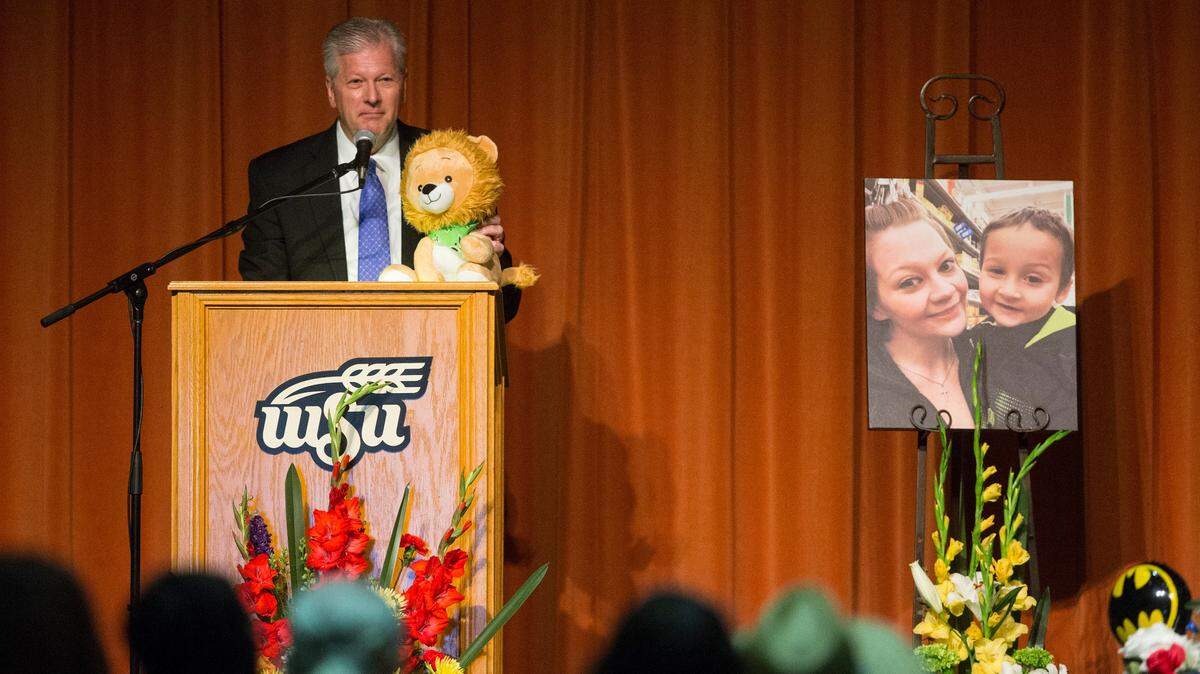
For 5-year-old Lucas Hernandez, school was supposed to be a safety net.
Less than a month before his killing, Lucas showed up at Wichita’s Beech Elementary School with bruises across his face.
The school apparently did not follow a state law designed to protect children from abuse, according to experts interviewed by The Eagle.
With that omission, the school possibly missed the last chance to save Lucas’ life.
Was law followed?
The state’s mandatory reporting law requires school employees and health care workers to report when they suspect abuse so that the state or police can investigate.
The Eagle asked experts to weigh in after the Wichita school district said Lucas’ school followed the law.
The school did not report Lucas’ injuries to the state child protection agency or Wichita police, based on interviews and checks of state, county and police records.
Initially the district refused to say whether the injuries were reported.
On Wednesday, school district spokeswoman Wendy Johnson said the injuries weren’t reported because school staff did not suspect child abuse. Under the law, suspicion triggers reporting.
The school nurse counted the injuries — all nine of them, including six across his face, with swelling or dark bruising on both of his cheeks and around both eyes. A scrape on his nose was 3 inches long. That same day, four different people at the school discussed the injuries, Johnson said. “In this instance, the team did not suspect abuse.”
Lucas and Emily Glass, his father’s girlfriend, said he fell off the monkey bars. But the school nurse later told an investigator that it looked like he had been in a fight, according to a court document. The school nurse doesn’t remember saying that, Johnson said.
Experts told The Eagle that his injuries were too extensive to be from a fall.
Was it child abuse?
Instead of reporting the injuries to the state child protection agency or the police, the school chose a different path.
The school told Glass that if she had concerns, she could take him to a community medical clinic, Johnson said.
Johnson said it’s common for a child to be referred to a medical provider to determine whether there is a concussion or a broken bone after a fall.
Three days later, Glass — the woman who remains the sole suspect in Lucas’ death — brought him back to school with a note from a clinic nurse. The note said: “Patient’s injuries are consistent with a fall. No needs currently.”
The experts said it appeared that the school did have suspicion — or it wouldn’t have looked into the injuries and referred them to the clinic.
The Eagle asked Katherine Melhorn — a Wichita pediatrician who specializes in child abuse and who serves on the state Child Death Review Board — to share her view.
Based on information The Eagle provided, Melhorn said, “It does not sound like they (the school) followed the law.”
Melhorn’s reasoning: “If you worried enough to send a child for a medical provider to evaluate whether the injury is abuse or not, then that is the threshold at which you should report it. The statute says ‘suspicion.’ If you think if it’s abuse or not, that’s when you report it. They might not find out it’s abuse, and that’s OK. At least you’ve looked at it.”
Given that the clinic nurse answered whether the injuries were consistent with a fall, Melhorn said, it’s clear that “somebody brought up a suspicion that this was not consistent with a fall.”
Another expert contacted by The Eagle — Connie Mayes — also came to the same conclusion about Lucas’ bruises and how the school dealt with them.
Mayes is a retired social worker supervisor who worked in the state child protection agency’s Wichita office from 1991 to 2013. She is helping a state task force to improve child protection services.
“Based on the information I have, no, it doesn’t sound to me like as mandatory reporters they followed the law,” Mayes said
“It sounds like they suspected” abuse because they were concerned enough to report it to the medical clinic, she said.
“You don’t have to know it happened. You only have to suspect.”
When there is a question of how injuries occurred, for mandated reporters, the choice should be “better safe than sorry” and report it to DCF, Mayes said.
A state guide to reporting child abuse explains “reason to suspect” as including whether anyone has a “hint or clue” of abuse and a “discrepant or inconsistent” explanation of an injury where a “caregiver of a child describes an injury as accidental, but bruises are on multiple areas of the body and in various stages of healing.”
Johnson said that experts have the advantage of hindsight.
“Based on all the knowledge the staff who interacted with this situation had available at the time, they handled it according to procedural and legal expectations,” Johnson said in an email.
Past suspicions
Lucas’ face was so battered that when his grandmother, Robin Taylor, saw a picture of his injured face posted on Facebook days after he disappeared, she didn’t recognize him. Since he was a baby, Lucas had prominent cheeks, Taylor said. She couldn’t resist kissing them.
If the injuries had been reported, the state child protection agency and Wichita police would have had access to previous reports in which Glass was suspected of abusing Lucas. They already each had at least one report that Lucas might be being abused by Glass. She had anger issues and used drugs and was trusted to see her own sons for only limited time, according to other court documents and police records. Lucas lived with Glass while his father worked out of state for weeks at a time.
Whether the Kansas Department for Children and Families or police could have pieced together a picture of abuse if the school had contacted them will never be known.
Some people might be reluctant to report a suspicion for fear the child could be removed from a family, but that shouldn’t stop a person from reporting, Mayes said.
Police and court records show that Glass was also caring for her 1-year-old daughter, had tried to gain more visitation with her own two sons, used drugs and fought with Lucas’ father enough that police were called out.
If Glass was overwhelmed while caring for Lucas, a “DCF worker would have tried to get relief for her,” Mayes said.
Lucas went home from school with the one person who police believe killed him, whether it was intentional or not, the one person who lied and deceived investigators after she put Lucas’ body under a remote bridge. Lucas came back to school only a few more times after the school nurse saw the bruises on Jan. 22. He last attended school on Feb. 9 — eight days before Glass called 911 to say he was missing.
A court document says the school nurse called and left messages for Glass when she heard that Lucas was missing school.
Glass killed herself two weeks after she led a private investigator to Lucas’ body.
‘I would have called police’
Lucas’ relatives share the experts’ view. That the injuries weren’t reported to the state “kind of makes me speechless because it is a no-brainer,” said Sally Rasmussen, a great aunt of Lucas who is a former child protection services investigator in New Mexico, where suspicious bruises on Lucas also had been reported after his visits there.
“To me, they (the school) failed to do their job as mandated reporters,” Rasmussen said. “It makes no sense to me at all.”
Lucas’ maternal grandmother, Taylor, said: “I don’t know why they (the school) wouldn’t report it. I know when I saw the pictures of them, when I saw those injuries on his face, I didn’t realize it was him at first.”
Although Glass was Lucas’ caregiver much of the time, he visited his grandmother and last stayed with Taylor on Jan. 14, eight days before the school nurse measured the injuries. After his Jan. 14 visit, Taylor became ill and never got to see her grandson again.
If she had been able to see the same bruises the school saw, Taylor said, “I would have called police, I would have called DCF (Department for Children and Families). I couldn’t have let that go.”
To Taylor, the school’s documentation of the bruises was possibly the last, best chance for the child protection system to intervene for, and perhaps save, Lucas.
‘A lot of injuries’
Child abuse experts like Melhorn specialize in recognizing clues that might go undetected.
Melhorn is among the Wichita-area pediatricians who are asked to examine injuries in cases investigated by the Exploited Missing and Child Unit, which responds to child abuse reports with teams of specially trained DCF investigators and police and sheriff’s detectives.
When Melhorn looks at injuries, one of the things she considers is whether they exist on multiple planes — or parts of the body. Child abuse injuries often show up on multiple planes, like the face and the stomach or buttocks.
In Lucas’ case, he had all the facial injuries and a bruise on his left elbow and right knee. On his face alone, he had bruises on multiple planes, Melhorn said.
“Multiple planes doesn’t compute with a fall from a monkey bar,” she said.
“In general,” Melhorn said, “if I saw a young child with multiple bruises on the face, I would be very concerned that that could be abuse.”
Melhorn tells people that if they see multiple injuries, they need to at least report it to DCF — and realize that DCF is not necessarily going to be able to help determine whether it’s safe for the child to go home that day. So her advice is to also call 911 so police can be involved. Police have authority to immediately put a child in protective custody.
Every report of possible abuse is important because it helps to show a picture, she said.
Melhorn said she has heard that schools complain that they report concerns to DCF over and over and nothing seems to happen. Schools should realize that DCF might not be telling them what it is doing, she said.
“So we always encourage a teacher to, as frustrating as it is, report, report, report — every time they have a new concern.”
Another child abuse expert, Vincent Palusci, a professor of pediatrics at New York University School of Medicine, said that if he received a case like Lucas’ injuries, “we would be looking very hard” to determine if it could be abuse. He is a child abuse pediatrician with a child protection center at Bellevue Hospital.
They would get Lucas’ medical history. Palusci wondered: “With all the injuries, did the nurse … do a CAT scan of the head? We would get a team involved.”
Palusci also agreed that Lucas had injuries on multiple planes.
“It sounds like a lot of injuries from a fall as described,” he said.
Palusci was a contributing author of a 2014 U.S. Department of Justice paper entitled “Recognizing When a Child’s Injury or Illness Is Caused by Abuse.” The paper noted that bruises on the soft parts of the body — like the cheeks, neck, buttocks, thighs and calves — “are uncommon in accidental injury.”
‘No margin of error’
School staff are regularly reminded of their obligation to report suspected abuse, Johnson said.
“Without question, this district’s first and foremost concern is student safety,” she said in an email.
Soon, staff will be reminded of reporting protocol as the new school year begins. “In no way do we discourage reporting,” Johnson said.
The district policy on reporting suspected child abuse is based on state law and says: “As soon as suspicion arises, the employee, with only minimal questions to determine the nature of the incident, shall contact” a DCF report center.
The bottom line, the policy says, is that “once the observation and information causes any employee to have suspicion of abuse and/or neglect, the obligation to report the suspicion becomes legally mandatory.”
An employee who “knowingly and willfully fails to make a report required by (state law) may be charged with a misdemeanor.” Also, any employee who “intentionally prevents or interferes with the making of a report” can be charged with a misdemeanor.
In 2012, The Eagle reported that “a Wichita kindergarten teacher lost her job after allegedly failing to report suspected abuse quickly enough.” The article quoted a school district official saying, “All you have to do is suspect — period. ... Somebody else’s job is to investigate.”
This past week, Steve Wentz, president of United Teachers of Wichita, said teachers should err on the side of caution because “there’s just no margin of error.”
“I have no reason to believe that anybody at Beech dropped the ball. In particular, I think elementary educators bend themselves into pretzels to try to err on the side of caution. They lose sleep … worrying at night.”
Parents do not get the benefit of doubt, he said.
The union president said he tells teachers that “if you suspect and you don’t report it, you’re going to jail.”
This story was originally published July 27, 2018 at 4:26 PM.