
Parolee’s request for early discharge comes 48 years after young Wichita couple’s murders
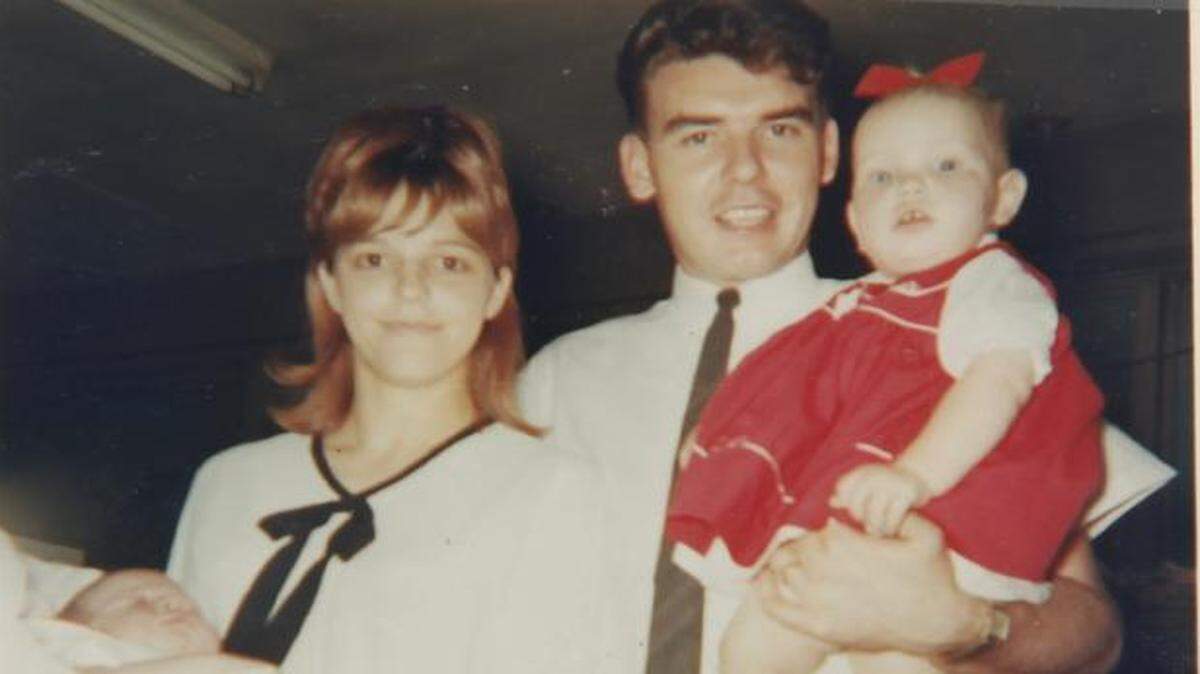
Susanne Marshall parked her car in front of Steen’s Super Discount Store late on July 16, 1966.
She was eager to pick up her husband, John, and head home after a long day of work as a drugstore sales clerk. The couple had two young children, a nearly 2-year-old girl and an 11-month-old boy, who were with an aunt awaiting their arrival.
John, 22 and already store assistant manager, was counting the last of the receipts and checks from Saturday sales when she hurried in. Around 10:30 p.m. he waved and bid goodnight to the last two store employees, who were leaving after having helped prepare the bank deposit.
“I’ll see you tomorrow,” were his final words to them, according to a news report.
Police found the couple dead about five hours later.
Forty-eight years after John and Susanne Marshall were fatally shot in a Wichita grocery store, the man convicted in their slayings has applied for early discharge from his parole – a move that if granted would end his supervision by the Kansas Department of Corrections.
Alfred G. Jones has been quietly living and working in Wichita for the past six years since his most recent parole in 2009. He was 23 when a Sedgwick County judge handed him two life sentences in the shooting deaths of the Marshalls on that July night in 1966, and he has spent more than two-thirds of his life either in prison or on parole for what many remember as a shocking crime.
Jones, now 71, called his request “a matter of procedure” in a brief interview with The Eagle outside of his home in August – a move typical of Kansas parolees convicted of decades-old crimes who are trying to live out the remainder of their lives without restrictions.
“Inmates reach that point where they say, ‘I’m through, I want this off my head’,” said Lynn McBride, executive director of Central Kansas Prison Ministry, a nonprofit that works with inmates at some Kansas prisons.
“The victims on the flip side of that say, ‘No. They need to stay in prison forever.’ ”
Still, McBride said, “There are some that do deserve a second chance.”
But Barbara Steen says the KDOC should never stop watching Jones. She and her late husband, Dale Steen, co-owned the store at 2221 E. 21st St., near Grove, where the Marshalls were gunned down.
“The killing was absolutely horrendous. This man devastated four families,” said Barbara Steen, 83.
She furiously gripped a note she penned to KDOC voicing her objections to Jones’ request for release as she spoke. Its handwritten opening read: “No. No. No.”
“I know he is getting older and that he’s getting slower,” Steen said, “but there’s no damn excuse for what he did.”
‘Police cars were everywhere’
The headline in The Eagle published after the Marshalls’ murders on July 16, 1966, read: “Double Slaying Stirs All-Out Police Effort.”
A security guard checking the outside doors of the Steens’ store early July 17 had discovered one unlocked hours after closing. He called Wichita police, who found the couple’s bodies and evidence of a robbery.
Officers, the article says, spent the following day questioning more than 100 people, trying to work up leads.
John Marshall, 22, who had been shot twice in the head, was found face-up in a pool of blood behind a meat counter in the east end of the grocery-department store, according to information gathered from newspaper articles and a 1968 Kansas Supreme Court decision upholding Jones’ murder convictions.
His wife, 23-year-old Susanne, suffered one gunshot wound to the back of her head. Her body was found at the back of a meat freezer behind some boxes. Police at the time said she it looked like she had been trying to hide from the shooter.
Signs announcing a 19-cents-a-pound sale for grapes and “Hi-Note Tuna, 5 cans for $1” were among those hanging on the storefront when investigators removed the bodies.
Barbara Steen said she remembers the phone ringing early that Sunday morning in 1966, rousing her husband from sleep.
“It was the police wanting my husband to come down to the store,” Steen said. “Well, we’d been broken into before, so he gets dressed and saunters down there, thinking he’s got to put up the window or something.”
But, she said, “The police cars were everywhere.”
“He knew something horrible had happened,” Barbara Steen continued. “So they took him aside and told him what had happened and (asked) would he please come” into the store.
Steen said officers asked her husband to calculate the missing money from the safe – $3,946. Officers also asked Dale Steen to identify the Marshalls’ bodies.
He was never the same.
“My husband never got over it. He lived with it for the rest of his life,” Barbara Steen said. Her voice wavered.
“They were a nice couple,” she said. “Very nice.”
‘Off paper’
Two days later, Jones was arrested at a home he shared with two other men within short walking distance from the Steens’ store.
He was thought to have entered the grocery store about 7:30 p.m. on July 16, 1966, hidden until closing so he could rob the store, and fired his weapon during a confrontation with John Marshall.
Susanne Marshall was killed, authorities thought, because she witnessed her husband’s shooting.
Authorities later traced bullets that killed the couple to a gun owned by Jones; it was found lying in grass outside his parents’ address two days after his arrest.
Witnesses testified at his trial that Jones had spent the day after the slayings playing rounds of craps and gambling away substantial sums of money. He was easy to identify, according to the high court’s opinion, because a near-fatal car crash about six months before the killings had left Jones’ jaw broken and his face “pulled over in a sneer.”
In all, Jones was charged and convicted of eight counts, including two for first-degree murder, aggravated armed robbery, aggravated assault of a police officer, resisting and obstructing a ministerial officer in the performance of his duty in a felony case, and weapons violations that stemmed from a 1965 conviction Jones received in California for attempted armed robbery.
He received two life sentences. If the same crime happened today, the defendant could be charged with capital murder and, if convicted, would face either the death penalty or life in prison without parole eligibility.
If approved for early discharge from his parole, Jones will be “off paper,” KDOC spokesman Jeremy Barclay said. That means he will no longer report to a parole officer or have to adhere to certain conditions, like travel restrictions, set forth in his parole.
“They are able to rejoin society. They’ve finished serving their sentences,” Barclay said.
When a person is released from parole, Barclay said, “we are no longer tracking their residence or anything along those lines.”
A decision in Jones’ case is expected this month.
Asked what she expected the outcome of Jones’ request will be, Barbara Steen said: “He’s going to be released. I have no doubt about it.”
But she said, “I just don’t understand this. He was given two life sentences, and now every time something comes up new, he’s qualified under the new law. And that’s not right.
“I’m so angry. I’m just so angry. He’s out free. ... He’s still on parole, but he’s free. And John and Sue are still in their graves. And their children have never, ever known their parents.”
Members of John and Susanne Marshalls’ families either could not be reached for comment for this story or said they did not want to be interviewed. One family member who said she did not want to be quoted or named in the newspaper said she did not object to Jones’ request for early discharge from parole.
The Marshalls’ two children were adopted and raised by extended family in a small Kansas town, according to newspaper articles. They are in their 40s now.
Indeterminate sentences
Jones is one of a few dozen parolees likely to request early discharge in the coming year. It’s a common step for a dwindling number of convicts sentenced under an old law that had no provisions outlining the length of time an offender had to spend on parole, said Barclay, the KDOC spokesman.
About 500 of 9,667 Kansas prison inmates still have these so-called “indeterminate sentences,” Barclay said. They were imposed before sentencing guidelines were adopted in 1993.
Currently, about 4,700 offenders are on supervised parole with the state Department of Corrections.
Barclay said the bulk of “indeterminate” offenders who have requested early discharge have served 15 or more years in prison and have been on parole for about seven years, on average. About half who ask for release are approved by the KDOC’s parole review board, he said – significantly higher than the 28 to 30 percent of inmates who request and receive parole because of a “much more vetted” application process.
Decisions on early discharge requests are typically made within 45 days after the parole review board receives an application, Barclay said. Approval hinges on a number of factors, including a parolee’s criminal history, social support system, stability in employment and residence, and whether all rules of parole have been followed for at least a year.
Like in parole hearings, KDOC also asks crime victims for input. Victims registered in Jones’ case received letters from KDOC around Aug. 1.
Between July 1, 2013, and June 30, 2014, KDOC received 43 applications for early parole discharge and granted 27, including 10 from Sedgwick County, Barclay said.
Over the prior 12-month period, 24 of 43 were applications were approved, he said. Two of the 10 released in Sedgwick County that year were men convicted of first-degree murder in unrelated killings in 1985 and 1987.
All other cases involved less serious crimes, like aggravated robbery or aggravated weapons violations, Barclay said.
Before July 2013, requests for early discharge from parole were limited to offenders with sentences considered indeterminate. But legislation that went into effect last year extended the option to parolees with finite terms, Barclay said.
Sex offenders and those with “egregious violations” in their recent past do not qualify for early discharge from parole, according to KDOC.
Barclay said those with unpaid restitution or other court-ordered fees also are ineligible.
‘Live my life’
Jones appealed his case to the Kansas Supreme Court, citing more than 20 errors at trial. On Nov. 9, 1968, the state high court upheld the convictions.
Jones was granted parole for the first time in April 1990 after serving 23 years in prison. KDOC records indicate six warrants were issued for him for parole violations between then and 1995, when he landed back in prison on new felony burglary and misdemeanor theft convictions from Sedgwick County.
Jones was not paroled again in Sedgwick County until 2009, after failed attempts in both 2003 and 2006. He has since maintained his status “without any violations,” Barclay said.
Online KDOC records also showed no disciplinary reports for Jones while he was in custody. Barclay confirmed that, saying he also saw “no acts of misbehavior.”
He would not disclose Jones’ specific parole restrictions or reporting requirements.
“He was 47 the first time he was paroled. The second time he’s paroled, he’s now 67,” Barclay said. “And you can see that there has been no bouncing around over the past five years.”
He added that, for most inmates, the risk of re-offense plummets after age 45.
“We’re talking about geriatric individuals. … The more that they age … the less likely they are to re-offend in terms of a murder or a burglary or something that will require some physical ability,” Barclay said.
Jones was reluctant to discuss his personal reasons for requesting early discharge from parole. The Eagle found him at the home he shares with family on Aug. 13 – nearly two weeks after Barclay says the parole review board would have received his application.
At 71, Jones appears to be a capable man still – he works in Wichita and says he wants to travel. But the aging is apparent.
A shock of graying hair encircles his head. His once commanding 6-foot-3 frame hunches slightly.
He is soft-spoken and, at times, smiling. His words are slightly muffled by age and the jaw injury he received from the car crash in early 1966.
“Basically I’m just trying to live my life and go on with it,” Jones said.
Asked about his request for early discharge from parole, he said: “That’s the law. That’s procedure.”
Reach Amy Renee Leiker at 316-268-6644 or aleiker@wichitaeagle.com. Follow her on Twitter: @amyreneeleiker.
This story was originally published September 6, 2014 at 3:02 PM with the headline "Parolee’s request for early discharge comes 48 years after young Wichita couple’s murders."