
Identity quest: How nine-year pursuit of ‘Lou Castro’ unfolded
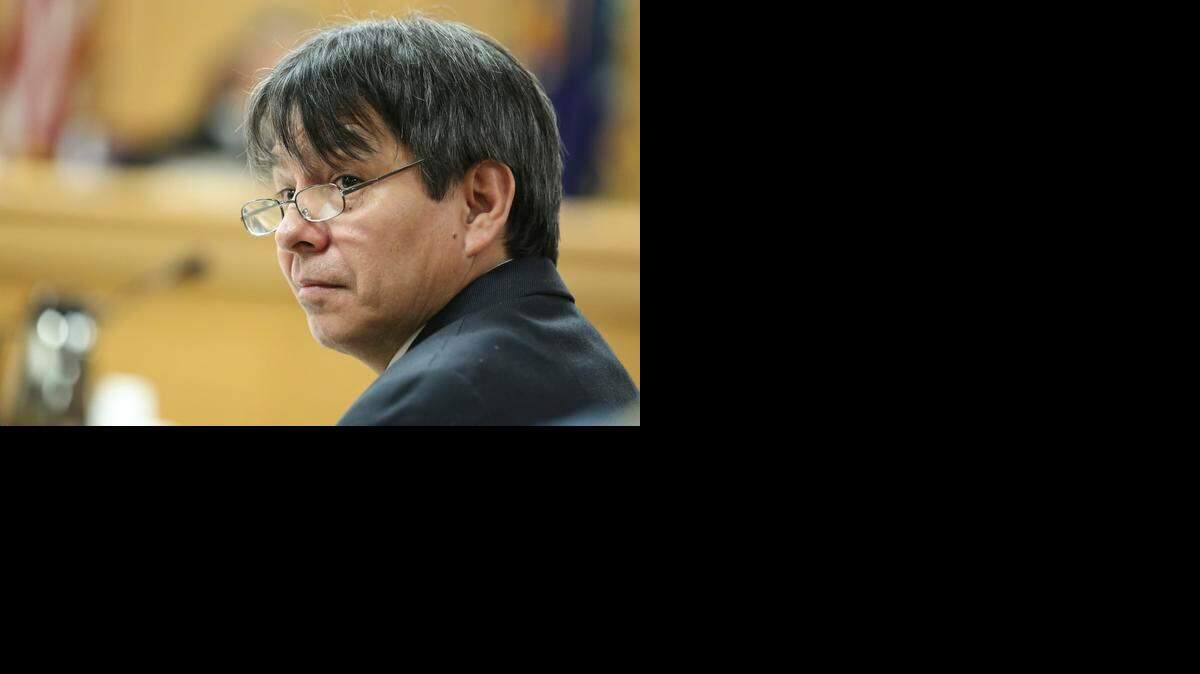
Daniel Perez would probably still be a free man except for one big mistake.
Perez didn’t have a job but drove white Corvettes, played with expensive remote-control planes and surrounded himself with women who were decades younger.
He almost got away with murder.
On Feb. 18, a Sedgwick County jury convicted the 55-year-old of 28 charges, including first-degree murder, rape and sexual exploitation of a child.
Perez’s downfall was showing off. He drew attention to himself with his cars, his planes and his horses. To one persistent detective, that seemed like a lot for a man who didn’t appear to have a job.
Sedgwick County sheriff’s Detective Ron Goodwyn spent nine years trying to figure out who this guy was and where he got his money. He spied on the mystery man, sifted through his trash and tried to trick him into leaving fingerprints.
With help from other investigators, the detective pieced together the identity of a fugitive who was thought by some to be dead and by others to possess magical powers, who spun stories about the supernatural and who traveled with an entourage in high-end SUVs with matching vanity plates.
Goodwyn and other investigators amassed 500,000 pages documenting Perez’s actions spanning more than two decades and several states.
They looked into the deaths of members of Perez’s group and millions of dollars in life insurance money that flowed to Perez and other surviving members.
Perez, who will be sentenced March 24, is facing imprisonment for possibly the rest of his life.
The day after the guilty verdict, Goodwyn and two investigators he worked with – former Wichita police Detective Clint Snyder and FBI Supervisory Special Agent John Sullivan – talked about the investigation.
Where suspicion began
Goodwyn first noticed Perez in April 2003. Perez, then known as Lou Castro, was living with a group of people on a 20-acre compound in the 9500 block of North Oliver near the town of Kechi.
Goodwyn was struck that the group had so many vehicles, costing $40,000 to $50,000 each. In most cases, an extended family will have at least one clunker. This “family” had all new pickups and SUVs, plus ATVs. Besides the new vehicles, the compound had a swimming pool and two houses.
Investigators call it “unexplained wealth.”
To Goodwyn, who focused on drug investigations, unexplained wealth is a tip-off.
In June of 2003, two months after Goodwyn first noticed the group, one of its members died. Patricia Hughes was a 26-year-old wife and mother, originally from South Texas. At first, her death was thought to be an accidental drowning in the pool at the compound.
Her death stoked Goodwyn’s suspicion. The detective gathered all police reports about the death and the autopsy.
As Goodwyn began looking into Castro’s identity, he learned that Castro had a South Dakota ID card with the name Lou Castro. Stories about Castro flowed to Goodwyn: that Castro had a wife and child who died in a South Dakota plane crash. On the Internet, Goodwyn found a story in the Rapid City newspaper about the crash. An obituary listed Castro as a brother of Mona Griffith, a woman who died in the crash in 2001, which also killed Griffith’s young daughter and Griffith’s boyfriend.
Through databases, Goodwyn found all of the people who lived on the North Oliver property, but he could find nothing on Lou Castro.
Goodwyn was suspicious for two reasons: Castro seemed to be hiding his identity, and people around him were dying.
The detective’s suspicion grew as he heard more stories, including that Castro seemed to have control over the people he lived with: for example, directing them on how much to withdraw from a money machine at a Kechi convenience store for a night out.
He gave different explanations for where his money came from. One story was that he came from oil wealth; another was that he had invented an inverted airplane tank; another was that he sold cattle to the government.
He was 5 feet 6 inches tall and portrayed himself as Native American. He would supposedly cut off his long hair to honor those who died. The truth was, he was Hispanic and from South Texas.
After Hughes’ body was taken to back to South Texas to be buried, others from the North Oliver property went to the funeral. Castro directed them not to tell anyone in Texas that he was in Kansas.
Goodwyn would eventually learn the reason that Castro didn’t want the Texans to know where he was living – or that he was alive.
No paper trail
The man who kept secrets also put himself in a position to draw attention.
Three months after Hughes died, the Kechi police chief introduced Castro at a City Council meeting. Castro was donating $19,000 to help buy an additional police vehicle. Castro asked for one thing: that a sticker be put on the vehicle in memory of Hughes.
Castro would stay in the Wichita area for eight years.
The compound would grow from two to three houses plus an expansive shop area and the pool. The group called their place Angels Landing. They threw parties.
Goodwyn’s frustration grew because he still couldn’t confirm Castro’s identity and couldn’t explain the source of the money that paid for $1 million in vehicles.
One night after work in 2004, Goodwyn called Sullivan, the FBI agent, and told him about Castro. Goodwyn and Sullivan had worked together on drug cases in the late 1990s.
Sullivan couldn’t find a photo of Castro or a physical description that matched the guy living on North Oliver. That doesn’t happen often. Everyone has a trail, yet even the FBI couldn’t find one for Castro.
Spying at restaurant
That same year, 2004, Goodwyn gathered trash set out at the compound. Crime lab workers spread the trash out but couldn’t find an identifiable fingerprint for Castro.
Later in 2004, Goodwyn was off-duty, driving on Rock Road, when he saw a white truck with Castro and a woman who was a member of the group. As with other compound vehicles, the truck had a vanity tag that included “Angel.” The truck bore lettering on the rear window: “In memory of Patricia Hughes.”
Goodwyn followed them to a restaurant at 21st and Rock, went inside and took a table so he could watch.
After the couple left, Goodwyn identified himself as a detective and got the manager’s permission to collect the glasses and silverware that Castro used. But it produced no fingerprint to identify Castro.
The case went dormant.
For the next two years, Goodwyn occasionally drove by Angels Landing. Couldn’t help himself. He woke up at night thinking about ways to uncover Castro’s true identity.
In late 2006, Goodwyn learned that Patricia Hughes’ husband, Brian, had died in March during a visit to South Dakota. Brian Hughes had been working under a car when it fell on him. Goodwyn found out about the latest death because of a child-custody case involving the couple’s daughter, whose parents had died young three years apart.
By then, there had been three fatal accidents in five years: the plane crash in South Dakota, the drowning on North Oliver and the car collapse in South Dakota. Five people had died.
Each death was followed by a big life insurance payout that would eventually amount to millions of dollars, money that went to Castro’s group.
Trying to trick him
As the deaths added up, Goodwyn asked, around late 2006 or early 2007, for the U.S. Attorney’s Office to open a case so they could review the group’s finances.
About the same time, the U.S. Attorney’s Office and the Wichita Police Department launched a cold-case investigation using federal law to go after the Crips, a violent Wichita street gang. Snyder, Goodwyn and other Wichita police detectives were on the task force.
During their two years together on the Crips investigation, Goodwyn told Snyder about Castro. Snyder was interested, but the two were busy with the Crips.
Then in 2008, another Castro follower died, in an apparent traffic accident in Butler County.
The number of deaths had grown to six, over a seven-year period. And the big insurance payouts continued.
The Castro case took on a sense of urgency.
Goodwyn got advice from another sheriff’s detective on how to trick Castro into giving his fingerprint. On Nov. 10, 2008, Goodwyn and another detective went to the North Oliver property, saying they were investigating area home burglaries. They handed Castro glossy photos of “suspects,” asking if he recognized the people.
Castro didn’t touch the photos with his fingertips, but held them on the edges with his palms. He moved the photos about on a table, using only his fingernails.
Castro gave his name but said he didn’t have an ID. He provided a Social Security number, which Goodwyn quickly determined to be false.
Time to focus
After the case against the Crips wound down in late 2009, Goodwyn and Snyder were assigned to the U.S. Attorney’s Office, focusing on financial investigations, including money laundering.
One day, Sullivan called from his FBI office and asked Goodwyn if he was near a fax machine. Sullivan faxed an e-mail sent to the FBI’s Kansas City office from a boyfriend of a young woman who had been part of Castro’s group. The boyfriend was suspicious of Castro. For the first time, it gave investigators someone they could talk to who had been on the inside of the group.
Around January 2010, investigators found out that the Castro group had moved from Wichita to Columbia, Tenn. Days after the e-mail arrived, FBI agents were watching Castro’s house in Tennessee, an impressive colonial-style home that sat at the end of a long driveway where he lived with five people.
The investigators learned that a new life insurance policy had been taken out on a young girl who was said to be the mystery man’s daughter.
The pattern was continuing.
Castro in handcuffs
In Tennessee, Castro was going by “Joe.” Authorities got video showing Castro using his new ID to open a bank account.
The feds charged him with two counts: aggravated identity theft and fraudulent use of a Social Security card number.
On April 21, 2010, Goodwyn, Snyder and Sullivan traveled to Tennessee to help execute a search warrant at Castro’s home. At 8:10 a.m., Castro came to the door holding cowboy boots, as if he was on his way out the door.
Goodwyn put handcuffs on Castro, and he was fingerprinted, but a check of the federal database found no fingerprint match.
At the time of the search, other investigators were interviewing witnesses, including a woman who was a teen when Castro assaulted her. But overall, members of Castro’s group weren’t saying much.
Still, the investigators got new insights, including that Castro would act as if he was using different personas – Daniel, Arthur and Amber – to control his followers. They were supposed to be good or bad angels that inhabited his body. Investigators also learned that over the years the group had moved from South Texas to the Dakotas, to Missouri, to Wichita, to Tennessee.
By then, Goodwyn and Snyder were working full time on the Castro case, with Sullivan assisting. They were calling everyone who might know something. They would interview about 85 people.
Castro still wasn’t saying who he was. In the federal case against him, he pleaded guilty to one of the two charges and went to federal prison as “John Doe” in late 2010.
Goodwyn knew they had two years – the length of Castro’s federal prison sentence – to build any additional case against him.
The Texas file
In May of 2010, the detectives learned from Patricia Hughes’ mother in Beeville, Texas, that her daughter had once dated a man named Daniel Perez, who had gotten into trouble. But Hughes’ mother had heard that Perez was dead.
Goodwyn had a hunch that Daniel Perez might be Castro’s real name. An old jail booking mug from Texas confirmed it.
Seven years after Goodwyn first tried to learn Castro’s identity, he had an answer. A fingerprint match, using a copy of fingerprints from Beeville, confirmed the identity. Even then, Castro wouldn’t admit he was Perez, but investigators could trace his past.
Three days after the match, Goodwyn and Snyder drove to Beeville and gathered copies of police reports on Perez, including a 1996-1997 case involving sex crimes against two girls, 11 and 14. Perez had fled, and the Texas cases against him were dismissed after reports that he had been found dead.
Goodwyn and Snyder learned that Perez had worked in prisons in Texas, had maintained airplanes in the Navy and had worked in aviation.
Biggest break of all
The longer his followers were away from Perez while he was in federal prison, the more they talked. One of the young women said Perez had directed her to use a hammer to smash a computer hard drive and throw it into a lagoon at Angels Landing. In August of 2010, Sedgwick County firefighters drained the lagoon and found remains of a hard drive.
Goodwyn and Snyder knew they had three potential key witnesses who were girls or young teens when they first met Perez. The three had broken contact with Perez in October of 2010. At first, only two cooperated with investigators.
The biggest break occurred March 15, 2011, when Goodwyn and Snyder met with the young woman who had been the holdout.
She told them how she and a relative had met Perez and that the relative described Perez as a “seer,” who could see the future, who needed a young girl to sustain his life. She gave details about sex crimes.
She told them that Perez had directed her, when she was 11, to give a made-up story to authorities that Patricia Hughes had slipped, fallen and drowned in the pool, when actually the girl heard a splash and a scream and saw Perez with wet arms and out of breath.
Now Goodwyn and Snyder could show that Perez had motive, means and opportunity to kill Hughes by holding her head underwater. They had a murder case.
At the recent trial, witnesses testified that Perez directed how the life insurance policies were to be written and that he had followers believing that those who died would come back.
Goodwyn’s fear was that Perez would get out of federal prison before they could charge him with murder and sex crimes. Goodwyn kept calling the federal prison to make sure Perez wasn’t being released.
With Perez still in custody, Sedgwick County prosecutors filed the murder charge and dozens of other charges in January 2012.
Perez’s downfall
Minutes after the guilty verdict against Perez on Feb. 18, District Attorney Marc Bennett, who helped to prosecute the case, said he first wanted to credit the investigators – Goodwyn, Snyder and Sullivan.
Snyder and Sullivan had worked on another unusual investigation before – the hunt for the BTK serial killer, Dennis Rader.
Although the Lou Castro/Daniel Perez investigation had become a team effort, Snyder and Sullivan said Goodwyn’s role was crucial.
“If Ron (Goodwyn) would not have stuck with this, we wouldn’t have been here today,” Snyder said.
Perez’s downfall, Sullivan said, is that he didn’t leave the Wichita area sooner. The longer Perez stayed, the more attention he drew – from a detective named Goodwyn.
Reach Tim Potter at 316-268-6684 or tpotter@wichitaeagle.com.
Who’s who
Ron Goodwyn, a Sedgwick County sheriff’s detective who spent nine years tracking Daniel Perez.
Daniel Perez, who used the name Lou Castro, led a lavish lifestyle with followers at a compound north of Wichita. On Feb. 18 he was convicted of first-degree murder and 27 other counts.
Clint Snyder, a former Wichita police detective and now a criminal investigator with the Sedgwick County District Attorney’s Office. He partnered with Goodwyn in the Perez investigation.
John Sullivan, FBI supervisory special agent, who assisted in the investigation.
Patricia Hughes, the murder victim, who was first thought to have died in an accidental drowning at the compound.
This story was originally published February 28, 2015 at 2:52 PM with the headline "Identity quest: How nine-year pursuit of ‘Lou Castro’ unfolded."