
Bat’s federal status of great interest to Kansas developers
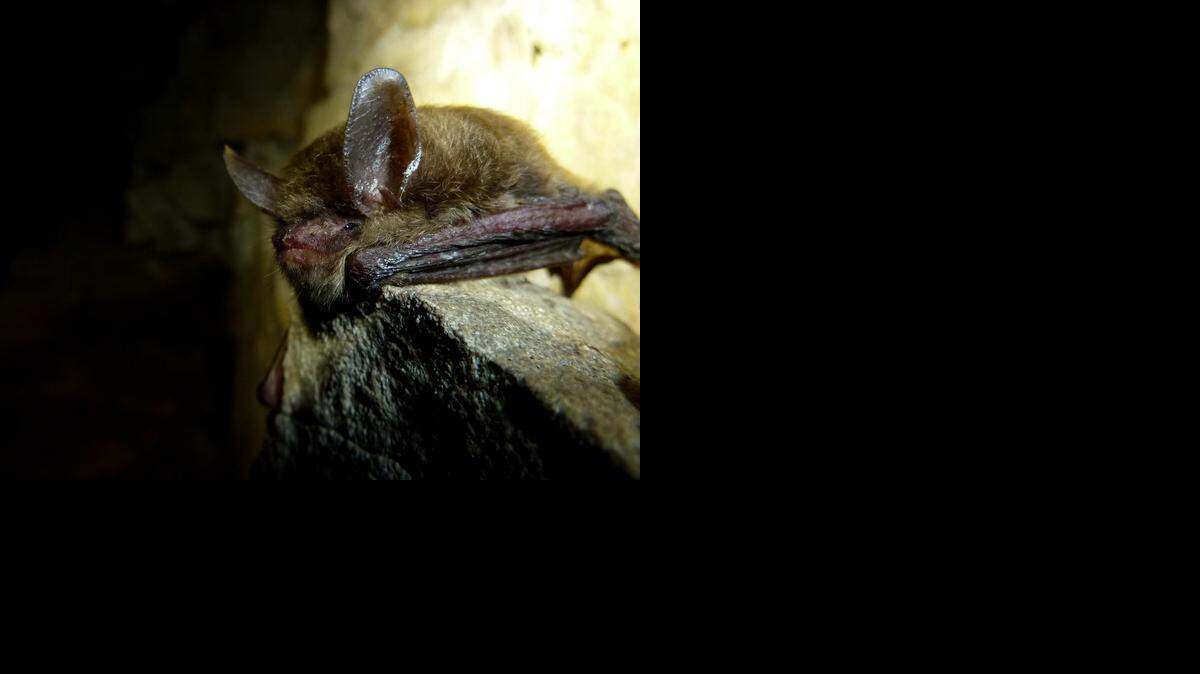
An elusive flying creature of the night, the northern long-eared bat is just a few inches long.
But it could become a big issue in the coming months.
Although Kansas is on the periphery of the bat’s 30-state range, some local officials have voiced concerns that road projects could face delays if the U.S. Department of Fish and Wildlife designates the animal as an endangered or threatened species, as expected in April.
Last week, Gary Janzen, city engineer, told the Wichita City Council not to delay decisions on an interchange project at K-96 and Hoover too long, because tree removal could be affected by the bat.
Kansas’ last experience with a threatened species – the lesser prairie chicken – ruffled feathers, with state officials pushing back against restrictions they said adversely affected landowners. Any rules to safeguard the northern long-eared bat are likely to affect eastern Kansas more than Wichita, federal officials say.
The bat, which lives in the eastern half of the United States, has been found in a handful of north-central Kansas counties, including Ellis, Graham, Marshall, Osborne, Phillips, Rooks and Washington, said Curtis Schmidt, zoological collections manager at Fort Hays State University’s Sternberg Museum of Natural History.
Its range includes the eastern half of the state, so 66 Kansas counties could be affected if the animal is listed, he said.
There could be a big difference in restrictions, depending on whether the bat is classified as endangered or threatened, Schmidt said.
“There’s talk right now that if they’re threatened and not endangered, then each region will be able to protect them differently based on how well populations are and what the threats are locally. So if we go that route, our hands probably won’t be tied as much.”
White-nose syndrome
The biggest threat to the northern long-eared bat is white-nose syndrome, a fungal disease that affects hibernation and gives infected bats a characteristic white nose.
“It interrupts that hibernating ‘deep sleep’ constantly at the metabolic level, and they just never really hibernate, and so there’s a lot of energy reserves that are used during that period,” said Heather Whitlaw, Kansas field office supervisor for the U.S. Department of Fish and Wildlife Service. “So we have bats in poor condition in the spring that then (die).”
The fungus is believed to be spread by bats and people traveling from cave to cave, she said.
At the end of the 2013-14 hibernating season, bats in 25 states and five Canadian provinces had white-nose syndrome, according to WhiteNoseSyndrome.org, a group of government, university and nongovernment organizations raising awareness of the disease.
White-nose syndrome was discovered in New York state in 2006, said Tony Sullins, chief of endangered species for the Midwest region of the U.S. Fish and Wildlife Department and the national lead for listing determination.
Since then, the bat’s population has declined by 99 percent in the northeast, and the syndrome appears to be spreading west, he said.
“In the northeast, particularly, it’s just been a tragic die-off of the bats,” Sullins said. “It’s very dramatic and quick-acting – a very frightening disease for the health of the species.”
No white-nose cases have been spotted in Kansas yet, but “researchers say it’s coming,” said Ed Miller of the Kansas Department of Wildlife, Parks and Tourism.
The closest confirmed cases are in northwest Arkansas and northwest Missouri, he said.
Kansas study
It’s unclear just how many northern long-eared bats live in Kansas, Schmidt said. Here, they primarily live in trees and limestone fissures.
“They’re still here in good numbers – they’re relatively common – but to put an actual number on it is impossible,” he said.
To learn more about the bat’s habits in Kansas, Fort Hays State University is planning a three-year study in coordination with the Kansas Department of Wildlife, Parks and Tourism.
The study will include a survey to see where bats live in the state.
He said the bats prefer to live in trees surrounding rivers and streams in the summer.
During the study, small radio transmitters will be glued onto the bats’ backs to track where they – quite literally – hang out. Within a few weeks, the transmitter will fall off, said Elmer Finck, FHSU biology professor.
Researchers will also use bat detectors with acoustic signals to track bat communications. The detectors can differentiate between species based on the bat signals, Finck said.
So far, the federal government has issued more than $20 million in grants for research on the bat, according to the U.S. Department of Fish and Wildlife’s website.
Bats are beneficial to the environment because they eat insects, Finck said.
Impact
Until the U.S. Department of Fish and Wildlife determines whether it will list the bat – and whether it will be listed as endangered or threatened – the exact impact on Kansas and other states is unknown.
The decision is expected April 2.
People can comment about proposed rules regarding the bat through March 17, Whitlaw said.
In January, the department proposed a special rule for the bat under the Endangered Species Act that would apply only if it’s listed as threatened.
The eastern one-third of Kansas, including Kansas City, is in a proposed “buffer zone,” which includes areas within 150 miles of confirmed white-nose syndrome locations. A green zone, which is the bat’s range and appears to include Wichita, extends about halfway through the state.
“Anything outside of (the buffer zone) would basically have very few, if any, restrictions related to development,” Whitlaw said.
The only protection in the green area is against intentionally harming the bats or removing them from where they hibernate, Sullins said.
“We’ve proposed a rule that would provide a blanket exemption for any activities outside that white-nosed syndrome area. So there would be no permit required for that interchange even if northern long-eared bats were going to be harmed by it,” because Wichita is outside the zone, he said.
In the buffer zone, the proposed rule would allow some activities to be exempted as well, Sullins said, including forest management, maintenance and expansion of rights of way, minimal tree removal and logging activity.
“We’re under no illusion that listing the bat will solve or cure the white-nose syndrome problem,” Sullins said. “But because of white-nose syndrome, the bat has been reduced significantly in many areas, and it’s probable that it will spread eventually.”
Reach Kelsey Ryan at 316-269-6752 or kryan@wichitaeagle.com. Follow her on Twitter: @kelsey_ryan.
To comment
Here’s how to comment on the proposed rule for the northern long-eared bat.
Electronically: www.regulations.gov. Enter Docket No. FWS–R5–ES–2011–0024 and submit a comment by clicking on “Comment Now!”
Hard copy: Public Comments Processing, Attn: FWS–R5–ES–2011–0024; Division of Policy and Directives Management; U.S. Fish and Wildlife Service, MS: BPHC; 5275 Leesburg Pike, Falls Church, Va. 22041-3803.
This story was originally published February 8, 2015 at 6:11 PM with the headline "Bat’s federal status of great interest to Kansas developers."